
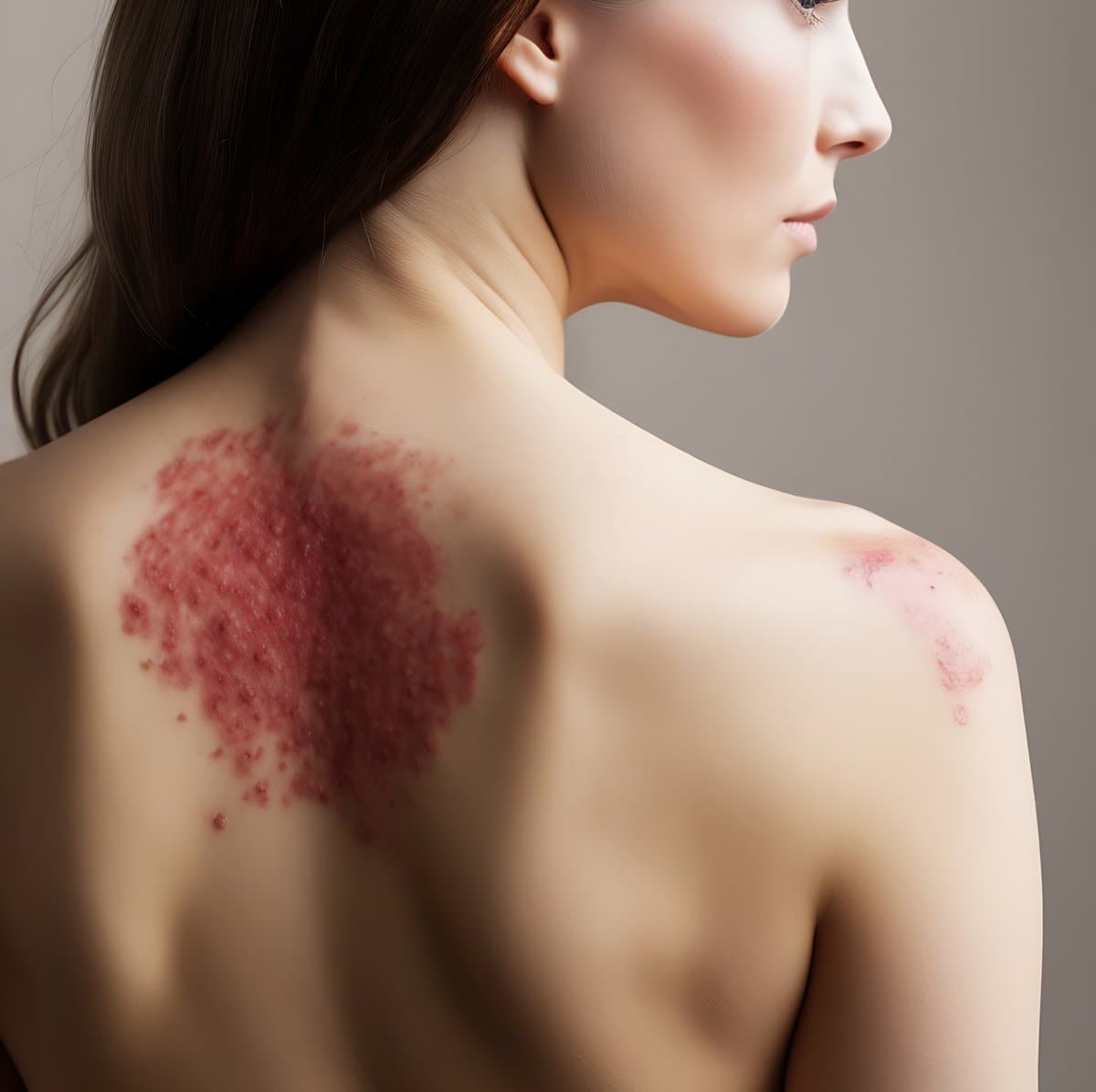
Vad är Bowens sjukdom?
Bowens sjukdom, även känd som skivepitelkarcinom in situ, är ett precanceröst hudtillstånd där onormala celler finns i epidermis men ännu inte har invaderat djupare lager av huden. Det representerar det tidigaste stadiet av skivepitelkarcinom (SCC) och beskrivs ibland som en pre-invasiv hudcancer. Tillståndet beskrevs först av dermatologen John T.
Bowen år 1912 och ses oftast hos ljushyade vuxna över 60 år. Även om Bowens sjukdom växer långsamt och ofta förblir på ytan i flera år, bär det en risk på cirka 3 till 5 procent för att utvecklas till invasivt skivepitelkarcinom om det lämnas obehandlat.
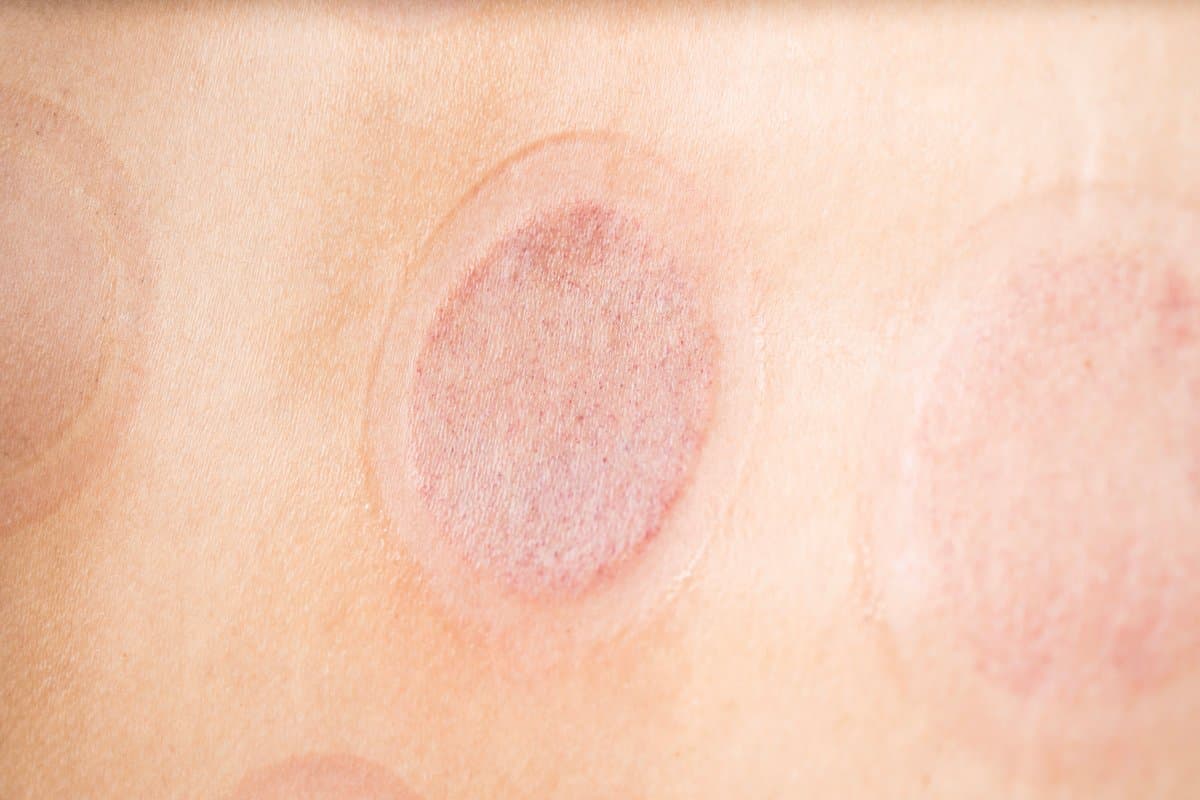
Hur ser Bowens sjukdom ut?
Bowens sjukdom presenterar sig typiskt som en väldefinierad, röd eller rosa fjällande fläck på huden. Det drabbade området är ofta platt eller något upphöjt och kan variera i storlek från några millimeter till flera centimeter. Fläcken kan se krustig, flingig eller något grov ut vid beröring, och den läker inte eller försvinner av sig själv.
Den återfinns vanligtvis på solutsatta områden som underben, underarmar, huvud och nacke, men kan dyka upp var som helst på kroppen, inklusive områden som inte utsätts för solen. Eftersom den liknar andra vanliga hudtillstånd som eksem, psoriasis eller svampinfektioner, misstas Bowens sjukdom ofta för något annat eller ignoreras under längre perioder.!!

Orsaker och riskfaktorer
Den primära orsaken till Bowens sjukdom är kumulativ skada från ultraviolett strålning efter år av solexponering. Ljushyade individer som har tillbringat betydande tid utomhus utan adekvat solskydd löper högst risk. Kronisk exponering för arsenik, oavsett om det är genom förorenat dricksvatten, yrkesmässig kontakt eller vissa läkemedel, har kopplats till utvecklingen av Bowens sjukdom, ibland framträdande decennier efter den initiala exponeringen.
Immunosuppression från organtransplantationsläkemedel, kemoterapi eller tillstånd som HIV ökar risken avsevärt. Vissa stammar av humant papillomvirus (HPV), särskilt HPV-typerna 16 och 18, har kopplats till Bowens sjukdom i genitala och perianala områden. Strålbehandling av ett särskilt hudområde kan också predisponera för tillståndet.
Risk för progression till invasiv cancer
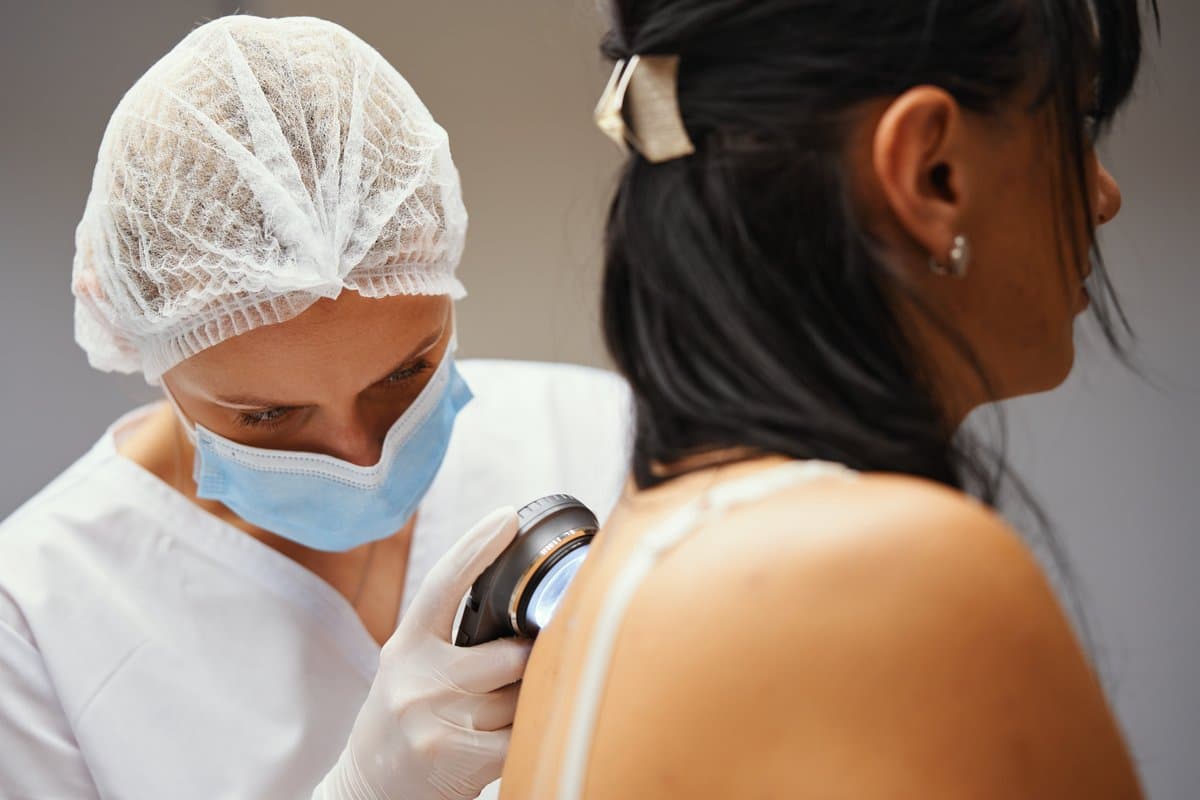
Även om Bowens sjukdom ofta kallas precancerös, beskrivs den mer exakt som cancer i sitt tidigaste och mest behandlingsbara stadium. De onormala cellerna är redan cancerösa till sin natur men förblir begränsade till epidermis, som saknar blodförsörjning eller lymfatisk dränering, vilket innebär att spridning till andra delar av kroppen inte är möjlig i detta skede. Om den lämnas obehandlad kommer cirka 3 till 5 procent av fallen av Bowens sjukdom att utvecklas till invasivt skivepitelkarcinom, där cancerceller bryter igenom basalmembranet och går in i dermis.!!
När invasion sker får cancern tillgång till blodkärl och lymfkärl och har potential att metastasera. Detta är anledningen till att dermatologer rekommenderar att behandla Bowens sjukdom omedelbart istället för att anta en avvaktande strategi.
Diagnos
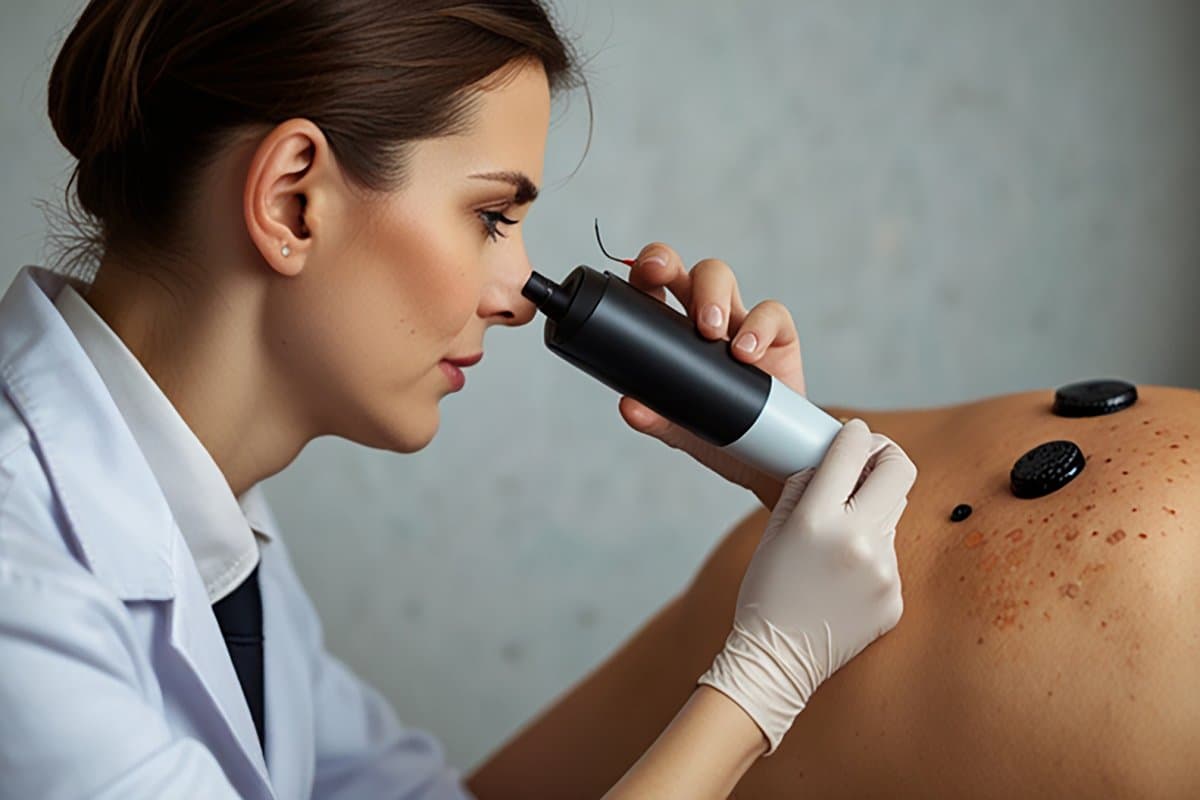
Diagnosen av Bowens sjukdom börjar vanligtvis med en klinisk undersökning av en dermatolog som känner igen den karakteristiska röda, fjällande fläcken. Dermatoskopi kan avslöja specifika mönster som glomerulära kärl arrangerade i kluster, vilket hjälper till att särskilja Bowens sjukdom från andra tillstånd. Men guldstandarden för diagnos är en hudbiopsi, där ett litet prov av den drabbade huden tas bort och undersöks under mikroskop.
Biopsin visar fulltjock epidermal dysplasi med atypiska keratinocyter genom hela epidermis men ett intakt basalmembran, vilket bekräftar att de onormala cellerna inte har invaderat djupare vävnader. Denna histologiska bekräftelse är viktig eftersom flera godartade och maligna tillstånd kan efterlikna den kliniska bilden av Bowens sjukdom.

Behandlingsalternativ
Flera effektiva behandlingar finns tillgängliga för Bowens sjukdom, och valet beror på storleken, platsen och antalet lesioner samt patientens allmänna hälsa. Topikala behandlingar såsom 5-fluorouracilkräm eller imiquimodkräm appliceras direkt på lesionen under flera veckor och verkar genom att förstöra de onormala cellerna samtidigt som normal hud skonas. Kryoterapi, som innebär att lesionen fryses med flytande kväve, är en snabb kontorsprocedur som är lämplig för mindre fläckar.
Fotodynamisk terapi använder en ljuskänslig kräm följt av exponering för en specifik våglängd av ljus för att förstöra de onormala cellerna och är särskilt användbar för större lesioner. Skrapning och kauterisering innebär att den påverkade huden skrapas bort och såret förseglas med värme. Kirurgisk excision kan rekommenderas för lesioner som är motståndskraftiga mot andra behandlingar eller där histologisk bekräftelse på fullständig borttagning önskas.

Förebyggande och övervakning
Förebyggande av Bowens sjukdom handlar om att minska kumulativ solskada genom konsekvent användning av bredspektrum solskydd, att bära skyddande kläder och hattar, samt att undvika långvarig sol exponering under peak UV-timmar. Personer med en historia av Bowens sjukdom bör ha regelbundna hudkontroller eftersom de har en ökad risk för att utveckla ytterligare lesioner samt andra former av hudcancer. Månatliga självundersökningar hjälper till att fånga nya eller återkommande fläckar tidigt, och varje ihållande röd eller fjällande fläck som inte svarar på fuktighetskrämer eller topikala behandlingar bör utvärderas av en dermatolog. Skinscanner kan hjälpa dig att övervaka din hud för nya eller föränderliga lesioner över tid, vilket gör det lättare att upptäcka tidiga tecken på tillstånd som Bowens sjukdom och uppmanar dig att söka snabb professionell utvärdering.