
What Are Skin Tags?
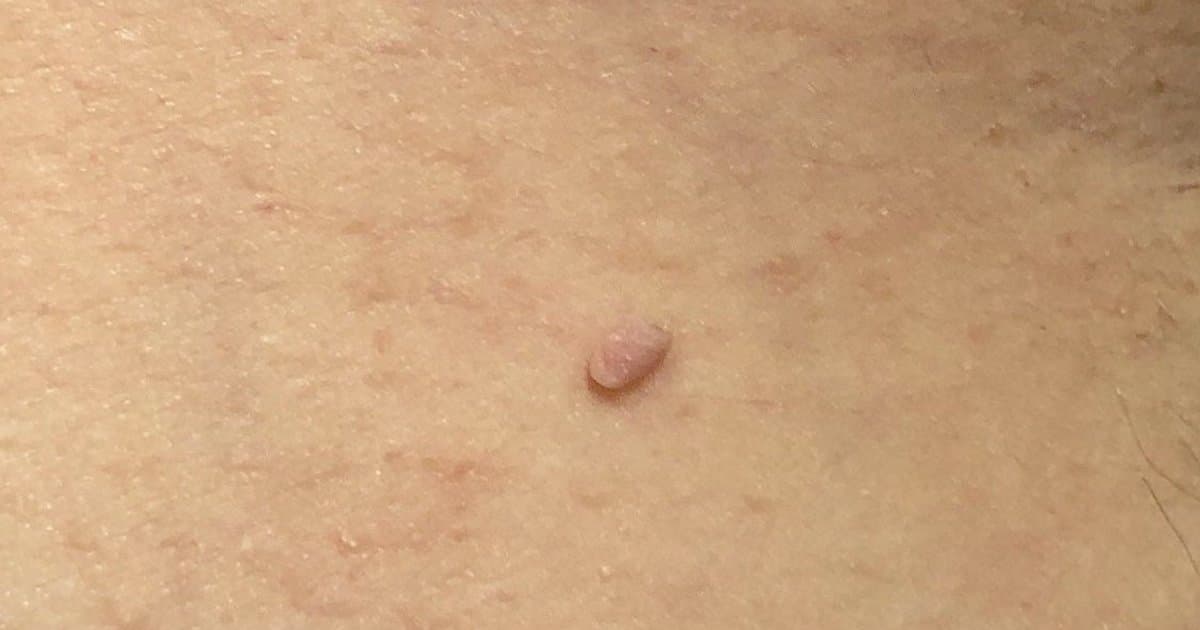
Skin tags — medically known as acrochordons, fibroepithelial polyps, or soft fibromas — are small, soft, pedunculated (attached by a narrow stalk or peduncle) benign growths that hang from the skin surface. They are one of the most common skin conditions in adults, affecting an estimated 46 percent of the general population, with prevalence increasing with age. Skin tags typically range from one to five millimeters in diameter, though they can occasionally grow larger, reaching one to two centimeters or more.
They are soft to the touch, flesh-colored to slightly darker than the surrounding skin, and hang from the surface by a thin stalk of tissue. Some skin tags are so small they resemble tiny raised bumps, while others dangle visibly and can be grasped between the fingers. The characteristic locations for skin tags are areas of skin friction and flexural zones — the neck, axillae (armpits), inframammary folds (under the breasts), groin and inguinal folds, eyelids, and buttock folds.
These locations share the common features of warmth, moisture, and skin-on-skin or skin-on-clothing friction. Skin tags are entirely benign — they have no malignant potential and will never transform into skin cancer. They are a purely cosmetic and occasionally functional concern, causing irritation when caught on jewelry, clothing, or seatbelts. Despite their harmless nature, skin tags are one of the most frequent reasons patients visit dermatology offices, driven by cosmetic concerns and occasionally by mistaken worry about cancer.

What Causes Skin Tags and the Insulin Resistance Connection
Skin tag formation results from an interplay of mechanical friction, metabolic factors, genetic predisposition, and hormonal influences. Chronic friction between opposing skin surfaces is the most directly observable trigger — this explains the consistent predilection for skin folds and flexural areas. The repeated mechanical irritation stimulates fibroblast proliferation and loose connective tissue accumulation, forming the soft, polypoid growth.
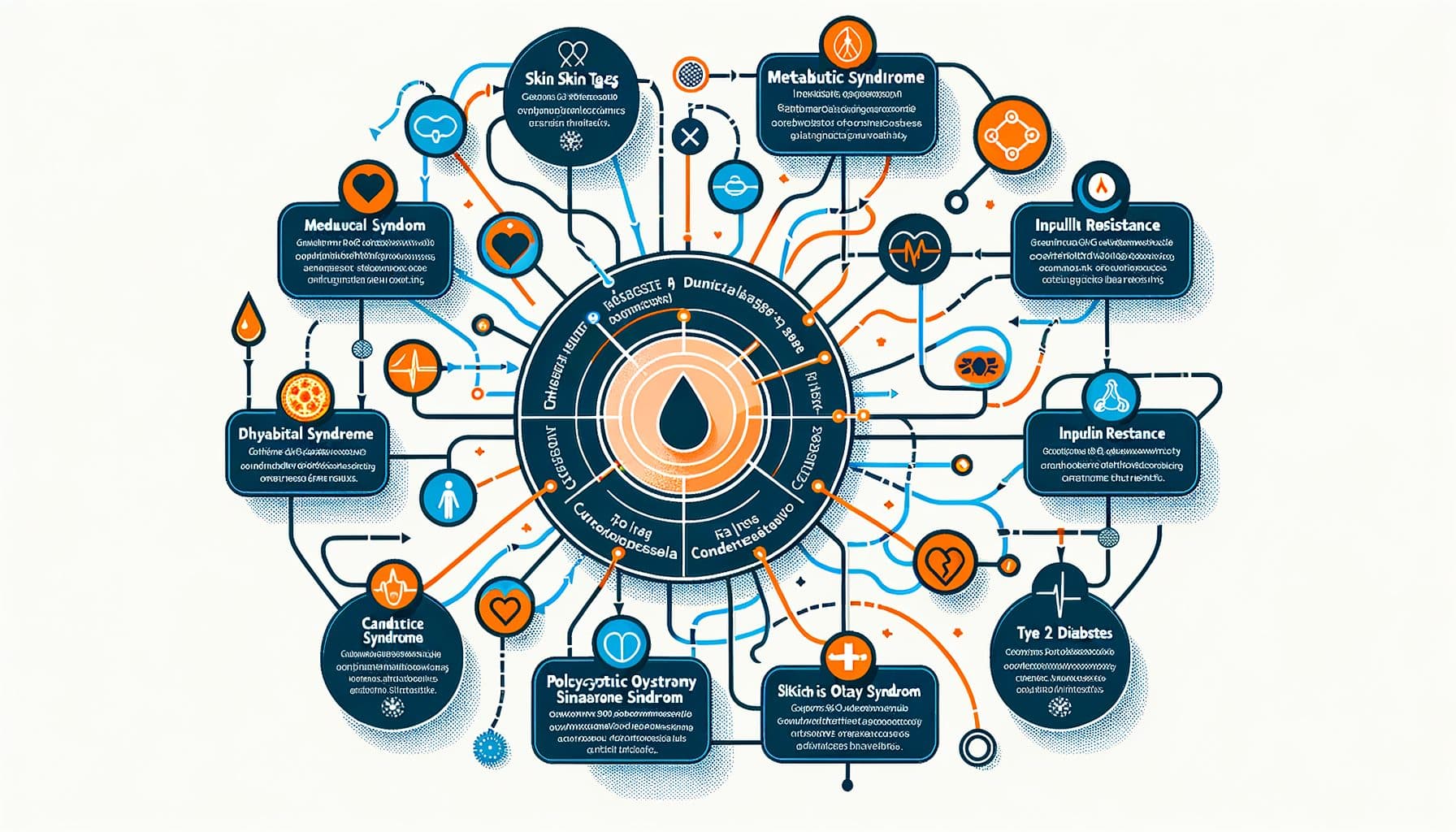
However, friction alone does not explain why some individuals develop numerous skin tags while others in similar physical circumstances develop none. The association between skin tags and insulin resistance is one of the most clinically significant findings in dermatology's contribution to systemic health screening. Multiple studies have demonstrated a strong correlation between the number of skin tags and the presence of insulin resistance, prediabetes, type 2 diabetes mellitus, and metabolic syndrome.
Insulin is a growth factor that stimulates fibroblast proliferation and epidermal growth — elevated insulin levels (hyperinsulinemia), even before blood glucose becomes abnormal, promote skin tag formation. Studies have found that patients with multiple skin tags have significantly higher fasting insulin levels, higher HOMA-IR (a measure of insulin resistance), and a higher prevalence of impaired glucose tolerance compared to age-matched controls without skin tags. The clinical implication is significant: the development of multiple skin tags, particularly in younger adults, should prompt screening for metabolic abnormalities including fasting glucose, hemoglobin A1c, fasting insulin, and lipid panel.!!
Obesity is independently associated with skin tag development, likely through both increased skin friction and the metabolic consequences of excess adiposity. Pregnancy increases skin tag development through hormonal changes, weight gain, and increased skin friction. Genetic factors determine individual susceptibility, with skin tags often clustering in families.

Skin Tags vs. Other Hanging Growths
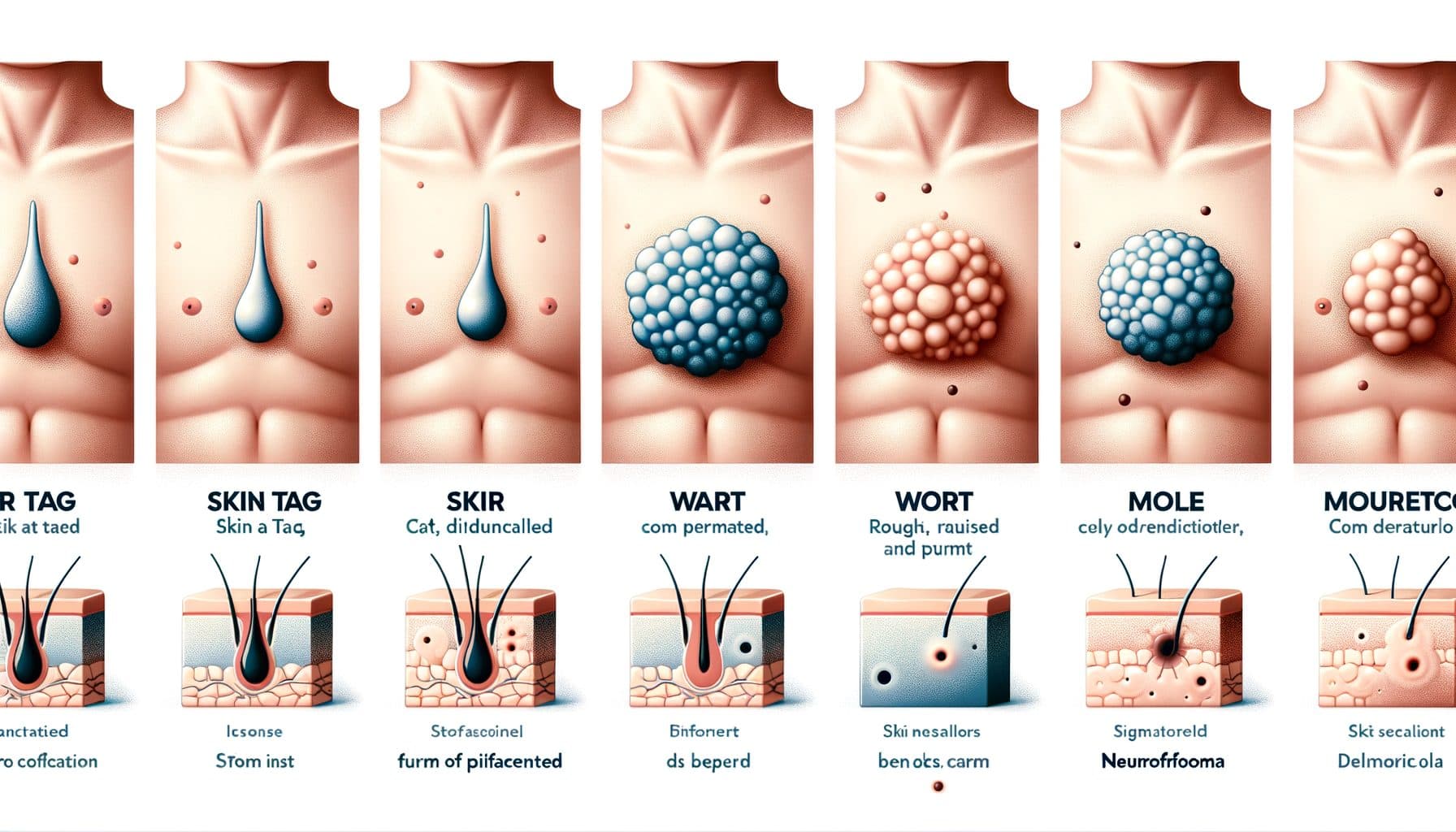
While skin tags are the most common cause of small, hanging skin growths, several other conditions can mimic their appearance and deserve recognition. Seborrheic keratoses can develop a pedunculated (stalked) morphology, particularly in flexural areas, closely resembling skin tags. However, seborrheic keratoses tend to have a rougher, more warty surface texture and may show the characteristic stuck-on waxy appearance and horn cysts that distinguish them from the smooth, soft consistency of skin tags.
Neurofibromas are benign nerve sheath tumors that can present as soft, pedunculated, skin-colored growths anywhere on the body. Solitary neurofibromas are common and harmless, but multiple neurofibromas — particularly if accompanied by cafe-au-lait spots — may indicate neurofibromatosis type 1, a genetic condition requiring ongoing medical surveillance. The buttonhole sign, where a neurofibroma can be invaginated into the skin with finger pressure, helps distinguish it from a skin tag.
Filiform warts are narrow, elongated viral warts caused by human papillomavirus (HPV) that can resemble skin tags, particularly on the face and neck. They have a rougher, more finger-like projection compared to the smooth stalk and bulbous tip of a skin tag. Molluscum pendulum is essentially another term for a skin tag.
Accessory nipples (supernumerary nipples) along the milk line can occasionally be confused with skin tags in the axillary or trunk region. Basal cell carcinoma, although typically presenting as a pearly nodule, can very rarely develop a pedunculated morphology. Any supposed skin tag with atypical features — particularly firmness, ulceration, rapid growth, or bleeding — should be biopsied rather than assumed benign.!!
Associated Health Conditions
Beyond the well-established insulin resistance connection, skin tags have been associated with several other health conditions that make them clinically relevant beyond their cosmetic impact. Metabolic syndrome — defined by the co-occurrence of central obesity, dyslipidemia, hypertension, and impaired glucose metabolism — is strongly associated with multiple skin tags. Studies have found that patients with skin tags have a significantly higher prevalence of all components of metabolic syndrome compared to controls.
This association is clinically actionable because metabolic syndrome dramatically increases cardiovascular risk, and skin tags can serve as a visible, easily identifiable marker prompting metabolic screening. Polycystic ovary syndrome (PCOS) in women is associated with skin tags through the shared mechanism of insulin resistance and hyperandrogenism. Women developing skin tags alongside other signs of androgen excess — acne, hirsutism, irregular menstruation — should be evaluated for PCOS.
Dyslipidemia (abnormal cholesterol and triglyceride levels) has been independently associated with skin tags in several studies, further reinforcing the metabolic connection. Acanthosis nigricans — velvety, darkened patches of skin in body folds, another cutaneous marker of insulin resistance — frequently coexists with skin tags in the same patients, and the combination is a strong clinical indicator of hyperinsulinemia. The association between skin tags and colonic polyps was proposed in early studies but has not been consistently supported by subsequent research, and routine colonoscopy screening based solely on skin tags is not currently recommended. Human papillomavirus (HPV) DNA has been detected in some skin tags, but its causal role remains uncertain — HPV may be an incidental finding rather than a causative factor.
Safe Removal Options
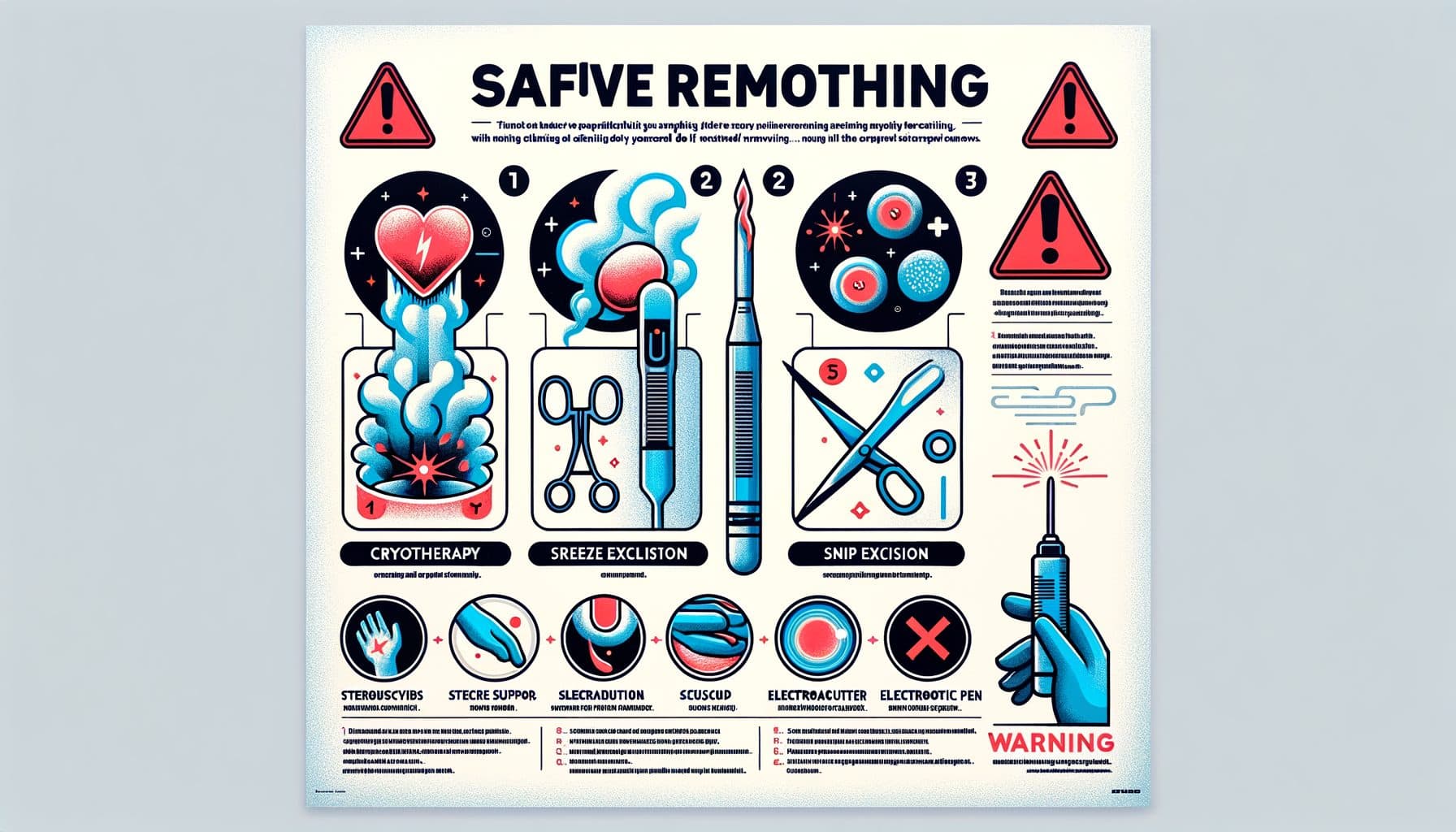
Skin tag removal is a straightforward procedure with multiple effective approaches, but it should be performed by a healthcare professional rather than attempted at home. Snip excision (scissor excision) is the most common and efficient method for small skin tags. The tag is grasped with forceps and cut at the base of the stalk with fine scissors or a scalpel blade.
For very small tags, anesthesia may not be needed; for larger ones, a small injection of local anesthetic numbs the area. Hemostasis is achieved with aluminum chloride solution, silver nitrate, or light electrocautery if needed. This quick, effective procedure removes the tag completely with minimal discomfort and excellent cosmetic results.
Cryotherapy with liquid nitrogen freezes and destroys the skin tag, which then falls off within one to two weeks. Cryotherapy is efficient for multiple small tags but may cause temporary stinging and can leave hypopigmented marks, particularly in darker skin tones. Electrocautery (electrodesiccation) uses a fine electrical probe to burn the skin tag at its base, coagulating the blood supply and causing the tag to desiccate and fall off.
This method provides simultaneous hemostasis and is effective for medium-sized tags. Ligation involves tying a fine suture or thread tightly around the base of the skin tag, cutting off its blood supply and causing it to necrose and fall off over several days. Home removal methods widely circulated on the internet — tying string around skin tags, cutting with scissors, applying apple cider vinegar or tea tree oil — are strongly discouraged due to risks of incomplete removal, infection, scarring, and bleeding.
More importantly, self-removal means the tissue is not examined pathologically, potentially missing a rare mimicking condition. Insurance coverage for skin tag removal varies — medical indications such as symptomatic, irritated, or bleeding tags are more likely to be covered than purely cosmetic removal.
How AI Skin Analysis Can Help
When you notice a new growth hanging from your skin, your first question is naturally whether it is harmless. Skinscanner provides immediate AI-powered analysis when you photograph a pedunculated skin growth, evaluating its characteristics — soft versus firm, smooth versus rough surface, narrow versus broad stalk, location in a typical friction area — to determine whether it matches the classic presentation of a benign skin tag or shows features suggesting a different diagnosis. This is particularly useful for distinguishing skin tags from filiform warts, pedunculated seborrheic keratoses, neurofibromas, and other hanging growths that may require different management approaches.
For individuals developing multiple skin tags, Skinscanner serves as a prompt to consider the metabolic implications — the app can provide educational information about the insulin resistance connection and suggest appropriate health screening discussions with your physician. This systemic health perspective makes skin tags more than a cosmetic issue and underscores the value of paying attention to your body's visible signals. Tracking skin tag development over time through regular scanning can help document whether new tags are appearing, which may correlate with metabolic changes. Skinscanner does not replace professional evaluation — any skin growth with atypical features should be examined and potentially biopsied — but it provides accessible, immediate guidance for the common scenario of evaluating a new hanging growth on your skin.