
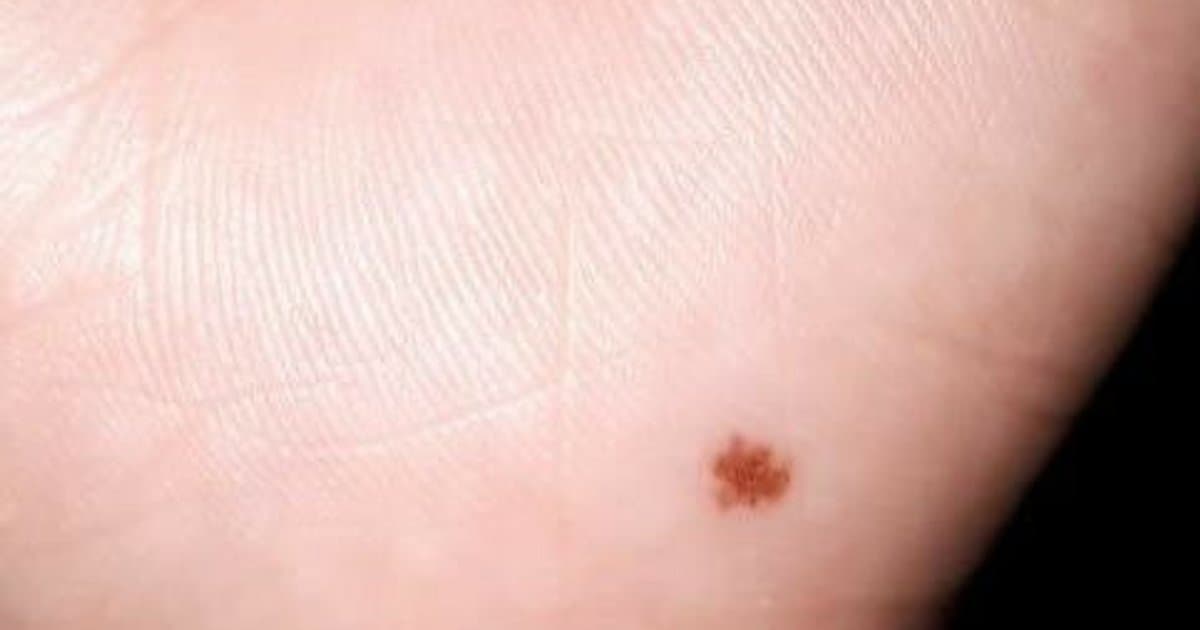
Qu'est-ce qu'un Névus Acral ?
Un névus acral est un névus mélanocytaire (grain de beauté) situé sur les sites acrals du corps — les paumes des mains, les plantes des pieds et l'appareil unguéal (zones sous-unguéales et péri-unguéales). Ces emplacements sont collectivement appelés acrals car ils représentent les extrémités ou les parties terminales des membres. Les nævi acrals méritent une attention particulière en dermatologie non pas parce qu'ils sont intrinsèquement plus dangereux que les grains de beauté ailleurs, mais parce que les grains de beauté à ces emplacements ont une apparence fondamentalement différente de ceux sur d'autres sites corporels en raison de l'anatomie unique de la peau acrale — et parce que le mélanome acral, le cancer dangereux qui peut survenir dans ces zones, est de manière disproportionnée agressif et fréquemment diagnostiqué à des stades avancés.
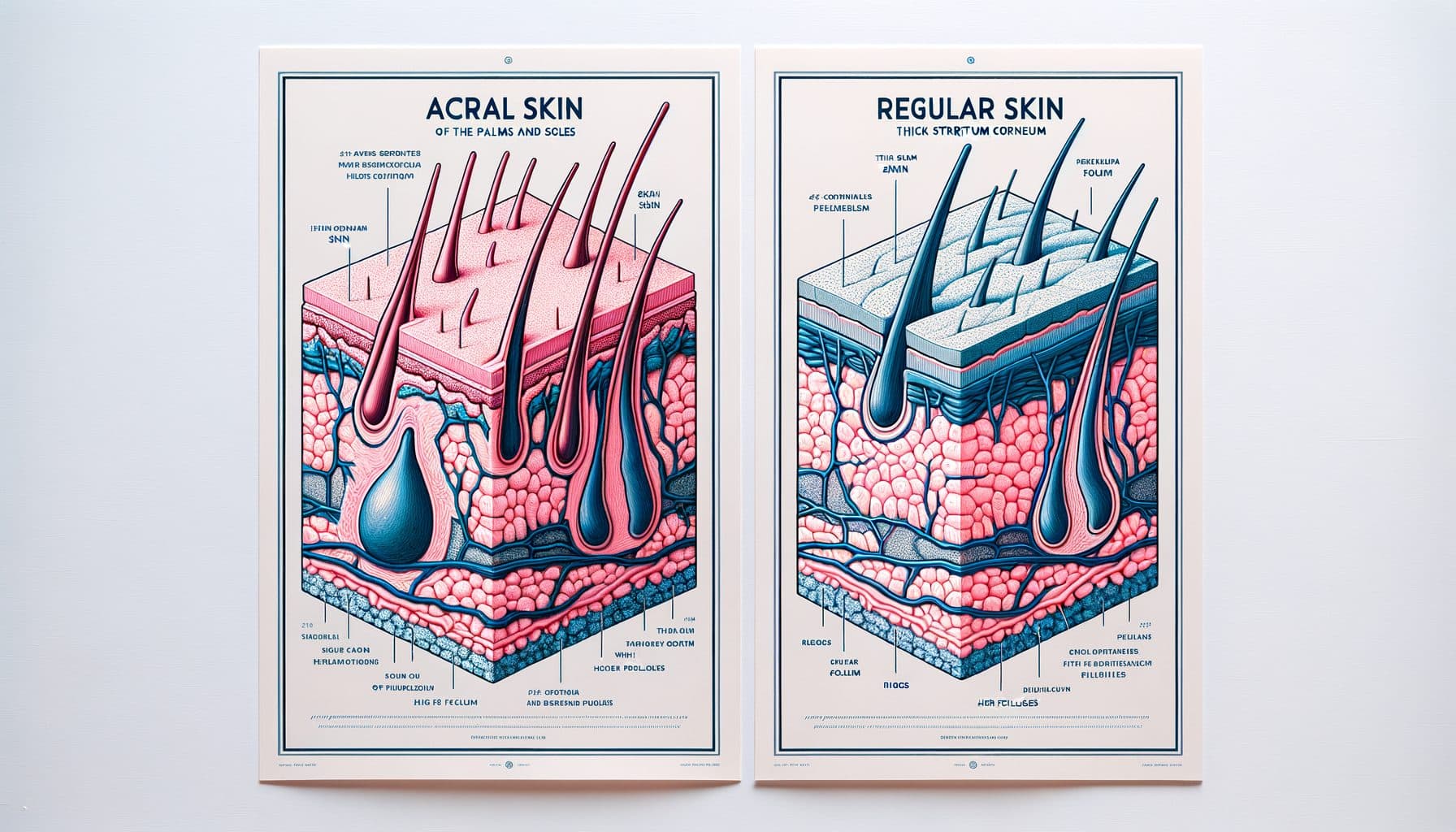
La peau acrale, également connue sous le nom de peau glabre (peau sans poils), a une structure nettement différente de la peau poilue qui recouvre la majeure partie du corps. Elle se caractérise par une épiderme beaucoup plus épaisse, la présence de crêtes et de sillons distinctifs (dermatoglyphes — empreintes digitales et empreintes de pieds), l'absence de follicules pileux et de glandes sébacées, et une densité plus élevée de glandes sudoripares eccrines. Ces différences anatomiques affectent profondément l'apparence des lésions mélanocytaires à ces emplacements, créant des motifs qui peuvent être mal interprétés par des cliniciens peu familiers avec la dermoscopie acrale.
Les nævi acrals sont courants, en particulier chez les individus ayant une peau plus foncée — des études ont trouvé des nævi plantaires chez jusqu'à 20 % de certaines populations. La plupart sont entièrement bénins, mais leur importance clinique réside dans la nécessité de les distinguer de manière fiable du mélanome acral, qui a un pronostic moins favorable que le mélanome sur d'autres sites en partie à cause d'un diagnostic tardif.

Pourquoi les Grains de Beauté Acrals Ont une Apparence Différente
L'apparence distinctive des nævi acrals résulte de l'architecture unique de la peau glabre. Contrairement à la peau poilue, où la surface de la peau est relativement plate et sans caractéristiques, la peau acrale est organisée en crêtes alternées (sulci) et en sillons (sulci limitantes) qui forment les motifs dermatoglyphiques que nous connaissons sous le nom d'empreintes digitales et d'empreintes de pieds. Les canaux sudoripares eccrins s'ouvrent sur le sommet des crêtes, tandis que la crista limitans (la crête anatomique du derme) sous-tend le sillon de surface.
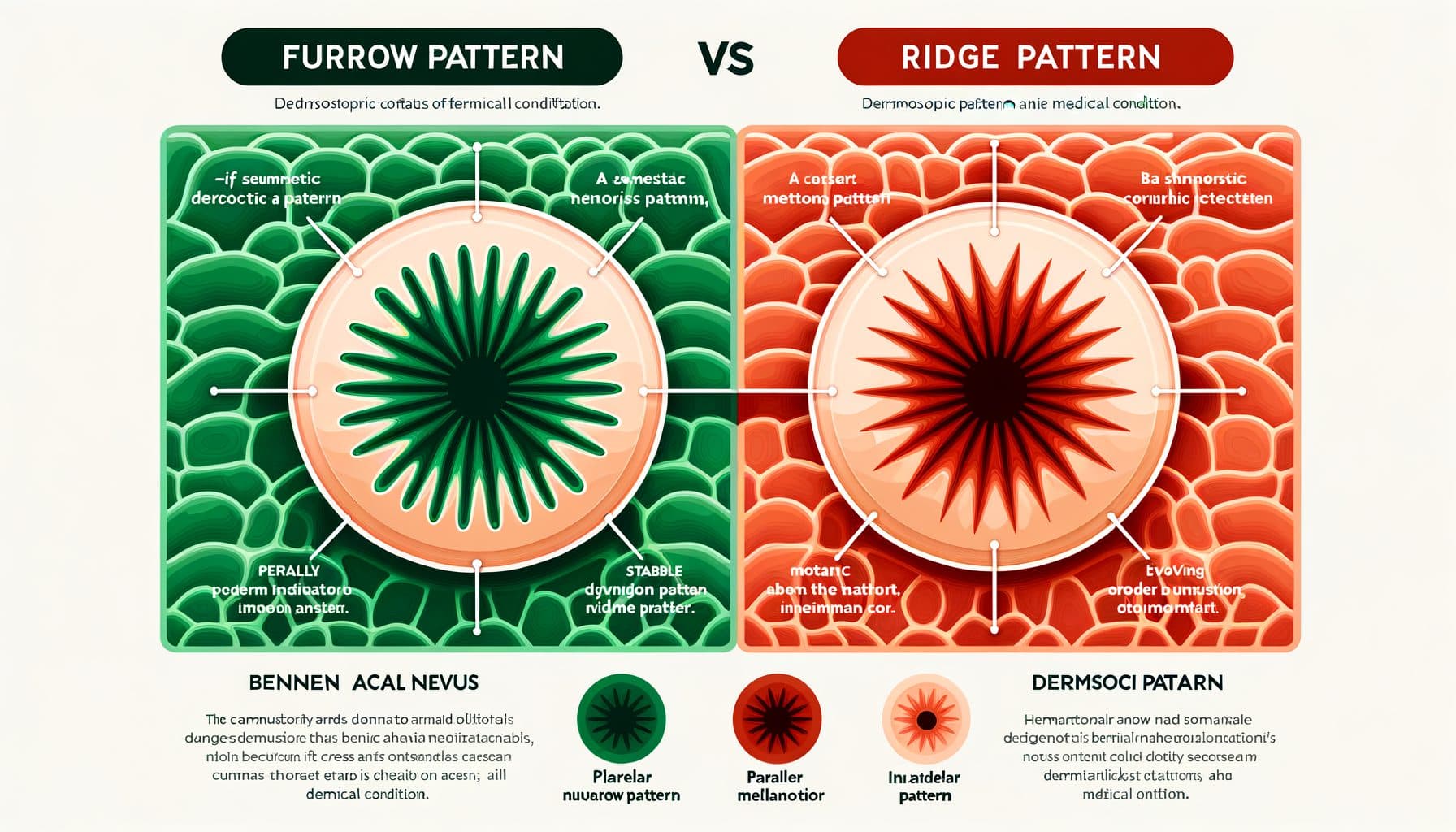
Cette organisation topographique signifie que les mélanocytes au sein des nævi acrals sont distribués le long de ces crêtes et sillons selon des motifs spécifiques qui n'ont pas d'équivalent sur la peau poilue. En dermoscopie — la technique d'examen agrandi essentielle pour évaluer les lésions pigmentées — les nævi acrals affichent des motifs distinctifs non observés sur d'autres sites corporels. Le motif de sillon parallèle est le motif bénin le plus courant, dans lequel la pigmentation suit les sillons (sulci) des dermatoglyphes, apparaissant sous forme de lignes parallèles de pigment qui s'alignent avec les marquages cutanés.
Les variantes incluent le motif en treillis, où les lignes de pigment traversent les crêtes, et le motif fibrillaire, où de fines lignes obliques donnent une apparence striée, le plus souvent observée sur les zones de port de poids de la plante. Le motif à points de crista montre des points de pigment le long des crêtes (cristae). Ces motifs bénins reflètent la distribution normale des mélanocytes au sein de l'architecture de la peau acrale. Comprendre ces motifs est essentiel car le motif malin équivalent — le motif de crête parallèle, où le pigment suit les crêtes plutôt que les sillons — est l'indicateur dermoscopique principal du mélanome acral.
Névus Acral vs. Mélanome Acral
Distinguer les nævus acraux bénins du mélanome acral est l'une des tâches les plus importantes — et les plus difficiles — en dermatologie clinique. Le mélanome acral (mélanome lentigineux acral, ou MLA) représente environ deux à trois pour cent de tous les mélanomes dans les populations caucasiennes, mais représente une proportion beaucoup plus élevée — jusqu'à 60 à 70 pour cent — des mélanomes chez les individus d'ascendance africaine, asiatique et hispanique. Cette disparité fait du mélanome acral un problème significatif d'équité en santé.
Le mélanome acral a un pronostic moins favorable que le mélanome à d'autres sites, en grande partie à cause d'un diagnostic tardif — l'épaisseur moyenne de Breslow au moment du diagnostic est significativement plus grande pour le mélanome acral que pour le mélanome sur une peau exposée au soleil. Plusieurs facteurs contribuent à ce retard : les paumes et les plantes des pieds ne sont pas systématiquement examinées lors des auto-examens cutanés, le mélanome des ongles est souvent confondu avec une infection fongique ou un traumatisme, les individus à peau plus foncée peuvent ne pas se percevoir comme à risque de mélanome, et les prestataires de soins de santé peuvent être moins familiers avec le mélanome dans ces localisations. Cliniquement, les caractéristiques qui devraient susciter des inquiétudes pour le mélanome acral incluent une lésion pigmentée de plus de sept millimètres sur la paume ou la plante, une forme asymétrique, des bords irréguliers ou flous, une variation de couleur incluant des composants bruns, noirs, bleus ou rouges, et un changement ou une évolution récente.
Pour le mélanome des ongles spécifiquement, le signe de Hutchinson — pigment s'étendant de l'ongle sur la peau environnante (extension périunguale) — est un signe d'alerte important. En dermoscopie, le motif de crête parallèle — où le pigment suit les crêtes des dermatoglyphes plutôt que les sillons — est très spécifique au mélanome acral et est la caractéristique dermoscopique la plus importante à évaluer. Toute lésion acrale pigmentée affichant un motif de crête parallèle doit être biopsiée rapidement.!!
Grains de Beauté des Ongles : Le Névus Sous-Ungéal
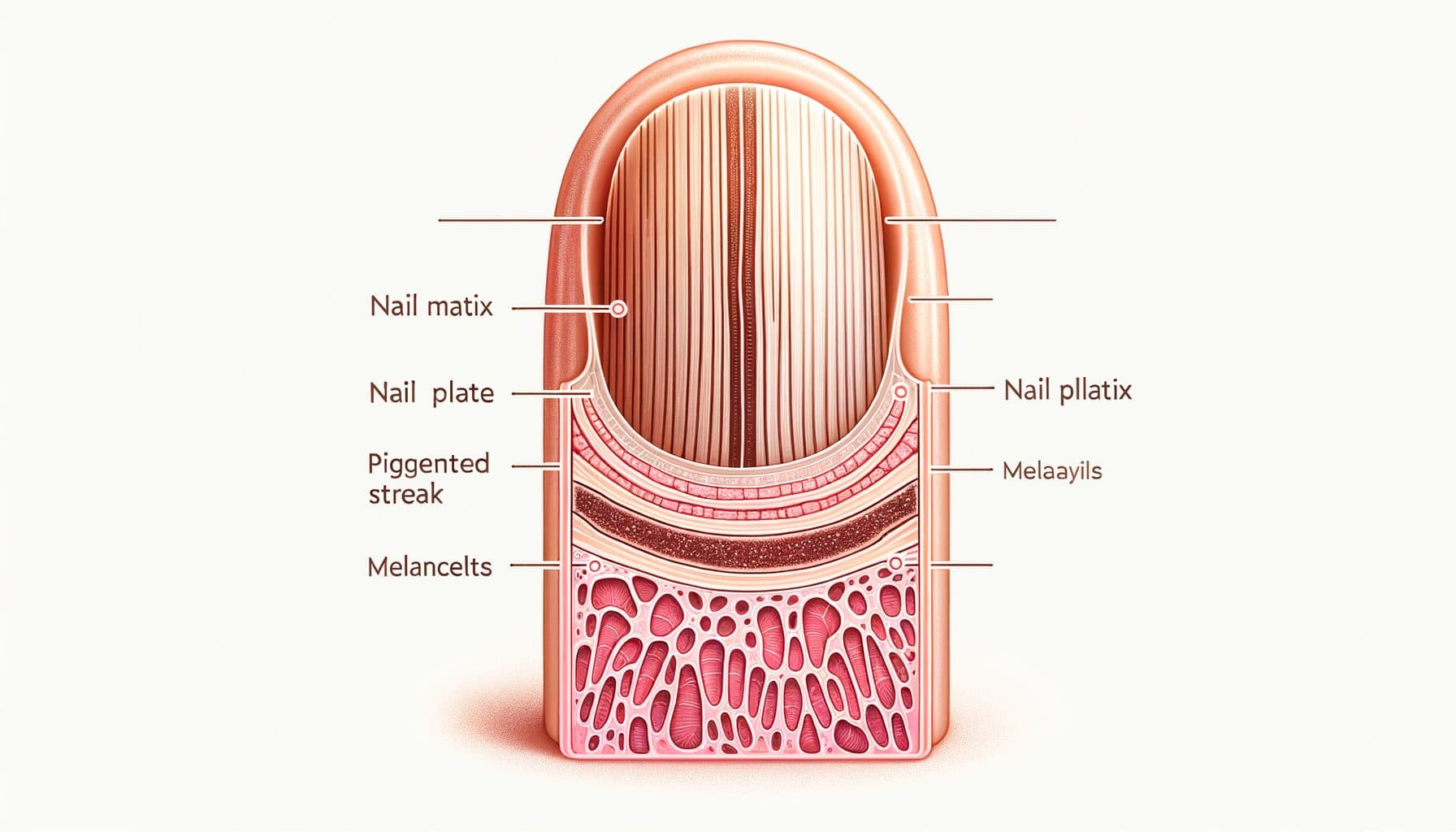
Les nævus mélanocytaires peuvent apparaître dans la matrice de l'ongle — le tissu en forme de croissant à la base de l'ongle à partir duquel la plaque de l'ongle pousse — produisant une bande longitudinale de pigmentation dans l'ongle appelée mélanonychie striée (mélanonychie longitudinale). Cela se présente sous la forme d'une bande brune ou brun-noire courant sur toute la longueur de l'ongle, de la base au bord libre. La mélanonychie longitudinale est la présentation clinique qui crée le plus d'anxiété diagnostique car elle peut représenter un nævus ungué, un mélanome ungué, ou plusieurs autres conditions incluant la mélanonychie ethnique (pigmentation normale chez les individus à peau plus foncée), la pigmentation induite par des médicaments, une infection fongique, ou un hématome sous-unguéal.
Chez les adultes d'ascendance africaine, la mélanonychie longitudinale est très courante et représente généralement une activation mélanocytaire normale — elle touche pratiquement tous les adultes afro-américains d'ici l'âge de 50 ans et plusieurs ongles sont généralement impliqués. Chez les adultes caucasiens, la mélanonychie longitudinale est moins courante et suscite plus fréquemment des inquiétudes pour un mélanome. Les caractéristiques suggérant un nævus ungué bénin incluent une bande étroite (moins de trois millimètres), uniforme, à bords parallèles de couleur marron homogène, survenant chez un enfant ou un jeune adulte, stable dans le temps.
Les caractéristiques soulevant des inquiétudes pour un mélanome ungué incluent une bande large (plus de trois millimètres) ou s'élargissant, des bords latéraux irréguliers ou flous, une hétérogénéité de couleur dans la bande (zones brunes, noires, grises), le signe de Hutchinson (extension de pigment périunguale), la dystrophie de la plaque unguéale (craquelures, fissures, amincissement), et survenant dans un seul doigt d'un adulte plus âgé. Le pouce, l'index et le gros orteil sont les doigts les plus souvent affectés par le mélanome ungué. Toute nouvelle ou changeante mélanonychie longitudinale chez un adulte doit être évaluée par un dermatologue expérimenté en dermoscopie unguéale.!! La biopsie de la matrice de l'ongle est parfois nécessaire pour un diagnostic définitif.
Évaluation et gestion des lésions pigmentées acrales
Étant donné les défis d'évaluation des lésions pigmentées sur la peau acrale, une approche systématique est essentielle. L'évaluation clinique commence par noter la localisation, la taille, la forme, la couleur, les caractéristiques des bords et l'historique de la lésion. Les critères ABCDE utilisés pour évaluer les grains de beauté ailleurs s'appliquent aux lésions acrales mais avec des modifications — le seuil de préoccupation devrait être plus bas étant donné les enjeux plus élevés d'un diagnostic tardif.
La dermoscopie est indispensable pour l'évaluation des lésions acrales et nécessite une formation spécifique sur les motifs dermoscopiques acrales. L'algorithme en trois étapes pour la dermoscopie acrale fournit une approche structurée : d'abord, déterminer si la lésion présente un motif bénin reconnaissable (sillon parallèle, en treillis, fibrillaire ou ponctué de crista); ensuite, si aucun motif bénin n'est identifié, vérifier le motif de crête parallèle (suggérant un mélanome); enfin, si le motif est indéterminé, envisager une biopsie ou un suivi rapproché avec dermoscopie en série. Une biopsie est recommandée pour toute lésion acrale avec un motif de crête parallèle, toute lésion avec des caractéristiques atypiques ne correspondant pas à un motif bénin reconnu, toute lésion qui change de taille, de forme ou de couleur, toute lésion pigmentée de plus de sept millimètres, et toute lésion suscitant des inquiétudes cliniques, indépendamment des résultats dermoscopiques.
La biopsie excisionnelle est préférée à la biopsie partielle pour une évaluation histopathologique précise. Pour les nævi acraux bénins confirmés, une surveillance routinière est appropriée avec une évaluation clinique et dermoscopique à des intervalles déterminés par le profil de risque individuel. Les patients doivent être informés sur ce qu'il faut surveiller — changements de taille, de forme, de couleur ou nouveaux symptômes — et l'importance d'inclure les paumes, les plantes des pieds, entre les orteils et les ongles dans les auto-examens cutanés.

Comment l'analyse de la peau par IA peut aider
Les grains de beauté sur les paumes, les plantes des pieds et les ongles sont parmi les découvertes cutanées les plus anxiogènes en raison de leur association avec le mélanome acral et de la prise de conscience générale que le mélanome dans ces zones est souvent diagnostiqué tard. Skinscanner fournit une analyse immédiate pilotée par IA lorsque vous photographiez une lésion pigmentée sur la peau acrale, évaluant ses caractéristiques visuelles, y compris la taille, la forme, la régularité des bords, l'homogénéité de la couleur et la symétrie. L'IA a été formée pour reconnaître les motifs associés aux nævi acraux bénins et pour signaler les caractéristiques qui soulèvent des préoccupations pour le mélanome acral, aidant à combler le fossé entre le fait de remarquer une tache et d'obtenir une évaluation professionnelle.
Cela est particulièrement précieux car beaucoup de gens n'incluent pas leurs paumes, leurs plantes des pieds et leurs ongles dans les auto-examens cutanés de routine, et lorsqu'ils découvrent une lésion pigmentée dans ces zones, l'apparence inhabituelle (comparée aux grains de beauté ailleurs) peut susciter une inquiétude disproportionnée. Skinscanner aide à fournir un contexte informé sur les lésions pigmentées acrales, expliquant pourquoi les grains de beauté dans ces endroits ont une apparence différente et quelles caractéristiques justifient une préoccupation par rapport à une rassurance. Pour les individus surveillant des nævi acraux existants, la photographie en série via l'application permet de suivre tout changement au fil du temps — le facteur le plus important pour identifier une lésion qui pourrait évoluer d'une nature bénigne à maligne.
Skinscanner ne remplace pas l'évaluation dermoscopique par un clinicien formé en dermoscopie acrale — la distinction entre les motifs de sillon parallèle et de crête parallèle nécessite un examen agrandi au-delà de la photographie standard. Mais pour une évaluation initiale et une surveillance continue, Skinscanner fournit une première étape accessible et immédiate vers une santé cutanée acrale proactive.