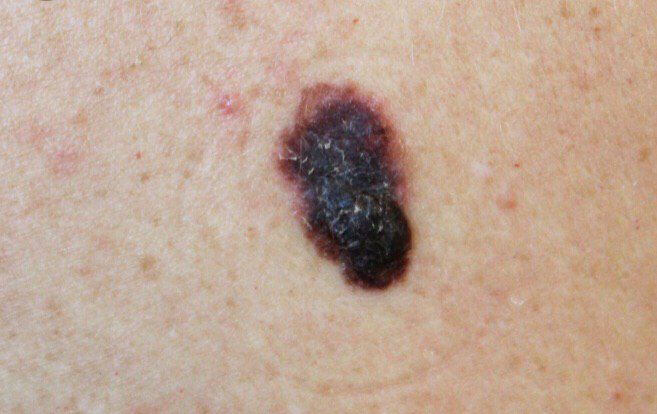
Melanoma develops when melanocytes accumulate genetic damage and turn malignant, most often under the influence of ultraviolet radiation and inherited susceptibility. In many people, no single clear cause can be identified, but a mix of UV exposure, skin type, and genetics plays a role.
The main risk factors for melanoma are intense or repeated UV exposure, fair skin that burns easily, many or atypical moles, a personal or family history of melanoma, and older age. Darker skin is somewhat protected, but acral and subungual melanomas still occur and are often found later.
The main treatment for melanoma is surgical removal with a safety margin of normal skin around the tumor. If lymph nodes or distant organs are involved, treatment may also include lymph node surgery, immunotherapy, targeted therapy, chemotherapy, and/or radiation, chosen by an oncologist based on stage.