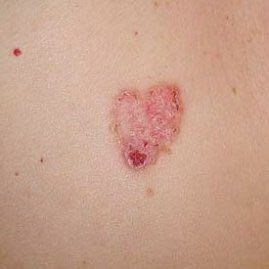
Walang isang malinaw na sanhi ng Bowen disease, ngunit ang pangmatagalang pagkakalantad sa araw, radiation, ilang kemikal, talamak na pinsala sa balat, ilang bihirang sakit sa balat, at posibleng human papillomavirus (HPV) ay lahat ay nagpapataas ng panganib. Karaniwang ilang mga salik na ito ang kumikilos nang magkasama sa loob ng maraming taon.
Ang Bowen disease mismo ay hindi nagme-metastasize dahil ito ay nakulong sa ibabaw na layer ng balat, ngunit maaari itong maging invasive squamous cell carcinoma kung hindi magagamot. Ang mga taong may Bowen disease ay may mas mataas na tsansa na magkaroon ng iba pang mga kanser sa balat, kaya mahalaga ang pangmatagalang pagmamanman.
Ang pangunahing paggamot para sa Bowen disease ay ang ganap na pagtanggal ng sugat, karaniwang sa pamamagitan ng surgical excision na may safety margin ng normal na balat. Sa ilang mga kaso, lalo na para sa mas maliliit na sugat o kung saan mahirap ang operasyon, maingat na pinlanong radiotherapy o iba pang lokal na paggamot ay maaaring gamitin sa ilalim ng patnubay ng espesyalista.
Maaari mong bawasan ang iyong panganib ng Bowen disease at ang pag-unlad nito sa pamamagitan ng pagprotekta sa iyong balat mula sa UV, pag-iwas sa talamak na pinsala sa balat at mapanganib na mga kemikal, at pagsunod sa mga patakaran sa kaligtasan sa trabaho. Regular na self-checks, gamit ang mga tool tulad ng aming AI skin analysis, at napapanahong pagbisita sa dermatologist para sa mga nagbabagong spot ay susi.
Kailan Dapat Magpatingin sa Doktor?
Kung mapansin mo ang isang matagal na pula, kaliskis na patch o plaka na mabagal na lumalaki at hindi gumagaling, dapat kang magpatingin sa isang dermatologist o oncologist para sa isang personal na pagsusuri at posibleng biopsy. Ang aming AI skin analysis ay kapaki-pakinabang para sa pagmamanman, ngunit tanging doktor lamang ang makakapagkumpirma ng Bowen disease at makakapaggamot nito nang maayos.
Ang Bowen disease ay hindi isang emergency, ngunit dapat itong masuri at gamutin ng isang dermatologist o oncologist sa loob ng mga linggo hanggang ilang buwan upang maiwasan ang pag-unlad sa invasive skin cancer.