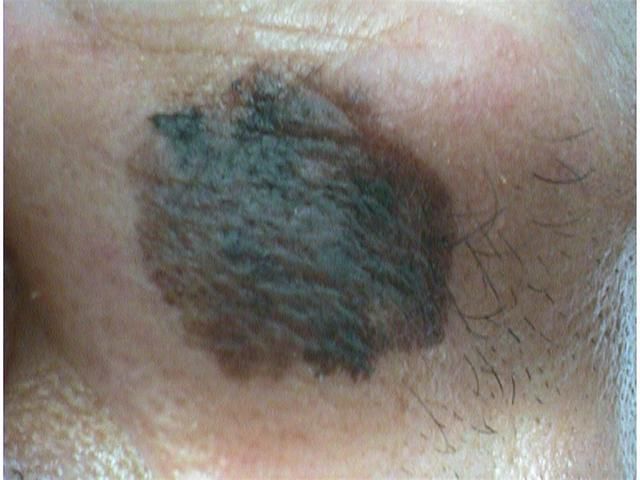
Lentigo melanom stavar mest frá langvarandi uppsavnaðum sólskaða á húðini, serliga í andlitinum, sum leiðir til illkynja broyting í pigmentkyknum innan eini verandi blett, kallað lentigo maligna. Arvalig tilhoyr, ljós húð, og minkað antitumor immunitetur spæla eisini ein leiklut í, hvør fær hetta slag av melanom.
Lentigo melanom hevur stóran vanda fyri lokalari endurtøku og útbreiðslu til lymfuknútur og innaru organir, tá tað fer djúpari inn í húðløgini. Vandinn er størri hjá eldri, ljós húðaðum fólki við stórari lívslangari sólútseting, søgu um sólbruna, ella fyrrverandi melanom.
Høvuðsviðgerðin fyri lentigo melanom er víðkað skurðviðgerð við trygdarmarginum, stundum saman við lymfuknút viðgerð, um útbreiðsla er illgrunasom. Í meira framkomnum førum kunnu eyka viðgerðir sum immunterapi, málrættað viðgerð, kemoterapi, ella stráling verða nýttar, meðan lokal destruktiv metodur sum laser ella frysting ikki eru hóskandi fyri hetta krabbameinið.
Tú kanst minka um vandan fyri lentigo melanom við at verja húðina móti langvarandi sólskaða, sleppa undan sólbrunum, og minka um króniska irritation av pigmenteraðum blettum. Regluligar sjálvkanningar, vanlig nýtsla av okkara AI húðgreining, og tíðilig vitjan hjá húðlækna fyri nakra broytandi lesion eru lykilin til tíðliga upptøku.
Allur illgruni um lentigo melanom skal verða mettur av húðlækna ella onkolog sum skjótast, ideelt innan fáar dagar til eina viku. Okkara AI húðgreining er nyttug til vanligt eftirlit, men kann ikki avloysa eina persónliga kanning, dermatoskopi, og biopsi, tá melanom er ein møguleiki.
Møguligt lentigo melanom skal verða viðgjørt sum bráðfeingis: skipa fyri eini persónligari vitjan hjá húðlækna ella onkolog innan fáar dagar til, í mesta lagi, 1-2 vikur, og beinanvegin um tað er bløðing, sáring, ella skjótt broytandi litur ella stødd.