

Why Men's Skin Is Different
Men's skin is structurally and hormonally distinct from women's skin in several important ways. Testosterone drives higher sebum production, making male skin roughly 20 percent oilier on average. The dermis is about 25 percent thicker, which gives it more collagen density and a firmer texture but also means products need to penetrate a more robust barrier.
Men have larger pores, particularly across the nose, forehead, and cheeks, which makes them more prone to blackheads and congestion. Daily shaving introduces another variable entirely: the repeated act of dragging a blade across the face removes the outermost layer of skin cells, which can be mildly exfoliating but also causes chronic low-grade irritation, razor bumps, and ingrown hairs. Men also tend to lose collagen at a steady, linear rate throughout their lives rather than experiencing the sharp decline women face around menopause.
Despite these differences, the fundamental principles of good skincare remain the same for everyone — cleanse, protect, and moisturize. The problem is that most men either do nothing at all or use a single harsh bar soap for everything from their face to their feet. Neither extreme serves the skin well.
Understanding that male skin has its own set of needs is the first step toward a routine that feels effortless rather than burdensome. The good news is that because men's skin is generally thicker and oilier, it tends to be more resilient, and a simple, consistent routine can produce noticeable results within just a few weeks.

The Three-Step Routine That Actually Works
The most effective skincare routine for men is one that gets followed consistently, which means keeping it short. Three steps, morning and evening, is all most men need. Step one is cleansing.
Use a gentle, sulfate-free face wash twice daily — once in the morning and once before bed. A proper cleanser removes excess oil, dirt, and dead cells without stripping the skin barrier, which harsh soaps and body washes inevitably do.!! Massage it into damp skin for about thirty seconds and rinse with lukewarm water.
Step two is moisturizing. Even oily skin needs hydration. When skin is dehydrated, it compensates by producing even more oil, creating a cycle of shine and breakouts.
Choose a lightweight, oil-free moisturizer with ingredients like hyaluronic acid or niacinamide. Apply it to slightly damp skin for better absorption. Step three — and this is non-negotiable — is sunscreen.
Apply a broad-spectrum SPF 30 or higher every morning, even on cloudy days and even if you work indoors. UV damage is cumulative and is the single largest contributor to premature aging, wrinkles, and skin cancer in men. For a deeper dive, see our daily sunscreen guide.
Look for a mattifying formula if shine is a concern. At night, swap the sunscreen step for a product containing retinol if you want to address fine lines or uneven texture. That is genuinely all it takes.
Three products, less than two minutes, morning and night. Consistency trumps complexity every time, and a simple routine you maintain daily will always outperform a complicated one you abandon after a week.
Post-Shave Care and Preventing Irritation
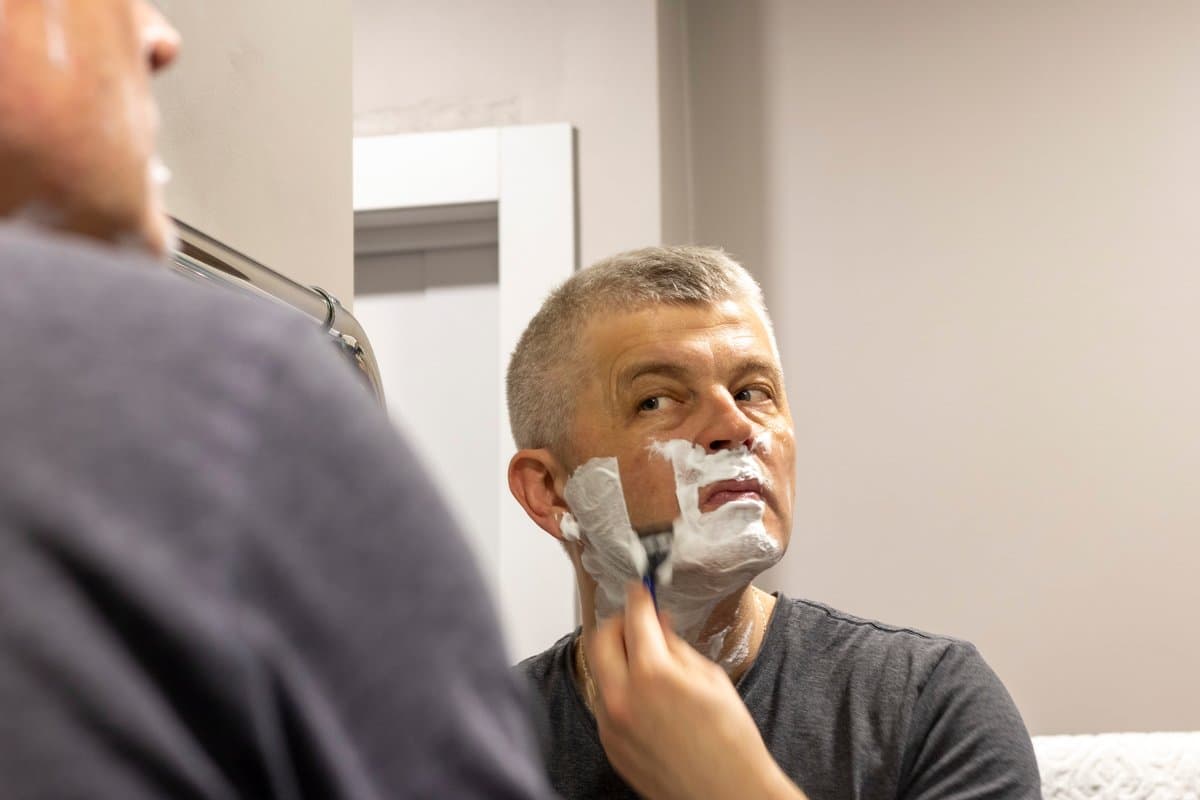
Shaving is the most abrasive thing most men do to their facial skin, and poor technique or aftercare is responsible for a range of issues from razor burn to chronic folliculitis. Razor bumps and ingrown hairs affect up to 80 percent of men with curly or coarse hair, making post-shave care essential rather than optional.!! Start by shaving after a warm shower when the hair is softened and pores are open.
Always use a clean, sharp blade — dull razors cause more friction and micro-tears. Shave in the direction of hair growth rather than against it, especially if you are prone to ingrown hairs. Use a shaving cream or gel that provides a slick barrier, not a dry foam that evaporates on contact.
After shaving, rinse with cool water to help close pores and pat dry gently rather than rubbing. Avoid alcohol-based aftershaves, which cause stinging and strip moisture. Instead, use a soothing post-shave balm containing ingredients like aloe vera, allantoin, or bisabolol, which calm inflammation without clogging pores.
If razor bumps are a recurring problem, consider applying a product with salicylic acid to the affected areas, as this helps prevent the buildup of dead skin that traps hair beneath the surface. Men who experience persistent irritation despite good technique may benefit from switching to a single-blade safety razor, which cuts hair at the surface rather than pulling it below the skin line the way multi-blade cartridges can. Electric trimmers set to leave slight stubble are another option for those whose skin simply does not tolerate close shaving.
Why Sunscreen Matters More Than You Think
Men are statistically more likely to develop skin cancer than women, and a significant reason is the widespread reluctance to wear sunscreen. Studies consistently show that men apply sunscreen less frequently, in smaller amounts, and with less regularity than women. The consequences are measurable: men account for roughly 60 percent of melanoma deaths despite making up about half the population.
UV damage is also the primary driver of visible aging — the deep forehead lines, leathery texture, and dark spots that many men attribute to getting older are largely the result of accumulated sun exposure rather than the passage of time alone. The areas men most commonly neglect are the tops of the ears, the back of the neck, and the scalp, particularly where hair is thinning. These are also among the most common sites for skin cancer in men.
A single application of broad-spectrum SPF 30 sunscreen each morning reduces the risk of melanoma by roughly 50 percent and significantly slows photoaging.!! If you find sunscreen greasy or unpleasant, the formulas available today bear little resemblance to the thick, white pastes of decades past. Gel-based, matte-finish, and invisible sunscreens designed specifically for the face absorb quickly, leave no residue, and layer well under moisturizer.
For men who spend time outdoors, reapplication every two hours is essential, as is applying sunscreen to the hands, forearms, and any other exposed areas. Think of sunscreen not as a cosmetic product but as a basic health measure on the same level as brushing your teeth.

Anti-Aging Basics for Men
The idea that aging gracefully means doing nothing at all is a misconception that costs many men years of preventable skin damage. While men benefit from thicker skin and higher collagen density in their younger years, this advantage diminishes steadily over time. By the time visible aging becomes obvious — deep wrinkles, sagging, significant sun spots — much of the underlying damage is already advanced and harder to reverse.
Starting a basic anti-aging routine in your late twenties or early thirties is far more effective than trying to undo decades of neglect at fifty. Learn more about preventing premature aging. Retinol is the most evidence-backed ingredient for anti-aging and the single most useful addition to a man's routine.
It accelerates cell turnover, stimulates collagen production, reduces fine lines, and evens out skin tone. Start with a low-concentration retinol product two to three times per week at night, gradually increasing frequency as your skin builds tolerance. Initial dryness and mild peeling are normal and temporary.
Vitamin C serum applied in the morning provides antioxidant protection against environmental damage and brightens dull skin. It also boosts the effectiveness of your sunscreen. Niacinamide, found in many moisturizers, strengthens the skin barrier, reduces redness, and minimizes pore appearance.
Peptides in eye creams can help address the crow's feet and under-eye hollows that often appear first in men. The key principle is prevention rather than correction. Protecting your skin from UV damage, maintaining hydration, and using one or two active ingredients consistently will keep your skin looking years younger than it otherwise would. None of this requires a complicated routine — it simply requires the discipline to be consistent with the basics.