Aging Intrinżiku vs. Estrinżiku: Fehim id-Differenza
Il-proċess tal-anzjanità huwa inevitabbli, iżda l-veloċità li fiha l-ġilda tiegħek tiżdied fl-età hija ħafna iktar f'idejk milli jirrealizzaw ħafna nies. Ir-riċerka fil-dermatoloġija u l-ġerontoloġija stabbiliet b'mod ċar li l-maġġoranza tal-anzjanità viżibbli tal-ġilda hija mmexxija minn fatturi esterni li jistgħu jiġu evitati minflok il-mixja inevitabbli tal-ħin. Li tifhem id-distinzjoni bejn l-anzjanità intrinsea u estrinseca, u li tkun taf liema interventi għandhom appoġġ xjentifiku ġenwin, jagħtik il-poter li tagħmel għażliet li jżommu l-ġilda tiegħek żagħżugħa b'mod ħafna iktar effettiv minn dak li jista' joffri kwalunkwe talba ta' marketing.
L-anzjanità intrinsea, imsejħa wkoll l-anzjanità kronoloġika, hija l-proċess naturali, programmatiġament ġenetiku li jseħħ fil-ġilda kollha, irrispettivament mill-espożizzjoni esterna. Huwa mmexxi minn fatturi interni — is-senescenza ċellulari, il-livelli ta' ormoni li qed jonqsu, it-tnaqqis fil-kambju taċ-ċelluli, u l-qasrija gradwali tat-telomeri li jakkumpanjaw kull diviżjoni taċ-ċellula. L-anzjanità intrinsea tipproduċi linji fini, tnaqqis ħafif fil-ġilda, u tnaqqis gradwali fl-elastiċità, iżda tkompli bil-mod u b'mod relattivament uniformi.
L-anzjanità estrinseca, min-naħa l-oħra, hija kkawżata minn fatturi ambjentali u ta' stil ta' ħajja li jacceleraw il-proċess tal-anzjanità lil hinn minn dak li l-ġenetika waħedha tiddikta. Il-fatturi estrinsiċi prinċipali jinkludu radjazzjoni ultravioletta, tniġġis, smoking, nuqqas ta' nutrizzjoni, u stress kroniku. L-anzjanità estrinseca tipproduċi l-bidliet li l-biċċa l-kbira tan-nies associat ma' "dehra anzjana" — wrinkles profondi, sagging pronunzjat, pigmentazzjoni irregolari, tekstura rough, u vasi tad-demm miftuħa viżibbli.
L-illustrazzjoni l-aktar impressjonanti ta' din id-distinzjoni ġejja minn studji tal-ġilda protetta mix-xemx kontra dik esposta għax-xemx fuq l-istess individwu. Il-brat ta' fuq ta' persuna, li jirċievi espożizzjoni minima għax-xemx matul il-ħajja, tipikament tidher dekati iżgħar minn wiċċha, għonqha, jew idejha — anki jekk dawn il-partijiet kollha jaqsmu ġenetika identika u ġew esposti għall-istess numru ta' snin kronoloġiċi. Estimazzjonijiet dermatoloġiċi jissuġġerixxu li sa 80 sa 90 fil-mija tal-anzjanità viżibbli tal-wiċċ hija attribwita għal fatturi estrinsiċi, bil-espożizzjoni għall-UV tkun l-akbar kontribwenti wieħed.
Dan ifisser li l-maġġoranza kbira ta' dak li nsejħu "anzjanità" huwa teknikkament "ħsara" — u l-ħsara, minħabba li mhix il-passaġġ tal-ħin, tista' tiġi minimizzata b'mod sinifikanti bil-strateġiji t-tajba. Dan huwa verament informazzjoni li tagħti poter. Filwaqt li ma tistax twaqqaf l-anzjanità intrinsea, tista' b'mod drammatiku tnaqqas l-anzjanità estrinseca billi tindirizza l-fatturi modifikabbli li jikkawżawha. L-istrateġiji deskritti fil-partijiet li ġejjin jiffokaw fuq dawn il-fatturi speċifiċi b'approċċi appoġġati minn evidenza klinika minflok it-tendenzi ta' marketing.
Ħsara mix-Xemx: Il-Kawża Nru. 1 ta' Anzjanità Prematura
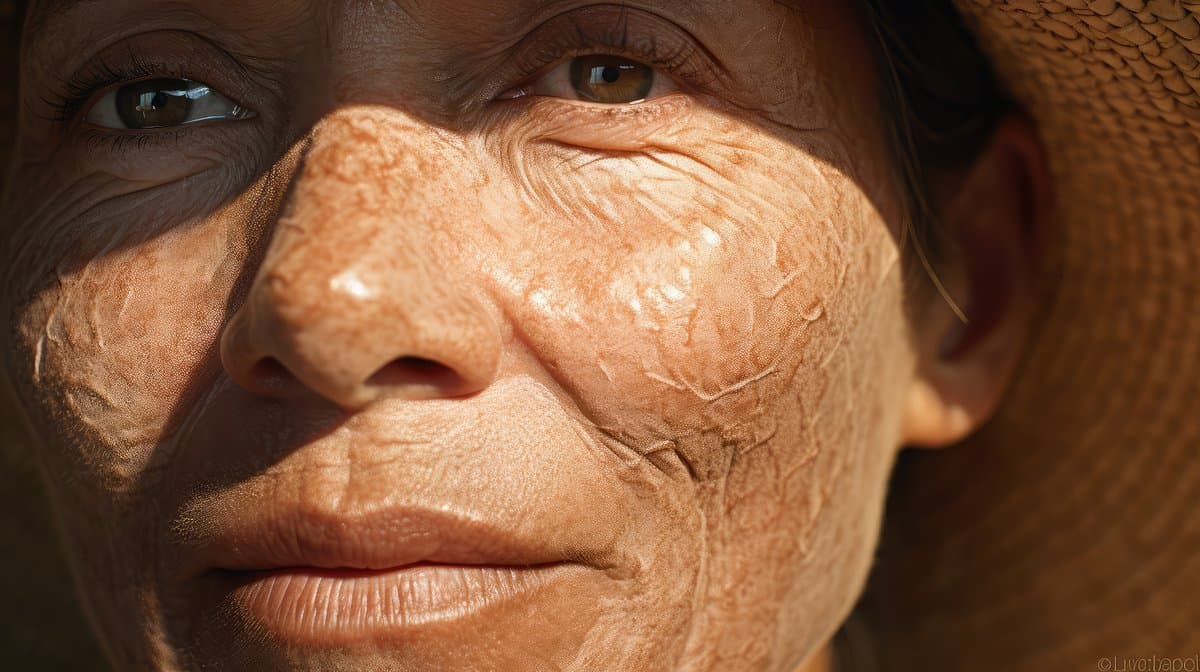
Il-foto-anzjanità — l-anzjanità tal-ġilda kkawżata minn radjazzjoni UV — hija responsabbli għall-maġġoranza tal-wrinkles prematuri, bidliet fil-pigmentazzjoni, u t-telf ta' elastiċità tal-ġilda. L-ebda fattur ieħor ma jersaq viċin l-impatt kumulattiv li l-espożizzjoni għax-xemx għandha fuq l-istruttura u l-dehra tal-ġilda matul il-ħajja. Ir-radjazzjoni UVA, li tikkostitwixxi madwar 95 fil-mija tar-radjazzjoni UV li tasal fuq il-wiċċ tal-art, tippenetra fil-fond fil-dermis fejn il-kollagen u l-elastin jinsabu.
Huma joħolqu speċi reattivi ta' ossiġenu li jikkawżaw ħsara direttament lil dawn il-proteini strutturali u lill-cells fibroblast li jipproduċuhom. L-espożizzjoni għall-UVA wkoll tikkawża enzimi msejħa matrix metalloproteinases li attivament jiddistruġu l-kollagen eżistenti. Ir-riżultat finali huwa assalt doppju — UV fl-istess ħin jiddistruġi l-kollagen u jnaqqas il-produzzjoni tiegħu.
Ir-riċerkaturi jissuggerixxu li episodju wieħed ta' espożizzjoni intensa għax-xemx jista' jindika attivitá ta' enzimi li jiddistruġu l-kollagen li tibqa' għal ġimgħat wara, li jfisser li anki l-burns sporadiċi jikkontribwixxu b'mod sinifikanti għall-foto-anzjanità fit-tul.!! Ir-radjazzjoni UVB, għalkemm tikkostitwixxi proporzjon iżgħar tar-radjazzjoni UV, tikkawża ħsara diretta għall-DNA fil-cells tal-ġilda u hija l-kawża prinċipali tal-burns mix-xemx. Ir-riparazzjoni tal-ġilda ta' din il-ħsara tad-DNA mhijiex perfetta, u l-iżbalji akkumulati matul il-ħin jikkontribwixxu kemm għall-foto-anzjanità kif ukoll ir-riskju tal-kanċer tal-ġilda.
L-użu ta' sunscreen b'kapaċità wiesgħa ta' spektrum kuljum huwa l-intervent anti-aging l-aktar effettiv disponibbli. Ara l-gwida tagħna daily sunscreen guide għall-aħjar prattiċi. Studju landmark Awstraljan segwa aktar minn 900 parteċipant għal aktar minn erba' snin u sab li dawk li applikaw sunscreen kuljum ma wrewx żieda detettibbli fl-anzjanità tal-ġilda matul il-perjodu tal-istudju, filwaqt li l-grupp ta' kontroll għadda minn anzjanità measurabbli.
Dan l-istudju jipprovdi fost l-evidenza l-aktar qawwija li l-użu konsistenti ta' sunscreen verament jipprevjeni l-wrinkles u l-bidliet fil-pigmentazzjoni — mhux biss fil-teorija, iżda fil-prattika. Barra minn sunscreen, l-imġieba protettiva mix-xemx għandhom importanza kbira. Tfittex dell waqt li tkun espost għall-UV bejn id-10 AM u l-4 PM, tilbes ħwejjeġ protettivi inklużi cappelli b'brim wiesa', u tuża sunglasses protettivi għall-UV kollha jnaqqsu l-espożizzjoni kumulattiva għall-UV. Dawn l-istrateġiji ta' imġieba jsiru speċjalment importanti hekk kif tixjieħ, peress li l-kapaċità naturali tal-ġilda li tirripara tiżdied matul il-ħin.
Retinoids: Il-Livell tal-Istandard fil-Kura tal-Ġilda Anti-Aging
Fost l-ingredjenti topiċi kollha anti-aging studjati fid-dermatoloġija, ir-retinoids għandhom l-aktar bażi ta' evidenza robusta u estensiva. Derivati minn vitamina A, ir-retinoids jaħdmu permezz ta' mekkaniżmi multipli biex jikkontrobattu kemm l-anzjanità intrinsea kif ukoll estrinseca, li jagħmilhom effettivi b'mod uniku fil-pajsaġġ tal-kura tal-ġilda. Ir-retinoids jaħdmu billi jbindu ma' riċetturi nukleari speċifiċi fil-cells tal-ġilda, b'mod dirett jaffettwaw l-espressjoni tal-ġeni relatati mal-kambju taċ-ċelluli, il-produzzjoni tal-kollagen, u l-pigmentazzjoni.
Tretinoin, ir-retinoid b'saħħa preskrizzjoni, ġie studjat f'testijiet klinċi għal deċenni. Huwa juri b'mod konsistenti l-kapaċità li jżid it-thickness tal-epidermis, jistimula l-ġenerazzjoni ġdida tal-kollagen fil-dermis, inaqqas il-pigmentazzjoni iper, u jtejjeb it-testura u l-ton ġenerali tal-ġilda. Tretinoin jibqa' l-uniku ingredjent topiku bi aktar minn 50 sena ta' evidenza klinika li turi l-kapaċità tiegħu li jerġa' lura sinjali measurabbli tal-foto-anzjanità, inkluż il-ġdid tal-produzzjoni tal-kollagen fil-ġilda mħassra mix-xemx.!!
Ir-retinol li jinstab fuq il-banek għandu jiġi konvertit f'acidu retinoic fil-ġilda permezz ta' proċess enżimatik b'żewġ passi, li jagħmilha inqas qawwija iżda wkoll inqas irritanti minn tretinoin. Derivattivi aktar ġodda ta' retinoid bħal adapalene, retinaldehyde, u hydroxypinacolone retinoate joffru bilanċi varji ta' effikaċja u tolleranza. Il-kliem għal użu ta' retinoid suċċess huwa paċenzja u introduzzjoni gradwali.
B'diġà b'konċentrazzjoni baxxa tnejn sa tlieta drabi fil-ġimgħa u b'ħeffa żżid il-frekwenza matul ġimgħat sħaħ, il-ġilda tista' tikkalibra filwaqt li tnaqqas il-perjodu inizjali ta' retinizzazzjoni ta' niexef, qsim, u sensittività. Applikar ir-retinoids fuq ġilda niexfa minflok ġilda umda, u buffering bil-moisturizer jekk meħtieġ, jista' jnaqqas ulterjorment l-irritazzjoni. Ir-retinoids jżidu s-sensibilità għax-xemx, li jagħmel l-użu ta' sunscreen kuljum assolutament mhux negozjabbli waqt it-terapija ta' retinoid.
Applika r-retinoids bil-lejl u ipproteġi b'attenzjoni matul il-ġurnata. L-aktar dermatologi jqisu l-kombinazzjoni ta' sunscreen kuljum u l-użu ta' retinoid bil-lejl bħala l-iktar reġim anti-aging appoġġat minn evidenza disponibbli. Ir-riżultati mill-użu ta' retinoid huma gradwali — aspettaw tlieta sa sitt xhur ta' użu konsistenti qabel il-bidliet viżibbli fil-linji fini u t-testura jsiru apparenti. Il-ġenerazzjoni tal-kollagen hija proċess bijoloġiku bil-mod, u l-bidliet, filwaqt li huma ġenwini, jiżviluppaw b'mod incrementali minflok drammatiċi.
Antioxidants u l-Preservazzjoni tal-Kollagen
Filwaqt li r-retinoids attivament jistimulaw il-ġenerazzjoni ġdida tal-kollagen, l-antioxidants jaqdu rwol komplementari billi jipproteġu l-kollagen eżistenti u l-istrutturi ċellulari minn ħsara ossidattiva. Flimkien, dawn iż-żewġ kategoriji ta' ingredjenti jiffurmaw approċċ komprensiv biex iżommu l-integrità strutturali tal-ġilda matul il-ħin. Il-Vitamina C, fil-forma attiva tagħha L-ascorbic acid, hija l-aktar antioxidant topiku studjat għall-anti-aging.
Fil-konċentrazzjonijiet ta' 10 sa 20 fil-mija, hija tneħħi r-radikali ħielsa ġġenerati mill-espożizzjoni għall-UV u t-tniġġis, tħeġġeġ il-ġenerazzjoni tal-kollagen billi tkun ko-fattur meħtieġ għall-enzimi li jibnu l-fibra tal-kollagen, u tnaqqas il-produzzjoni tal-melanin biex tissawwar it-ton tal-ġilda. Serum ta' vitamina C tajjeb formulat applikat filgħodu jipprovdi protezzjoni addizzjonali measurabbli għall-UV meta jintuża taħt sunscreen. Il-Vitamina E taħdem sinerġikament ma' vitamina C, u formulazzjonijiet li fihom kemm il-Vitamina C kif ukoll ferulic acid wrew li jipprovdu sa tmien darbiet protezzjoni kontra l-ħsara tar-radikali ħielsa kkawżata mill-UV meta mqabbla ma' ġilda mhux protetta.
Din il-kombinazzjoni tirrappreżenta waħda mill-aqwa sistemi ta' antioxidants topiċi studjati disponibbli. Niacinamide, forma ta' vitamina B3, tappoġġa l-barriera tal-ġilda, tnaqqas l-infjammazzjoni, u wrew li ttejjeb il-linji fini, il-pigmentazzjoni iper, u l-elastiċità tal-ġilda f'testijiet klinċi. Huwa tajjeb tollerat mill-prattikament kollha ta' tipi ta' ġilda u jista' jiġi kombinat ma' ħafna ingredjenti attivi oħra mingħajr problemi.
Peptidi huma chains qosra ta' ammino acidi li jaqdu bħala molekuli ta' sinjal fil-ġilda. Peptidi ċerti, partikolarment palmitoyl pentapeptide-4 u peptidi tal-kopru, wrew il-kapaċità li jstimolaw il-produzzjoni tal-kollagen u l-elastin f'studji klinċi. Filwaqt li l-bażi ta' evidenza għall-peptidi mhix daqshekk estensiva bħal dik għall-retinoids jew vitamina C, joffru għażla aktar ġentili għal dawk li ma jistgħux jissapportaw ir-retinoids.
Coenzyme Q10, resveratrol, u polifenoli tal-ħaxix tal-tea jtemmew l-arsenal ta' antioxidants bil-mekkaniżmi tagħhom stess ta' neutralizzazzjoni tar-radikali ħielsa u attivitá anti-infjammatorja. L-aktar strateġiji effettivi ta' anti-aging jużaw diversi antioxidants minflok jiddependu fuq ingredjent wieħed, hekk kif antioxidants differenti jiffokaw fuq tipi differenti ta' ħsara ossidattiva u jaħdmu f'kompartimenti ċellulari differenti.
Fatturi ta' Stil ta' Ħajja: Smoking, Dieta, Sogħla, u Iktar
Filwaqt li l-prodotti topiċi jirċievu l-iktar attenzjoni fil-diskussjonijiet dwar l-anti-aging, il-fatturi ta' stil ta' ħajja għandhom influwenza kbira fuq kemm malajr — jew bil-mod — tiżdied l-età tal-ġilda tiegħek. Għadd ta' mġieba modifikabbli ġew definitament assoċjati ma' anzjanità tal-ġilda accelerata jew deċelerata f'studji ta' skala kbira. Is-smoking huwa t-tieni wara l-espożizzjoni għax-xemx bħala kawża ta' anzjanità prematura tal-ġilda.
Il-fwar tat-tabakk fih eluf ta' kimiċi li ġġeneraw ħsara kbira tar-radikali ħielsa, jikkontrattaw il-vasi tad-demm li jnaqqsu l-iffissar ta' ossiġenu u nutrijenti għall-ġilda, jiddistruġu l-kollagen u l-elastin, u jnaqqsu l-produzzjoni ġdida tal-kollagen. Ir-riċerka li tqabbel twieled identiċi fejn wieħed is-smoke u wieħed le turi li t-twin li jismu is-smoke jidher konsistentement aktar anzjan, b'wrinkles aktar pronunzjati, laxity tal-ġilda, u bags taħt l-għajnejn aktar minn ħuhom ġenetikament identiku.!! Id-dieta għandha rwol dejjem iktar rikonoxxut fl-anzjanità tal-ġilda.
Kif kopert fil-gwida tagħna how diet affects your skin, dieta għolja f'fruits u veggies riċiċi b'antioxidants, omega-3 fatty acids, u proteini leani tappoġġa l-mekkaniżmi ta' riparazzjoni tal-ġilda, filwaqt li d-dieti għoljin fil-zokkor u ħafna proċessati jacceleraw il-glycation u l-infjammazzjoni li jiddistruġu l-kollagen. Il-mankament ta' sogħla jnaqqas il-proċessi ta' riparazzjoni bil-lejl li jżommu s-saħħa tal-ġilda. L-ormoni tal-ġewwa, li jiġu rilaxxati prinċipalment waqt is-sogħla profonda, jimmexxu l-ġenerazzjoni tal-kollagen u l-kambju taċ-ċelluli.
Il-limitazzjoni kronika tas-sogħla twassal għal żieda fil-cortisol, li jiddistruġi l-kollagen, u tnaqqas il-ħin disponibbli għall-programm ta' riparazzjoni ċirkadiana tal-ġilda. L-użu tal-alkoħol jikkontribwixxi għall-anzjanità tal-ġilda permezz ta' deidrazzjoni, infjammazzjoni, u assorbiment ta' nutrijenti mħassar. Huwa wkoll jikkontrattaw il-vasi tad-demm, li matul il-ħin jistgħu jwasslu għal redness permanenti u kapillari miftuħa, partikolarment fil-ġilda tal-wiċċ.
Attività fiżika regolari tagħmel tajjeb għall-anzjanità tal-ġilda billi ttejjeb iċ-ċirkolazzjoni, tnaqqas l-infjammazzjoni, u tnaqqas il-livelli ta' cortisol. Xi riċerka ssuġġerixxi li l-eżerċizzju jista' anke parzjalment jerġa' lura l-anzjanità tal-ġilda f'adulti akbar billi jtejjeb l-istruttura dermali u epidermali tal-ġilda.