

Understanding HSV-1 and HSV-2: Two Viruses, One Family
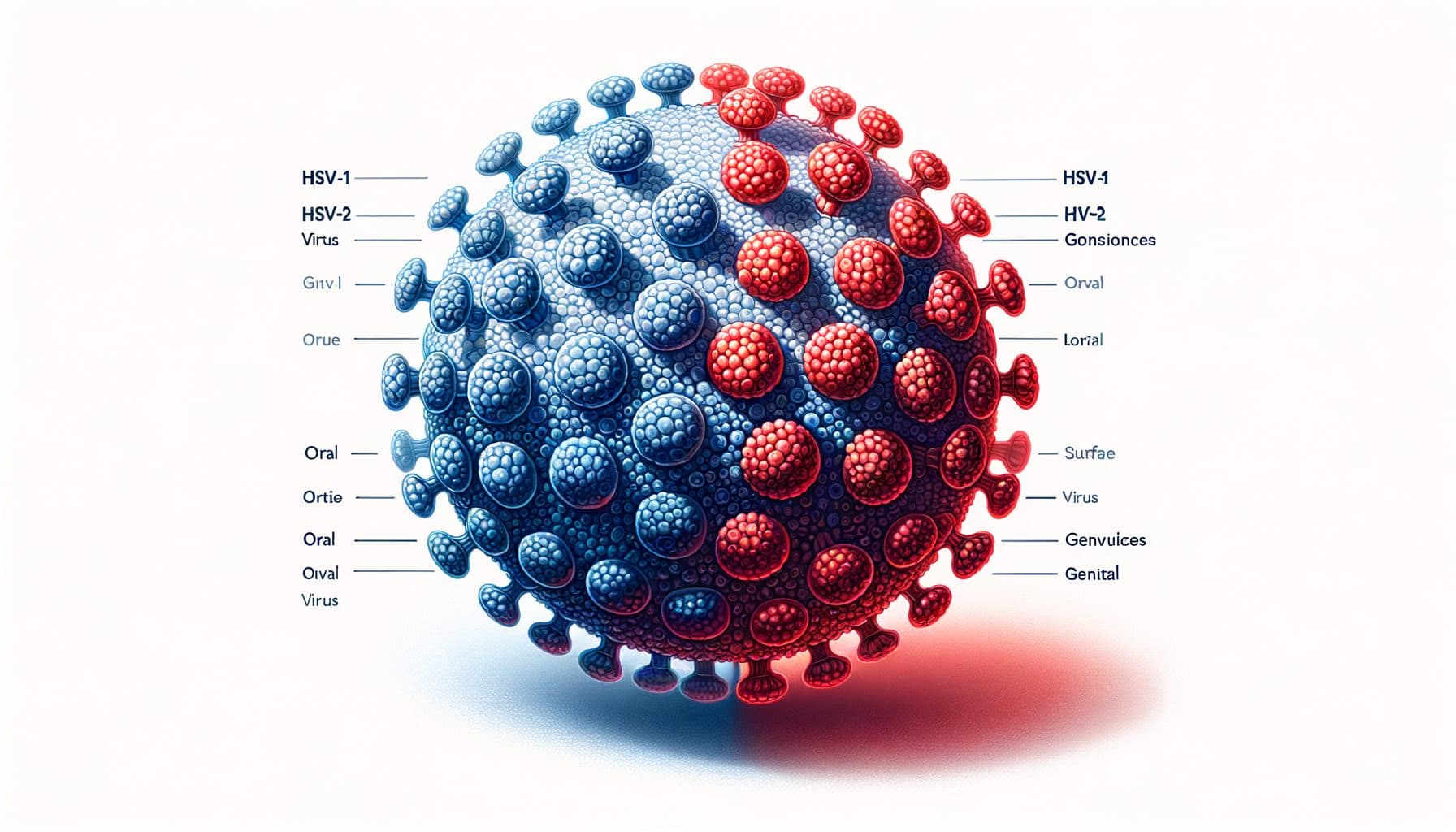
Herpes simplex virus comes in two types: HSV-1 and HSV-2, both members of the herpesvirus family that also includes varicella-zoster (chickenpox/shingles), Epstein-Barr virus, and cytomegalovirus. HSV-1 has traditionally been associated with oral herpes (cold sores) and HSV-2 with genital herpes, but this distinction has become increasingly blurred. HSV-1 is now the leading cause of new genital herpes infections in many developed countries, transmitted through oral-genital contact.
7 billion people under age 50 worldwide carry HSV-1 (approximately 67% of the global population), while an estimated 491 million people aged 15-49 carry HSV-2 (13% of the global population). These numbers reveal a fundamental truth: herpes is one of the most common infections in human history, not a rare or unusual condition. Both HSV-1 and HSV-2 establish lifelong latent infection in nerve ganglia — HSV-1 typically resides in the trigeminal ganglia (serving the face), while HSV-2 favors the sacral ganglia (serving the genital area).
After initial infection, the virus travels along nerve fibers to the ganglia where it enters a dormant state. Periodically, the virus reactivates, travels back down the nerve fibers to the skin surface, and causes a recurrent outbreak — or, frequently, sheds asymptomatically without any visible symptoms. This asymptomatic shedding is responsible for the majority of herpes transmission, meaning people can spread the virus even when they appear completely healthy and have no active lesions.
Symptoms: From Primary Outbreaks to Recurrences
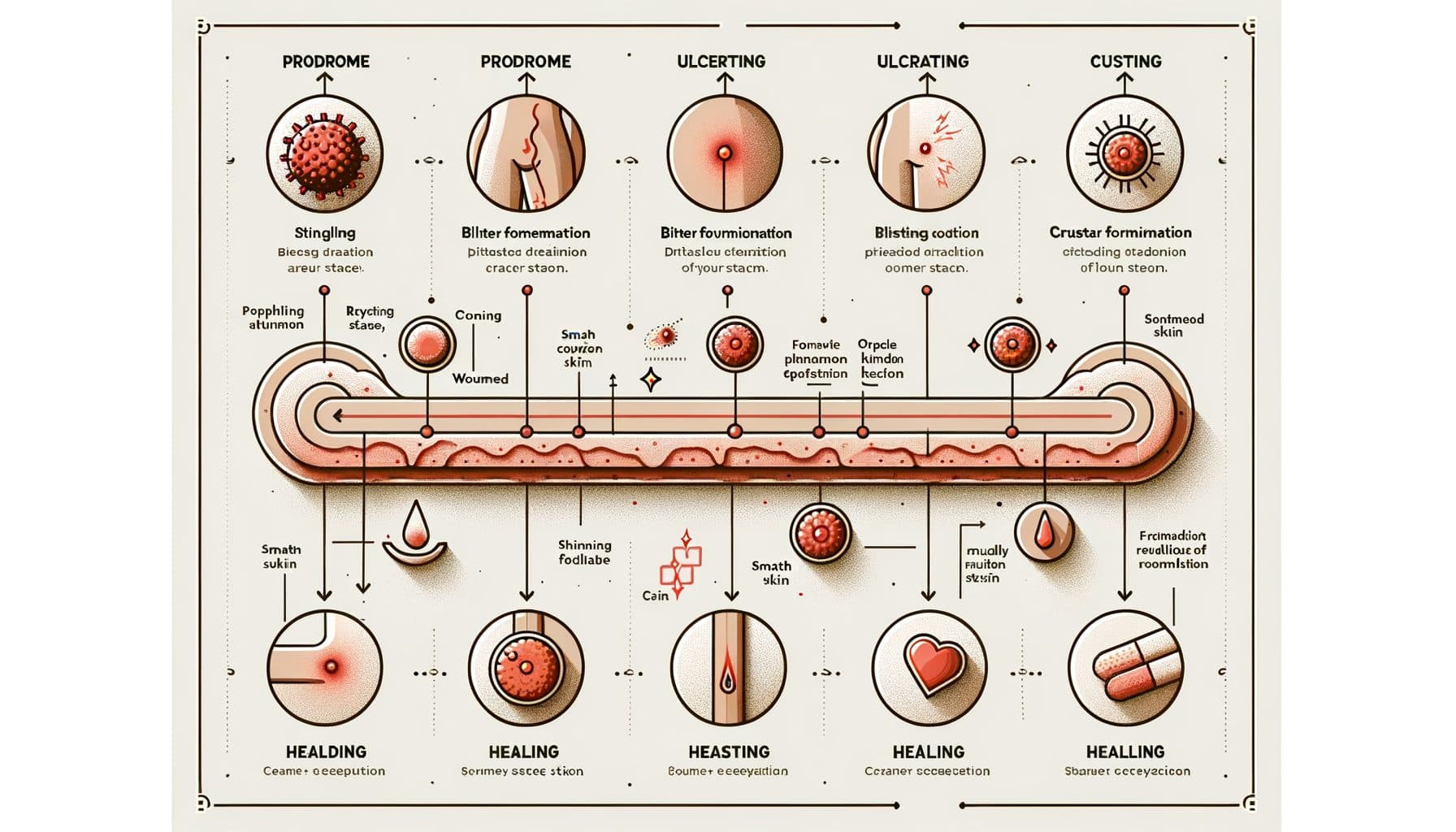
The initial (primary) herpes outbreak is typically the most severe, occurring 2-12 days after exposure. Symptoms may include multiple painful blisters or ulcers at the site of infection, significant pain and tenderness, flu-like symptoms (fever, body aches, swollen lymph nodes), and difficulty with daily activities (eating if oral, sitting or walking if genital). However, up to 80% of primary infections are asymptomatic or so mild that they go unrecognized — many people carry HSV for years or decades without knowing it.
When symptoms do occur, oral herpes presents as clusters of small, fluid-filled blisters on or around the lips, sometimes extending to the nose or chin. The blisters rupture, form shallow painful ulcers, then crust over and heal without scarring over 7-14 days. Many patients describe a tingling, burning, or itching sensation (prodrome) 12-48 hours before blisters appear.
Genital herpes presents similarly: clusters of painful blisters or ulcers on the genitals, perineum, buttocks, or upper thighs, sometimes with urinary symptoms (painful urination, urethral discharge) or difficulty sitting. Recurrent outbreaks are generally shorter and less severe than the primary episode, lasting 3-7 days. HSV-2 genital herpes recurs more frequently (average 4-6 outbreaks in the first year) than HSV-1 genital herpes (average 1 outbreak in the first year, declining rapidly thereafter).
Over time, recurrence frequency typically decreases for both types. Many patients develop a recognizable prodrome pattern that allows them to anticipate outbreaks and initiate treatment early.
Triggers: What Provokes Outbreaks
While the virus determines whether you carry herpes, numerous factors influence when and how frequently it reactivates. Physical stress on the body is a potent trigger: illness, fever, surgical procedures, and physical trauma (including dental work for oral herpes) can precipitate outbreaks. Sun exposure, particularly UV radiation on the lips, is a well-documented trigger for oral herpes — this is why cold sores commonly appear after beach vacations or skiing trips.
Emotional stress and psychological distress are among the most commonly reported triggers, likely through cortisol-mediated immune suppression. Hormonal fluctuations trigger outbreaks in many women, with recurrences commonly occurring during menstruation. Fatigue, inadequate sleep, and general immune suppression from any cause increase reactivation risk.
Local skin trauma or irritation at the site of infection can provoke recurrence — friction, chafing, and sexual activity may trigger genital outbreaks. For oral herpes, lip injuries, cracked lips from cold weather, and cosmetic procedures around the mouth can precipitate outbreaks. Immunosuppressive medications and conditions dramatically increase both frequency and severity of outbreaks.
Some patients identify dietary triggers, though evidence for specific foods is largely anecdotal. The relationship between the amino acids lysine and arginine has been debated — some evidence suggests that a diet higher in lysine and lower in arginine may reduce outbreak frequency, but results are inconsistent. Understanding your personal triggers through careful observation allows you to anticipate vulnerable periods and either take prophylactic antiviral medication or implement preventive strategies. A trigger diary — noting outbreak dates alongside potential triggers like stress, illness, sun exposure, menstrual cycle, and sleep quality — helps reveal your unique pattern over several months.
Antiviral Treatment: Suppression and Episodic Therapy
Three antiviral medications are approved for herpes simplex treatment: acyclovir, valacyclovir (Valtrex), and famciclovir (Famvir). All work by inhibiting viral DNA replication, reducing the severity and duration of outbreaks and decreasing viral shedding. These medications are safe, well-tolerated, and available in generic forms at modest cost.
They can be used in two ways: episodic therapy (taken at the onset of an outbreak to shorten its duration) or suppressive therapy (taken daily to prevent outbreaks and reduce transmission). Episodic therapy is most effective when started at the earliest sign of an outbreak — ideally during the prodromal tingling or burning phase before blisters appear. Valacyclovir 2g taken twice in one day (12 hours apart) can abort or significantly shorten an oral herpes episode.
For genital herpes, a typical episodic regimen is valacyclovir 500mg twice daily for 3-5 days. Starting treatment even after blisters appear still reduces duration by 1-2 days. Suppressive therapy involves daily antiviral medication, typically valacyclovir 500mg-1g daily for genital herpes.
Suppression reduces outbreak frequency by 70-80%, decreases asymptomatic viral shedding by approximately 50%, and reduces sexual transmission to uninfected partners by approximately 50% when combined with other precautions.!! Suppressive therapy is recommended for patients with frequent outbreaks (6 or more per year), for those experiencing significant psychological distress from recurrences, and for those in discordant relationships (one partner positive, one negative) to reduce transmission risk. Long-term suppressive therapy has been studied for over 20 years and shows no significant safety concerns — it can be continued indefinitely.
Antiviral resistance is rare in immunocompetent patients. For immunocompromised patients, higher doses and longer courses may be needed, and resistant strains may require alternative antivirals like foscarnet.
Stigma vs. Reality: Reframing Herpes
The social stigma surrounding herpes is vastly disproportionate to the medical reality of the condition. This stigma is relatively recent — it was largely manufactured in the late 1970s and 1980s through media coverage and pharmaceutical marketing that framed herpes as a moral failing rather than an extremely common viral infection. Before this period, cold sores and genital herpes were regarded much as they medically are: minor, recurrent inconveniences in otherwise healthy people.
The medical reality stands in stark contrast to the stigma: herpes simplex is carried by the majority of the global adult population; it causes no long-term health consequences in immunocompetent individuals; outbreaks are typically mild and self-limiting; effective treatments are available and affordable; and the virus causes no damage between outbreaks. For most carriers, herpes has zero impact on physical health and requires minimal medical intervention. Comparison with other common infections is instructive: HPV (human papillomavirus) infects an even higher percentage of sexually active adults, causes genital warts and can cause cancer, yet carries far less stigma.
Chickenpox (caused by another herpesvirus) infects most people in childhood with more severe symptoms, yet carries no social stigma. The emotional suffering caused by herpes stigma — shame, fear of rejection, anxiety about disclosure, avoidance of intimacy — typically far exceeds the physical discomfort of the virus itself. Many people report that receiving a herpes diagnosis devastated them emotionally, while the actual physical symptoms turned out to be minor or nonexistent.
Healthcare providers increasingly recognize that addressing the psychological impact of a herpes diagnosis is as important as managing the physical symptoms. Counseling, education, and connection with support communities can help reframe the diagnosis from a catastrophe to a manageable, common condition.

When to See a Doctor About Herpes
While most herpes outbreaks are medically uncomplicated, several situations require prompt medical attention. A suspected first outbreak should always be evaluated by a healthcare provider for proper diagnosis (clinical examination and/or viral culture or PCR testing), to rule out other conditions that can mimic herpes (syphilis, chancroid, aphthous ulcers, contact dermatitis), and to establish a treatment plan. Severe outbreaks with extensive blistering, significant pain, urinary retention (inability to urinate due to genital herpes pain), or systemic symptoms like high fever warrant urgent evaluation.
Herpes near the eye (herpes keratitis) is a medical emergency that can cause corneal scarring and vision loss — symptoms include eye pain, redness, tearing, light sensitivity, and blurred vision; seek immediate ophthalmologic evaluation.!! Outbreaks that spread beyond the typical area or affect large body surfaces may indicate immune compromise and need medical assessment. Herpes during pregnancy requires careful management to prevent neonatal herpes, which can be devastating for newborns — pregnant women with herpes should discuss suppressive therapy in the third trimester with their obstetrician.
If outbreaks are becoming more frequent or severe over time (the typical pattern is decreasing frequency), this may indicate immune changes warranting evaluation. Patients experiencing significant anxiety, depression, or relationship difficulties related to herpes should seek both medical care for optimal viral management and mental health support for the psychological burden.

How AI Skin Analysis Can Help with Herpes Assessment
Herpes simplex lesions can sometimes be confused with other conditions — impetigo, contact dermatitis, aphthous ulcers, hand-foot-and-mouth disease, and even early shingles can present similarly. Skinscanner provides a quick initial assessment that helps you understand whether your lesion has characteristics consistent with herpes simplex. By photographing the affected area during the active blister or ulcer phase, our AI analyzes the lesion pattern, distribution, and morphological features typical of herpes versus other conditions.
This is particularly valuable for people experiencing a first episode who are uncertain what they're dealing with, and for those with recurrent episodes who want to confirm that a new lesion is consistent with their known herpes pattern rather than something new. For tracking purposes, documenting outbreak frequency and severity with photographs and dates helps you and your healthcare provider make informed decisions about treatment approach — episodic versus suppressive therapy — based on objective data about your outbreak pattern. Skinscanner cannot confirm herpes diagnosis (this requires viral culture or PCR testing) but provides an accessible first step in understanding your symptoms and deciding whether and how urgently to seek professional evaluation.