Miliya nima?
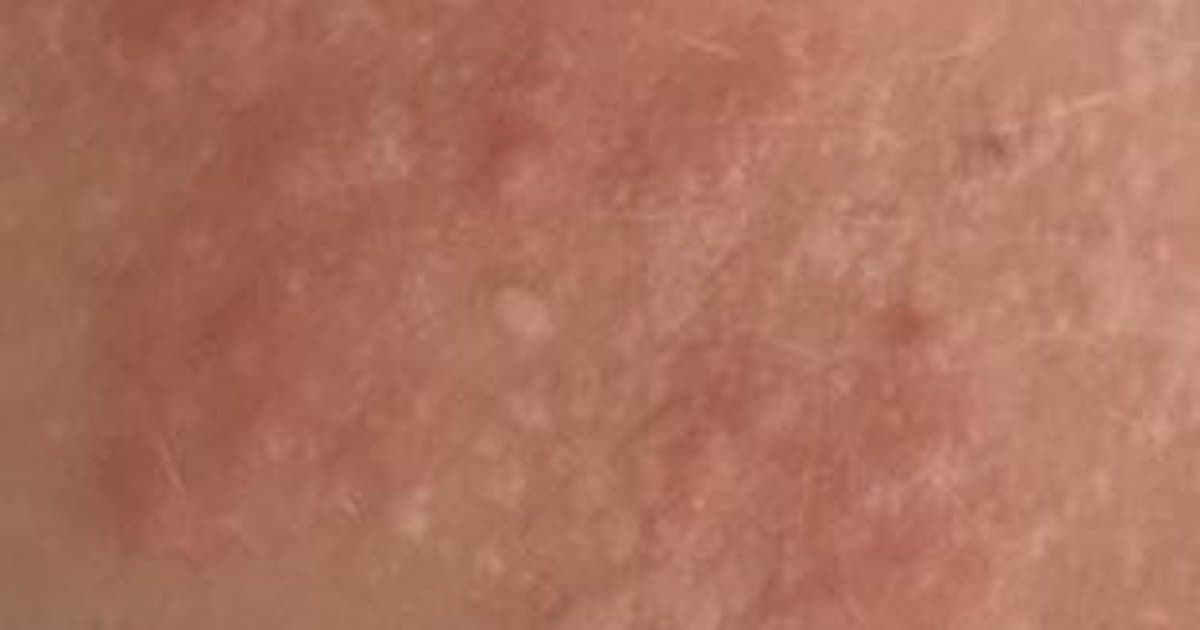
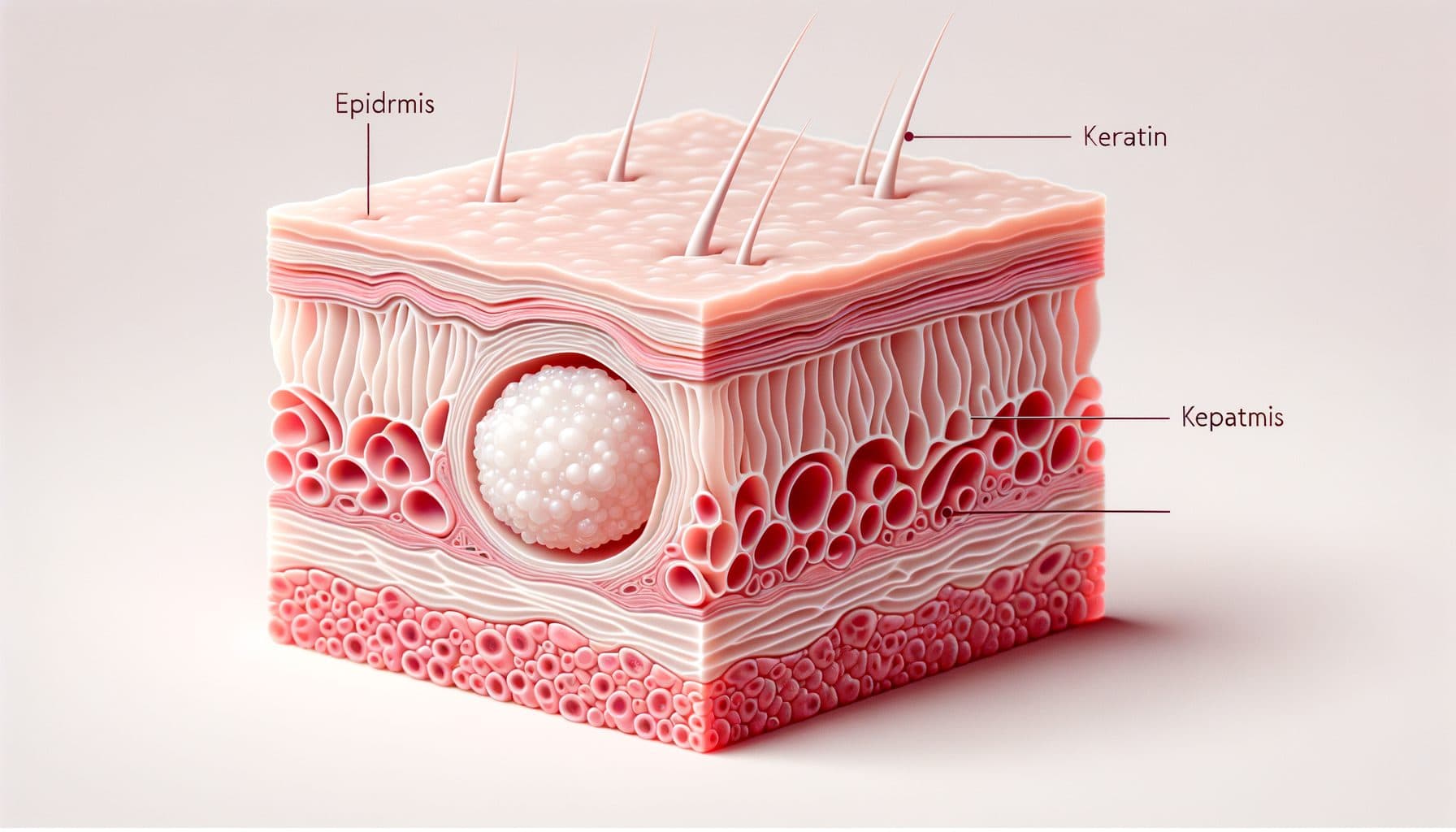
Miliya, teri yuzasining ostida keratin — teri, soch va tirnoqlarda tabiiy ravishda mavjud bo'lgan qattiq oqsil — tuzilgan kichik, gumbaz shaklidagi kistlardir. Ular odatda bir yoki ikki millimetr diametrda bo'lgan qattiq, dumaloq, oq-to'q sariq toshlar sifatida namoyon bo'ladi. Akne pustuylari yoki oq boshlar bilan farqli o'laroq, miliya pus yoki sebum bilan to'ldirilmagan; ular tananing normal ravishda tozalanmagan qattiq o'lik teri hujayralarining zich to'plarini o'z ichiga oladi.
Miliya har qanday yoshda, yangi tug'ilgan chaqaloqlardan tortib qariyalarigacha paydo bo'lishi mumkin. Yangi tug'ilgan chaqaloqlarda miliya juda keng tarqalgan bo'lib, yangi tug'ilganlarning 50 foizigacha ta'sir qiladi, odatda hayotning birinchi bir necha haftasida burun, yonoq va iyak atrofida paydo bo'ladi. Ushbu neonatal miliya bir necha hafta ichida o'z-o'zidan hal bo'ladi, chunki chaqaloqning terisi rivojlanadi va normal ravishda tozalanishni boshlaydi.
Kattalarda, miliya ko'proq davom etadi, ba'zida aralashuvsiz oylab yoki hatto yillar davomida saqlanib qolishi mumkin. Ular eng ko'p yuzda, ayniqsa ko'zlar atrofida, qovoqlarda, yonoqlarda, peshonada va burunda rivojlanadi, ammo tananing har qanday joyida, shu jumladan, tananing markaziy qismi va jinsiy a'zolarida ham paydo bo'lishi mumkin. Miliya mutlaqo benign hisoblanadi va hech qanday sog'liq uchun xavf tug'dirmaydi — ular faqat kosmetik muammo hisoblanadi. Biroq, ularning qattiq davomiyligi va ko'zga tashlanadigan joyda joylashuvi ularni ta'sirlanganlar uchun tez-tez qiyinchilik manbai qiladi.
Miliya qanday paydo bo'ladi?
Miliya, teri hujayralari tomonidan ishlab chiqarilgan keratin yuzada tuzilib qolganida paydo bo'ladi, o'z-o'zidan tozalanishi o'rniga. Mexanizm miliyaning turiga qarab farq qiladi. Birlamchi miliya, soch follikulasi va unga bog'liq sebasiy bezdan iborat bo'lgan pilosebaceous birlikdan yoki ekkrin teri bezidan o'z-o'zidan paydo bo'ladi.
Ular o'lik hujayralar to'planishi va qoplangan holda saqlanishi natijasida paydo bo'lishi mumkin, bu esa rivojlanmagan yoki sekin tozalanish jarayonidan kelib chiqadi. Genetik moyillik ham rol o'ynaydi, chunki ba'zi shaxslar miliya rivojlanishiga boshqalarga qaraganda ko'proq moyil. Ikkinchi miliya teri zararlanishi yoki buzilishi natijasida rivojlanadi.
Qizish, pufaklanish jarohatlari, dermabraziya, lazer bilan qayta ishlash, surunkali quyosh zarari va epidermoliz bullosa va porfiriya kutanea tarda kabi ba'zi pufakli teri kasalliklari ikkinchi miliya paydo bo'lishini keltirib chiqarishi mumkin. Yuqori kuchli topikal kortikosteroidlar, ayniqsa yuzga qo'llaniladigan kuchli formulalar tanilgan sababdir. Teshiklarni to'sib qo'yadigan va tabiiy tozalanishga aralashadigan og'ir, yopuvchi teri parvarish mahsulotlari va makiyaj, moyil shaxslar uchun miliya rivojlanishiga hissa qo'shishi mumkin.
Quyosh zarari vaqt o'tishi bilan terining tashqi qatlamini qalinlashtiradi, o'lik hujayralarni samarali tozalash qobiliyatini pasaytiradi va keratin tuzilishi uchun qulay sharoitlar yaratadi.!! Miliya en plaque — bu kam uchraydigan variant bo'lib, u erda miliya klasterlari yallig'langan, plaka shaklidagi asosda rivojlanadi, ko'pincha qovoqlarda, quloq orqasida yoki yonoqlarda paydo bo'ladi va lupus yoki lichen planus kabi autoimmun kasalliklar bilan bog'liq bo'lishi mumkin.
Miliya va Oq boshlar: Farq nima uchun muhim?
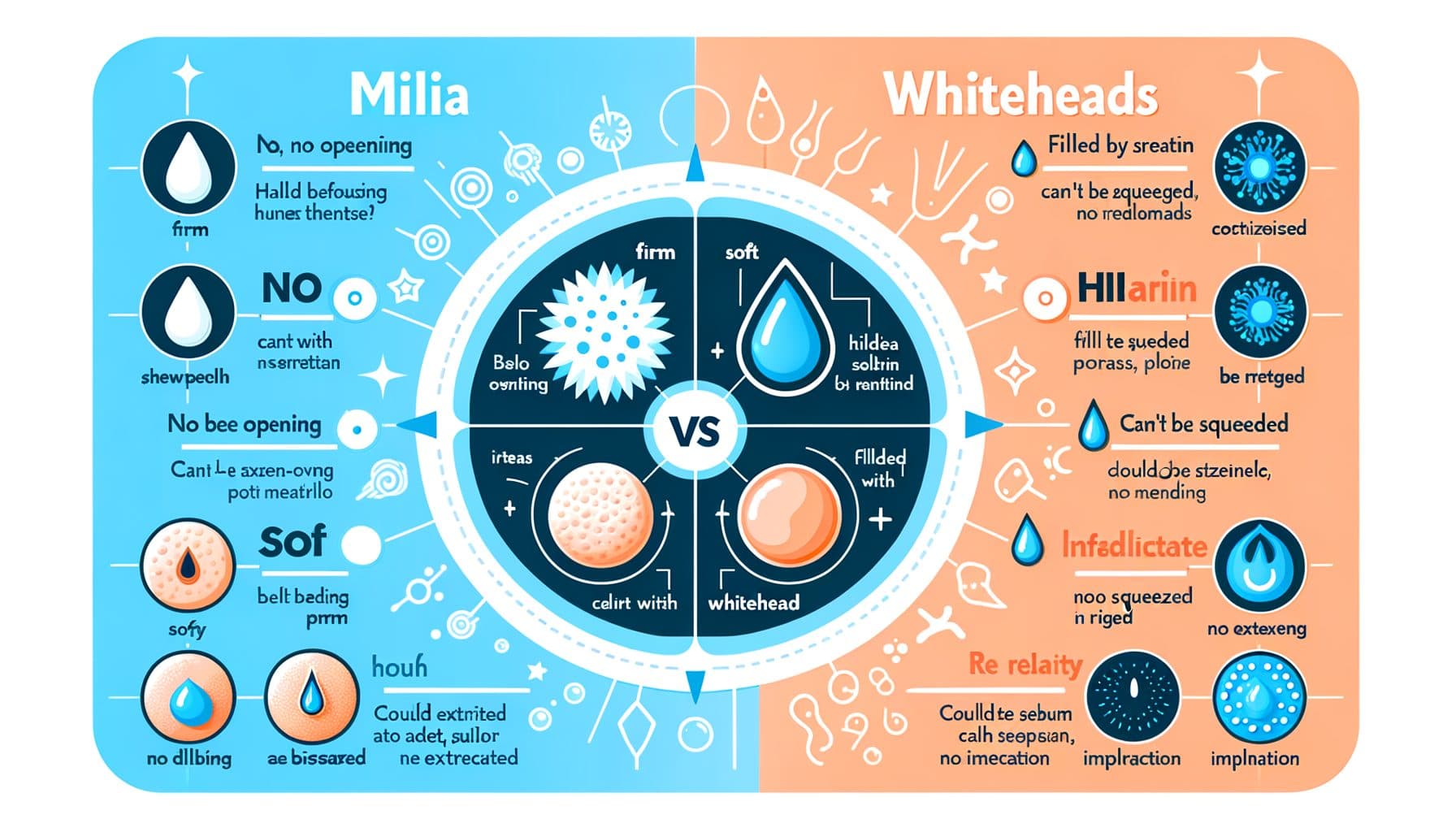
Miliya haqida eng keng tarqalgan noto'g'ri tushuncha shundaki, ular shunchaki qattiq oq boshlar yoki akne shakli. Ushbu noto'g'ri aniqlash, eng yaxshi holatda samarali bo'lmagan va eng yomon holatda zararli bo'lgan noto'g'ri davolash urinishlariga olib keladi. Oq boshlar (yopiq komedonlar) — bu soch follikulasi sebum (moy) va o'lik teri hujayralari aralashmasi bilan to'silib qolgan akne yarasi turidir.
Ular yumshoq, biroz ko'tarilgan va ko'pincha engil yallig'lanish bilan o'ralgan. Oq boshlar akne davolash vositalariga salitsil kislotasi, benzoil peroksid yoki retinoidlar qo'shilganida javob beradi, chunki bu ingredientlar komedonal akne sabab bo'lgan ortiqcha moy ishlab chiqarish va g'ayrioddiy follikulyar keratinizatsiyani hal qiladi. Miliya, aksincha, akne emas.
Ular terining yuzaki dermisida yoki dermo-epidermal kesish joyida joylashgan qoplangan keratin kistlari. Ular teginishda qattiq, oq boshlar kabi yumshoq yoki siqiladigan emas, va ularning atrofida qizil yoki yallig'lanish yo'q, o'ziga xos marvarid oq, gumbaz shaklidagi ko'rinishga ega. Miliya ortiqcha moy yoki bakteriyalarning ta'siri natijasida paydo bo'lmaganligi sababli, standart akne davolashlari ularga nisbatan ko'p hollarda samarasizdir.
Miliya siqish yoki pop qilishga urinish, oq boshni siqish kabi, behuda va zararli — kist tarkibi suyuq pus emas, balki qattiq keratin, va kist devori qattiq va qo'l bilan siqishga qarshi turadi.!! Aggressiv siqish, xususan, miliya eng ko'p uchraydigan nozik periorbital terida, sharmandalik, infeksiya va ko'karish xavfini keltirib chiqaradi. To'g'ri aniqlash to'g'ri davolashni belgilaydi, shuning uchun ushbu farqni tushunish bu qattiq oq toshlar bilan shug'ullanayotgan har kim uchun muhimdir.
Miliya turlari va kimlarda uchraydi
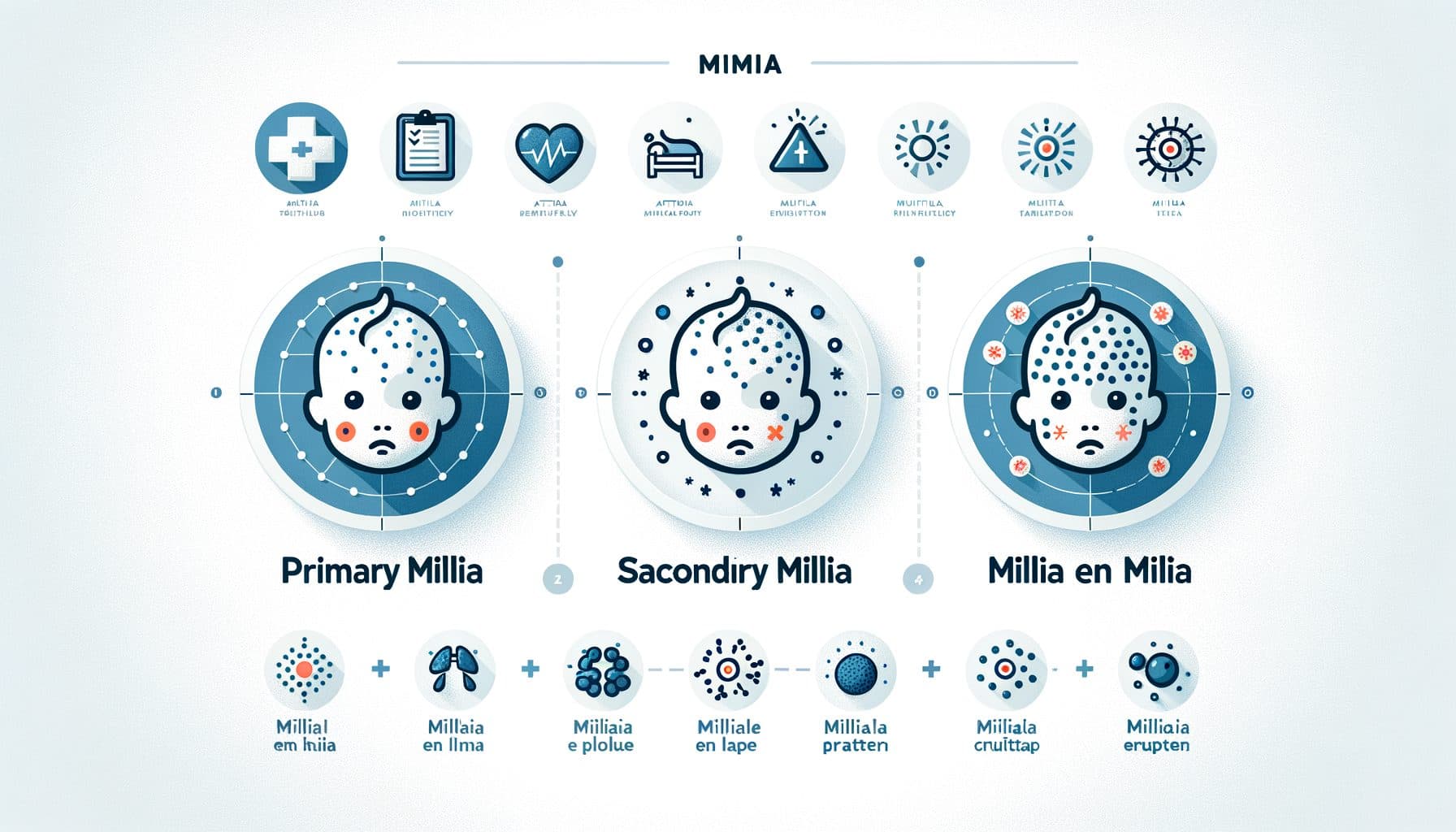
Miliyaning bir nechta farqli klinik variantlari mavjud bo'lib, har biri turli assotsiatsiyalar va demografik xususiyatlarga ega. Neonatal miliya eng keng tarqalgan tur bo'lib, yangi tug'ilgan chaqaloqlarning taxminan yarmida yuzda tarqalgan oq papulalar sifatida paydo bo'ladi. Ular yetilmagan pilosebaceous birliklardan kelib chiqadi va hayotning birinchi bir necha oyida hech qanday davolashsiz o'z-o'zidan hal bo'ladi — ota-onalar bu holatlarning mutlaqo normal va vaqtinchalik ekanligini bilishlari kerak.
Bolalar va kattalarda birlamchi miliya o'z-o'zidan rivojlanadi, eng ko'p ko'z qovoqlari, yonoqlar va peshonada paydo bo'ladi. Ularning tashqi sababi aniqlanmaydi va abnormal keratinizatsiyaga bo'lgan ichki moyillikni aks ettirishi mumkin. Ayollar erkaklarga nisbatan ko'proq ta'sirlanadi, bu ehtimol teri hujayralarining aylanishiga ta'sir qiluvchi gormonal omillar va yopuvchi kosmetik mahsulotlardan foydalanish bilan bog'liq.
Ikkinchi yoki travmatik miliya oldingi teri jarohatlari joylarida rivojlanadi — jarrohlik chandiqlari, kuyish yaralari, lazer yoki dermabraziya bilan davolangan joylar va pufak kasalliklaridan ta'sirlangan joylar. Ular dastlabki zarbadan bir necha hafta yoki oy o'tgach paydo bo'lishi mumkin, chunki tiklanayotgan teri jarohat jarayonida keratini tuzadi. Miliya en plaque — bu ko'p miqdordagi miliya qizil, ko'tarilgan teri plakasida paydo bo'lishi bilan ajralib turadigan kam uchraydigan variant.
Bu ko'proq o'rta yoshdagi ayollarga ta'sir qiladi va ko'z qovoqlari, quloq orqasida yoki jag' va yonoqlarda paydo bo'ladi. Ushbu variant autoimmun yoki yallig'lanish holatlari bilan bog'liq bo'lishi mumkin va davolashga ko'proq chidamli bo'lishi mumkin. Bir nechta eruptiv miliya — bu yana bir kam uchraydigan variant bo'lib, unda ko'p miqdordagi miliya yuzda, yuqori tanada va qo'llarda bir necha hafta yoki oy ichida paydo bo'ladi, ba'zida engil qichish bilan birga. Ushbu shakl genetik komponentga ega bo'lishi mumkin va odatda surunkali va qaytalanadigan bo'ladi.
Davolash va olib tashlash imkoniyatlari
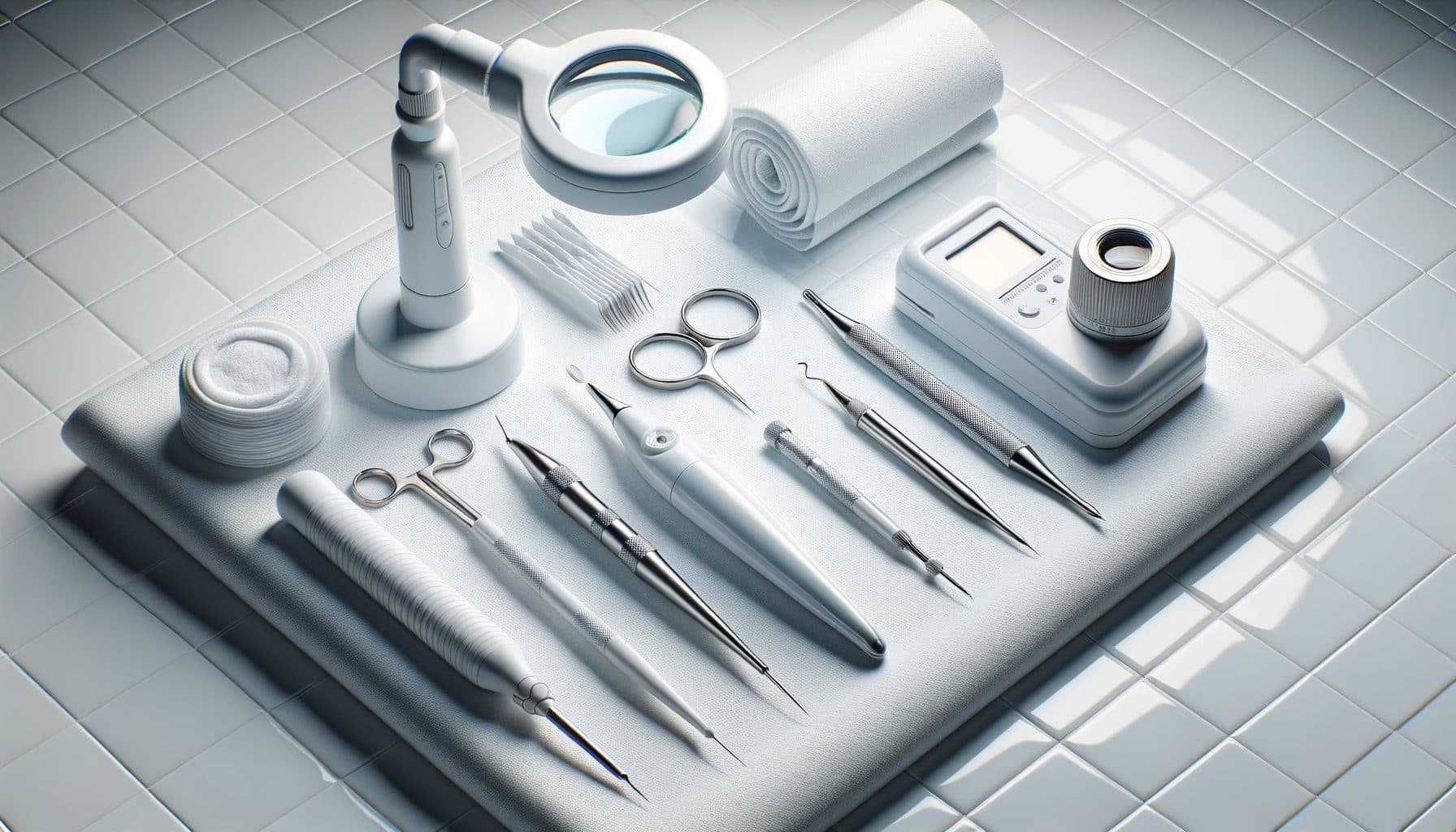
Miliya zararsiz bo'lsa-da va ba'zilari o'z-o'zidan hal bo'lsa-da, ko'plab kattalar kosmetik sabablarga ko'ra davolanishni izlaydilar, ayniqsa miliya ko'z atrofida yoki boshqa ko'zga tashlanadigan yuz joylarida to'planganda. Dermatolog tomonidan professional ekstraktsiya eng keng tarqalgan va samarali davolash usulidir. Steril lancet yoki nozik igna yordamida klinik shifokor miliyaning ustidagi terida kichik bir kesma yaratadi va keratin pluggini komedon ekstraktori yoki yumshoq qo'l bosimi yordamida chiqaradi.
Ushbu jarayon tez, minimal noqulaylik bilan o'tadi va malakali mutaxassis tomonidan to'g'ri bajarilganda, iz qoldirmasdan tuzaladi. Bu uyda miliyani siqish urinishidan fundamental jihatdan farq qiladi, bu esa to'qimalarga zarar yetkazish va infektsiya xavfini tug'diradi. Topikal retinoidlar — tretinoin, adapalene va tazarotene — hujayra aylanishini rag'batlantiradi va yangi miliyaning paydo bo'lishini oldini olishga yordam beradi va ba'zida mavjudlarini bir necha hafta yoki oy davomida hal qiladi.
Ular takroriy miliyaga moyil bo'lgan shaxslar uchun ayniqsa foydalidir. Biroq, retinoidlarni ko'z atrofida ehtiyotkorlik bilan ishlatish kerak va nozik terida irritatsiyaga olib kelishi mumkin. Glykolik kislota yoki laktik kislota peelinglari bilan kimyoviy eksfoliatsiya ustki terini yupqalashtirishga yordam beradi va normal teri tozalanishini rag'batlantiradi, bu esa tuzilgan keratinning yuzaga chiqishini osonlashtiradi.
Elektrodesikatsiya nozik elektr zondidan foydalanib, kist devorini yo'q qiladi, va krioterapiya suyuq azotni qo'llab, miliyani muzlatib yo'q qiladi. CO2 yoki erbiy lazerlari bilan lazer ablatsiyasi ko'p yoki takroriy miliya uchun samarali. Oldini olish uchun, engil, komedogen bo'lmagan teri parvarish mahsulotlaridan foydalaning, muntazam kimyoviy eksfoliantlarni o'z tartibingizga kiritishingiz, terini ortiqcha quyosh nuri ta'siridan himoya qilishingiz va miliyaga moyil joylarda og'ir yopuvchi kremlardan qochishingiz kerak. Agar sizda teri protseduralaridan keyin ikkinchi darajali miliya tarixi bo'lsa, kelajakdagi davolashlardan oldin dermatologingiz bilan oldini olish strategiyalarini muhokama qiling.
AI teri tahlili qanday yordam bera oladi
Yuzdagi kichik oq toshlar bir nechta turli holatlarni — miliya, oq boshlar, seboreya gipertrofiyasi, sirincoma yoki hatto kichik kistlarni — ifodalashi mumkin va to'g'ri aniqlash mos keladigan boshqaruvning birinchi qadamidir. Skinscanner ilg'or tasvir tahlilidan foydalanib, sizga ushbu umumiy yuz toshlarini ularning o'lchami, shakli, rangi, tarqatish naqshlari va yuzaki xususiyatlarini baholash orqali farqlashga yordam beradi. Teridagi muammolaringizni suratga olib, siz miliya bilan bog'liqmi yoki boshqa bir holatni ifodalashini talab qiladigan to'g'ri aniqlashni olish uchun darhol fikr olasiz.
Bu juda qimmatli, chunki miliyani akne sifatida davolash — yoki aksincha — samarali mahsulotlar bilan bir necha hafta davomida noqulay harakatlarga olib keladi. Takroriy miliyaga moyil bo'lganlar uchun, muntazam skanerlash sizga oldini olish strategiyalaringiz (retinoidlar, eksfoliatsiya, quyoshdan himoya qilish, mahsulot o'zgarishlari) yangi miliyani oldini olishda yoki professional ekstraktsiya kerakligini aniqlashda yordam beradi. Skinscanner shuningdek, davolangan joylarni qayta paydo bo'lishini kuzatishga va boshqa joylarda yangi miliya rivojlanishini aniqlashga yordam beradi.
Miliya benign bo'lsa-da va hech qachon xavfli bo'lmasa-da, tez o'sadigan, qonash yoki g'alati xususiyatlarga ega bo'lgan har qanday oq yoki teri rangidagi toshlar professional baholanishi kerak, boshqa tashxislarni istisno qilish uchun. Skinscanner dermatologik tekshiruvni almashtirmaydi, lekin bu sizning teringizni tushunishingizga va professional davolash qachon foydali ekanligini yoki sabr va oldini olish parvarishi etarli ekanligini bilishingizga yordam beradigan qulay, tezkor ko'rsatma beradi.