What Is Basal Cell Carcinoma and Why You Shouldn't Ignore It
Basal cell carcinoma (BCC) is the most common form of cancer worldwide, accounting for approximately 80% of all non-melanoma skin cancers. 6 million cases are diagnosed annually, and the incidence continues rising due to aging populations, increased sun exposure, and improved detection. BCC develops in the basal cellsâthe round cells at the base of the epidermis that produce new skin cells as old ones die off.
These cancers typically appear on sun-exposed areas: face (especially the nose), ears, neck, scalp, shoulders, and back. Here's why BCC is often called the 'good' skin cancer: it grows slowly, rarely metastasizes (spreads to other organs), and when caught early, is highly treatable with excellent cosmetic outcomes. The five-year survival rate for BCC is 100% when treated appropriately.
But here's the uncomfortable truth that 'good cancer' language obscures: while BCC rarely kills, it destroys. Left untreated, BCC grows deeper and wider, invading local tissues including cartilage and bone. A small BCC on the nose can, over years, erode through the nasal structure, requiring reconstructive surgery that may never fully restore appearance or function.
BCC near the eye can invade the orbit, potentially causing vision loss or necessitating eye removal. Ear BCC can destroy the entire external ear structure. Scalp BCC can penetrate to the skull.
These aren't rare worst-case scenariosâthey're the natural progression of untreated disease. Every year of delay allows the cancer to grow larger, penetrate deeper, and require more extensive and disfiguring surgery. The difference between a 15-minute office procedure with a tiny scar and major facial reconstruction surgery is often just months or a few years of ignoring that 'harmless' spot.
' Meanwhile, the cancer is silently expanding, planning its architectural destruction of your face. Upload a photo and get results in seconds before that spot becomes a surgical emergency.

Recognizing BCC: What to Look For on Your Skin
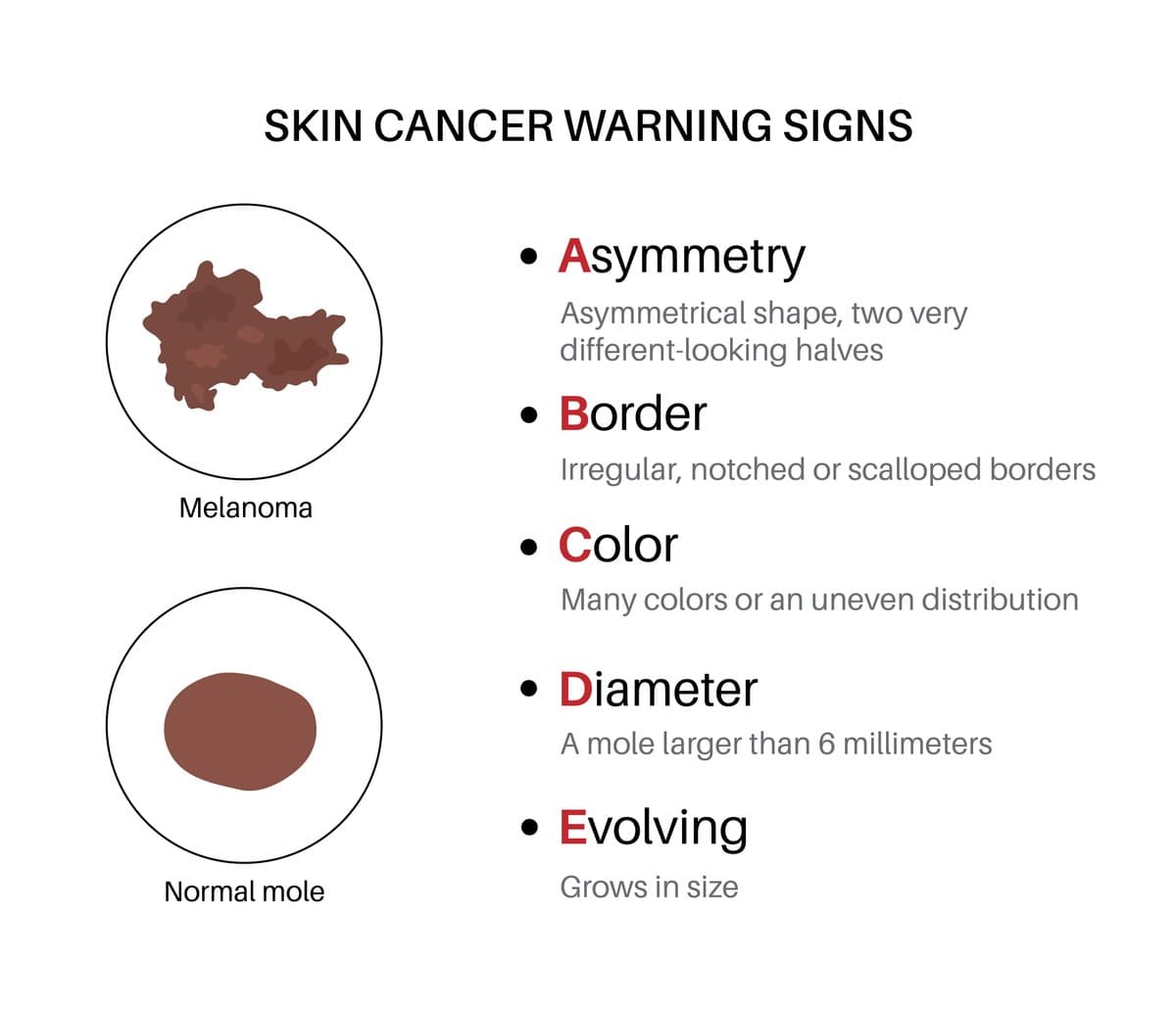
Basal cell carcinoma is a master of disguise, appearing in several distinct forms that people often mistake for benign conditions. Nodular BCC, the most common type, appears as a pearly or waxy bump, often with visible blood vessels (telangiectasias) on the surface. It's flesh-colored, pink, or slightly darker, typically dome-shaped, and may have a central depression or ulceration that bleeds easily and doesn't heal.
People often mistake it for a persistent pimple. Superficial BCC appears as a pink or red scaly patch, often with a slightly raised border, commonly on the trunk and limbs. It looks remarkably like eczema or psoriasis and is frequently misdiagnosed or ignored for years.
Morpheaform (sclerosing) BCC is the most insidious typeâappearing as a scar-like white or yellow patch that's flat or slightly depressed, with poorly defined borders. It's easily dismissed as a scar from minor trauma, but it's actually a more aggressive BCC type that infiltrates widely beneath innocent-appearing surface skin. Pigmented BCC contains melanin and appears brown, blue, or black, often confused with moles or melanoma.
Fibroepithelial BCC appears as a firm, skin-colored or red raised bump, often on the back. The warning signs: any new growth on sun-exposed skin, particularly face, ears, neck, or scalp; a sore that bleeds, oozes, crusts, or doesn't heal within a few weeks; a shiny, translucent, or pearly bump; a pink growth with raised edges and central crusting; a white or yellow scar-like area that appears without prior injury; a slowly growing spot that changes over months to years. The key word is persistentâBCC doesn't come and go like pimples or rashes.!!
It's there day after day, month after month, slowly growing. That spot you've been watching for six months? It needs evaluation now.
That 'pimple' that won't heal? It's not a pimple. The tragedy is how many people have photographs showing a tiny, easily treatable BCC years before they finally sought treatment, by which point it required extensive surgery. Don't waitâearly detection saves faces.

Risk Factors: Who Gets BCC and Why
While anyone can develop basal cell carcinoma, certain factors dramatically increase your risk. Cumulative sun exposure over your lifetime is the primary causeâBCC is essentially a disease of sun damage. Every sunburn, every hour of unprotected sun exposure, accumulates in your skin's cellular memory, increasing cancer risk.
People with fair skin that burns easily and tans poorly face the highest riskâthose with blonde or red hair, blue or green eyes, and pale skin are particularly vulnerable. But darker-skinned individuals aren't immune; they develop BCC less frequently but often present at later stages with larger lesions. Living in sunny climates or at high altitudes where UV radiation is more intense increases risk.
Outdoor occupations and recreational activities providing chronic sun exposureâfarming, fishing, construction, golfing, skiing, sailingâall elevate BCC risk significantly. Indoor tanning bed use substantially increases risk, with some studies showing a 50% or higher increase for those who use tanning beds before age 35. Previous history of skin cancer is a powerful predictor: once you've had one BCC, you have a 40% chance of developing another within five years.!!
People with multiple BCCs often develop them repeatedly throughout life. Radiation therapy for other conditions increases BCC risk in the treated areas, often decades later. Chronic wounds and scars, particularly burn scars, can develop BCC.
Exposure to arsenic (historically from contaminated well water or certain occupational exposures) increases risk. Immunosuppression from medications (organ transplant recipients) or diseases (HIV, chronic lymphocytic leukemia) dramatically increases BCC incidenceâtransplant patients have 10 times the risk. Genetic conditions including basal cell nevus syndrome (Gorlin syndrome) cause hundreds of BCCs beginning in adolescence or early adulthood, requiring lifelong surveillance and repeated treatments.
Xeroderma pigmentosum, a rare genetic disorder impairing DNA repair after UV damage, causes extreme skin cancer susceptibility. Family history suggests genetic susceptibility even without identified syndromes. Advanced age correlates with increased risk simply due to cumulative lifetime sun exposure.
The grim reality: if you're reading this and you're over 40 with a history of sun exposure, you're at risk. That spot you're ignoring could be your first BCC. Your skin tells a story. Let AI read it.

Treatment Options: From Simple Excision to Mohs Surgery
The good news about basal cell carcinoma is the variety of effective treatment options available, with selection depending on BCC size, location, subtype, and your medical history. Surgical excision is the gold standard for most BCCsâthe tumor is cut out along with a margin of normal-appearing skin to ensure complete removal, then the wound is sutured closed. This provides a tissue sample for pathologic examination confirming complete removal.
Cure rates exceed 95% for primary BCCs. Mohs micrographic surgery is the most precise and effective treatment, with cure rates above 99% for primary BCCs. It's particularly valuable for BCCs on the face, ears, and other cosmetically or functionally critical areas; for large or aggressive BCCs; for recurrent BCCs; and for BCCs with poorly defined borders.
The technique involves removing the cancer layer by layer, immediately examining each layer under a microscope, and stopping only when margins are clear. This preserves the maximum amount of healthy tissue while ensuring complete cancer removalâcritical when every millimeter of tissue matters for reconstruction and appearance. Electrodesiccation and curettage (ED&C) involves scraping away the cancer with a curette then burning the area with an electrocautery needle.
It's suitable for small, superficial BCCs in low-risk locations but has higher recurrence rates (5-15%) than excision or Mohs surgery. Cryotherapy uses liquid nitrogen to freeze and destroy the cancer, appropriate for small, superficial BCCs but with limited ability to confirm complete destruction and recurrence rates of 5-10%. Radiation therapy is used when surgery isn't feasible due to patient health, tumor location, or patient preference, or as adjuvant treatment after surgery for high-risk features.
It requires multiple treatments over weeks and carries long-term cosmetic concerns and risk of radiation-induced skin cancers decades later. Topical medications including imiquimod cream (immune response modifier) and 5-fluorouracil cream (chemotherapy) are options for superficial BCCs in low-risk locations, applied for weeks to months. They avoid surgery but have higher recurrence rates and require patient compliance with uncomfortable treatment courses causing redness, irritation, and crusting.
Photodynamic therapy (PDT) uses a photosensitizing agent applied to the skin followed by light exposure to destroy cancer cells, used for superficial BCCs. The most important factor in BCC treatment is completenessâincomplete removal leads to recurrence, often in a more aggressive form requiring more extensive subsequent surgery.!! This is why Mohs surgery, despite being more expensive and time-consuming, is increasingly preferred for facial BCCs where both cure and cosmetic outcome matter.
Every millimeter of unnecessary tissue loss on your nose, lip, or eyelid affects your appearance forever. Not sure if it's serious? Let our AI take a look.

The Disfigurement Factor: What Advanced BCC Really Looks Like
Medical literature uses clinical language like 'locally invasive' and 'requiring reconstructive surgery,' but let's be explicit about what untreated or neglected basal cell carcinoma actually does. BCC on the noseâthe most common locationâstarts as a small pearly bump or non-healing sore. Over months to years, it expands, eventually ulcerating through the skin.
As it continues growing, it invades the cartilage that gives your nose its structure. Eventually, it can erode completely through the nose, creating a hole where cartilage and tissue once were. Reconstruction requires grafting tissue from other body sitesâforehead, ear, or rib cartilageâto rebuild nasal structure.
Even with expert plastic surgery, the nose never looks or functions the same. Breathing may be impaired. The psychological impact of severe facial disfigurement is devastating.
BCC of the ear follows a similar pattern, eventually destroying the external ear structure. Early BCCs on the ear are easily excised with good cosmetic results. Neglected BCCs require partial or complete ear removal followed by complex reconstruction or prosthetic ears.
BCC near the eye is particularly dangerousâit can invade the orbit, requiring exenteration (removal of the eye and surrounding tissues) in extreme cases. Even less advanced periorbital BCCs require delicate surgery where tissue preservation is critical for eyelid function. BCCs on the scalp can penetrate to the skull and even invade through bone to reach the brain in extremely neglected casesâthese are surgical and oncological emergencies.
The cruelty is that this disfigurement is entirely preventable. A BCC caught when it's 5mm requires a simple excision with a tiny scar. The same cancer allowed to grow to 20mm requires Mohs surgery, possibly local flap reconstruction, and leaves significant scarring.
At 40mm, it may require complex reconstruction with tissue grafts and multiple surgeries. By the time it's destroying cartilage and bone, the patient faces permanent disfigurement despite heroic surgical efforts. The photographs of advanced BCC are shockingâimages that would be disturbing to display here but that everyone ignoring a suspicious spot should see.
These aren't rare cases from developing countries with no medical access; they occur in the United States and other developed nations when people delay treatment due to fear, denial, lack of insurance, or simple procrastination. Every one of those disfigured faces started with a small spot that could have been treated in a 15-minute office procedure. Take 30 seconds to scanâit could save your face.

Recurrence and Multiple BCCs: Life After Your First Diagnosis
If you've been diagnosed with basal cell carcinoma, your relationship with skin cancer screening has changed permanently. Having one BCC means you're at significantly increased risk for additional BCCsâapproximately 40% of people diagnosed with BCC develop another within five years. Some individuals develop dozens or even hundreds of BCCs over their lifetime, requiring repeated treatments and vigilant monitoring.
The reasons for this increased risk are clear: the same factors (sun exposure, skin type, genetics) that caused your first BCC continue affecting your entire skin surface; sun damage is widespread even when only one area has progressed to cancer; genetic susceptibility means your skin is predisposed to developing these cancers. After BCC diagnosis and treatment, you need regular full-body skin examinationsâtypically every 6-12 months initially, potentially spacing to annually if you remain clear for several years. These exams check for new BCCs and for recurrence of treated BCCs.
Recurrent BCC is more aggressive than primary BCC, often of the infiltrative or morpheaform histologic subtype, and requires more extensive treatment. Recurrence rates depend on initial treatment quality: Mohs surgery has the lowest recurrence rate (less than 1% for primary BCC, 5% for recurrent BCC), while ED&C and topical treatments have higher recurrence rates. Self-examination becomes a lifelong habit: monthly full-body checks looking for new growths or changes in existing spots.
Photographing your skin creates a reference for detecting subtle changes. Sun protection becomes non-negotiable: daily broad-spectrum SPF 30+ sunscreen on all exposed skin, sun-protective clothing, wide-brimmed hats, seeking shade, and avoiding midday sun (10 AM to 4 PM when UV is strongest). For people with multiple BCCs or high risk, some dermatologists recommend field therapyâtreating entire sun-damaged areas with topical medications like 5-fluorouracil or imiquimod to address subclinical (not yet visible) cancers.
The psychological burden of multiple skin cancers is substantialâthe anxiety before each dermatology appointment wondering if new cancers will be found, the financial burden of repeated procedures, the accumulating scars, and the feeling of your body betraying you repeatedly. But there's also empowerment in vigilance: catching new BCCs early means simple, minimally invasive treatment. The alternativeâignoring new lesions or skipping follow-up appointmentsâinvites the same disaster you've already narrowly avoided.
Curious about that spot? Get instant AI analysis.

Prevention: It's Never Too Late to Reduce Your Risk
While you can't undo past sun damage, you can prevent additional damage and reduce future BCC risk. Sun protection is the cornerstone of prevention: apply broad-spectrum (protects against both UVA and UVB) sunscreen with SPF 30 or higher daily to all exposed skin, reapplying every two hours when outdoors and after swimming or sweating. Use adequate amountsâmost people apply only 25-50% of the needed amount; you need about one ounce (a shot glass full) to cover your entire body.
Sunscreen alone is insufficient: wear protective clothing including long sleeves, long pants, and wide-brimmed hats (at least 3-inch brim all around); seek shade especially during peak UV hours (10 AM to 4 PM); use UV-blocking sunglasses to protect the delicate eye area. Avoid tanning beds completelyâthere is no safe tan from artificial UV radiation. The 'base tan' myth needs to die: a tan represents DNA damage and provides minimal protection equivalent to SPF 3 while dramatically increasing skin cancer risk.
Be vigilant about sun exposure during high-risk activities: skiing and snowboarding (UV reflects off snow, increasing exposure); boating and beach activities (water reflects UV); golfing and outdoor sports. Windows block UVB but not UVA, so sun damage occurs during drivingâconsider UV-blocking window film for cars. Check your medications: some antibiotics, diuretics, and other drugs cause photosensitivity, increasing sun damage during use.
For high-risk individuals (history of multiple skin cancers, immunosuppression, genetic syndromes), chemoprevention with oral nicotinamide (a form of vitamin B3) has shown promise in reducing new skin cancer development. Regular dermatologic surveillance catches new cancers early when they're most treatable. Self-examination allows you to identify suspicious lesions between professional exams.
Teaching children sun-safe behaviors establishes lifelong habitsâmost lifetime sun exposure occurs before age 18, making childhood sun protection critical. The fatalistic attitudeâ'I've already had sun damage, so protection now won't help'âis wrong. Every additional day of unprotected sun exposure adds to your risk.
Every day of protection reduces future risk. Prevention won't eliminate your BCC risk if you're already predisposed, but it will reduce the number of future cancers you develop and delay their onset. For those who've had BCC, prevention is about reducing the parade of future cancers from a flood to a trickle.
Your skin tells a story. Let AI read it.

How Skinscanner Helps You Stay Ahead of Basal Cell Carcinoma
Basal cell carcinoma is eminently treatable when caught early but potentially disfiguring when neglected. The challenge is recognizing which spots warrant professional evaluation versus which are benign. Skinscanner serves as your first line of defense, providing immediate analysis of suspicious lesions between dermatology appointments.
Our artificial intelligence has been trained on thousands of images of BCCs and benign lesions, learning to identify the subtle features that distinguish cancer from harmless spots. Simply photograph any suspicious growth using your smartphone, and our AI analyzes it within seconds, flagging concerning characteristics and recommending whether dermatologist evaluation is warranted. For those at high riskâprevious BCC diagnosis, fair skin, significant sun exposure historyâSkinscanner enables frequent monitoring of your entire skin surface.
The recommended approach: photograph any new or changing spots monthly, creating a visual timeline that makes subtle changes obvious. The AI can identify concerning features like the pearly borders, telangiectasias, central ulceration, or scar-like appearance characteristic of different BCC subtypes. This is particularly valuable for monitoring hard-to-see areas like the scalp, ears, and back where BCCs commonly develop but self-examination is difficult.
For those who've had BCC treatment, the AI helps monitor for recurrence at previous treatment sitesâany new growth or non-healing area near a previous BCC should be evaluated promptly as recurrent BCCs are more aggressive. Skinscanner doesn't replace professional dermatologic examination and biopsyâdefinitive BCC diagnosis requires pathologic examination of tissueâbut it serves as an accessible screening tool that catches red flags early, potentially months or years before you'd otherwise seek evaluation. Think of it as a smoke detector: it alerts you to danger so you can take action before disaster strikes.
The difference between catching a 3mm BCC and a 15mm BCC can be the difference between a tiny scar and significant facial reconstruction. For people with limited access to dermatologists due to geography, insurance, or availability, Skinscanner helps triage which lesions most urgently require professional evaluation versus which can be monitored. The peace of mind value is significant: rather than worrying about every spot, you can get objective AI analysis within seconds.
Every day matters in skin cancer detection. Early detection prevents disfigurement, reduces treatment complexity, and provides peace of mind. Check your skin now with a free AI scan and give yourself the advantage of early detection.
That suspicious spot isn't going to disappear on its own, but with timely treatment, it can be addressed before it requires surgery that changes your face forever. Don't wait until you can't ignore it any longer. Act now while treatment is simple and outcomes are excellent.