
Why Photo Documentation Outperforms Memory
Human memory is remarkably unreliable when it comes to gradual visual changes. A mole that grows by half a millimeter per month may be imperceptible to the naked eye from one week to the next, yet over six months that change becomes clinically significant. Without photographic documentation, most people cannot accurately recall what a specific mole looked like even a few weeks ago.
Dermatologists frequently encounter patients who report that a mole has "always looked like that" when in reality it has been changing gradually. This is not a failure of attention but a well-documented limitation of human visual memory. Our brains continuously update our mental image of familiar features, making it nearly impossible to detect slow, incremental changes without an external reference.
Photographic documentation provides that objective external reference. When you compare a photograph from today against one from three months ago, changes that would be invisible through memory alone become immediately apparent. Side-by-side photo comparison is considered one of the most effective tools available for detecting slow-evolving skin changes that would otherwise go unnoticed until they become advanced.!!
The practice of sequential dermoscopic photography is standard in dermatology clinics for monitoring atypical moles. While you do not have dermoscopic equipment at home, the same principle applies to standard photography. Consistent, well-executed photographs taken at regular intervals create a visual timeline that makes change detection dramatically more reliable.
Pair this practice with a thorough skin self-examination routine for the best results. This guide covers the practical aspects of creating a home photo documentation system that is thorough enough to be useful without being so complex that you abandon it after two sessions. The best system is one you will actually maintain consistently, so simplicity and sustainability are key design principles.
Lighting: The Most Important Technical Factor
Of all the variables that affect the quality and comparability of skin photographs, lighting is the most critical. A mole can appear to change color dramatically simply because of different lighting conditions between photo sessions. Eliminating this variable is essential for reliable documentation.
Natural daylight is the gold standard for skin photography. Position yourself near a large window on an overcast day or in indirect sunlight. Avoid direct sunlight streaming through the window, as it creates harsh shadows and can wash out subtle color variations.
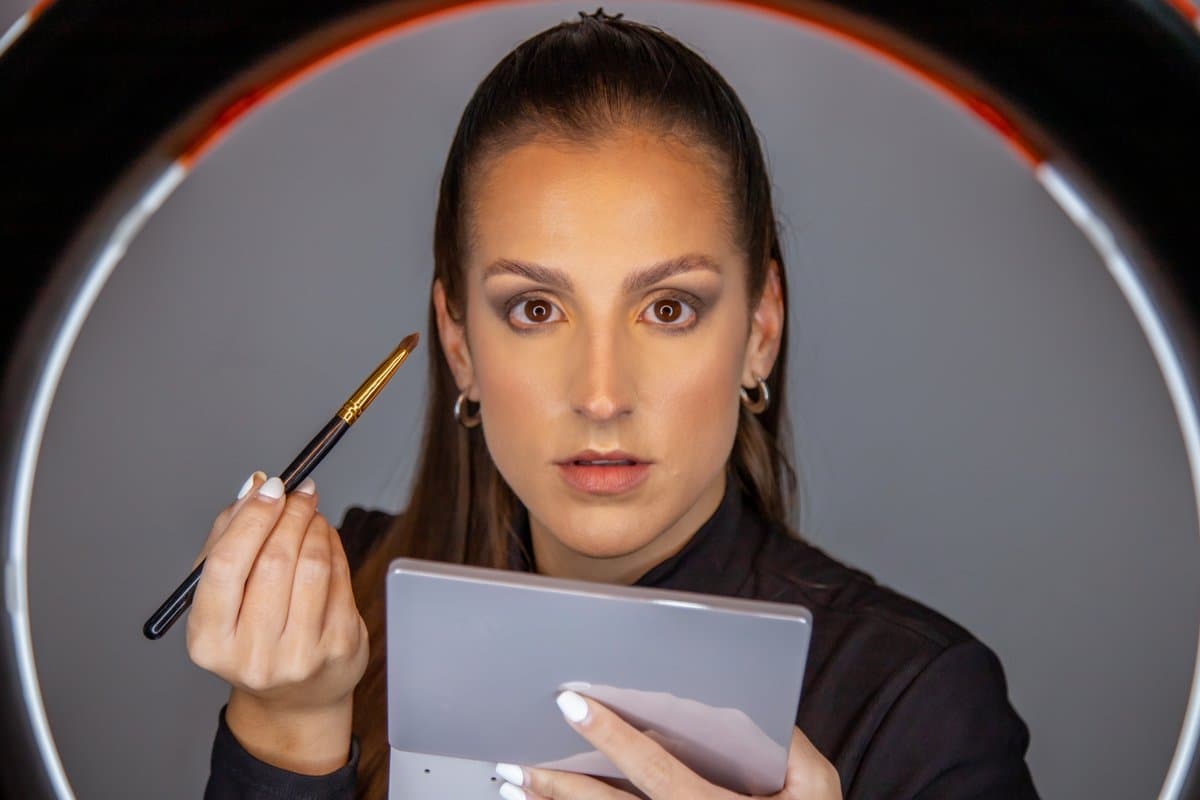
The ideal setup provides bright, even illumination without strong directional shadows. If you cannot use natural light consistently, invest in a simple daylight-balanced LED panel or ring light. These devices produce consistent color temperature light and can be positioned the same way each session.
Avoid using ceiling fixtures as your primary light source because they cast downward shadows that distort the appearance of raised lesions and obscure border details. Turn off your camera flash in every situation. The flash creates specular highlights on the skin surface that obscure color detail and make lesions appear flatter and lighter than they actually are.
Flash photography also produces inconsistent results because the distance and angle to the subject change the flash exposure, making comparison between sessions unreliable. Whatever lighting setup you choose, document it and replicate it exactly each session. Note which window you stand near, what time of day provides the best light, or the exact position of your artificial light source.
Some people mark the floor with tape to indicate their standing position relative to the light source. This level of consistency may seem excessive, but it is what transforms casual snapshots into clinically useful documentation.
Camera Technique and Smartphone Tips
Modern smartphone cameras are more than adequate for skin documentation when used with proper technique. You do not need specialized medical photography equipment for home monitoring. However, certain techniques significantly improve the diagnostic value of your images.
Always hold the camera so that the lens is perpendicular to the skin surface directly above the lesion. Photographing at an angle introduces perspective distortion that changes the apparent shape and size of the mole. If the mole is on a curved body surface like a shoulder, try to angle the camera so it faces the mole head-on rather than photographing the entire curved surface at once.
Use your phone's built-in macro or close-up mode if available. On phones without a dedicated macro mode, the standard camera at a distance of approximately 10 to 15 centimeters usually provides sufficient detail. Tap the screen directly on the mole to ensure the camera focuses on the lesion rather than the surrounding skin or the ruler you have placed alongside it.
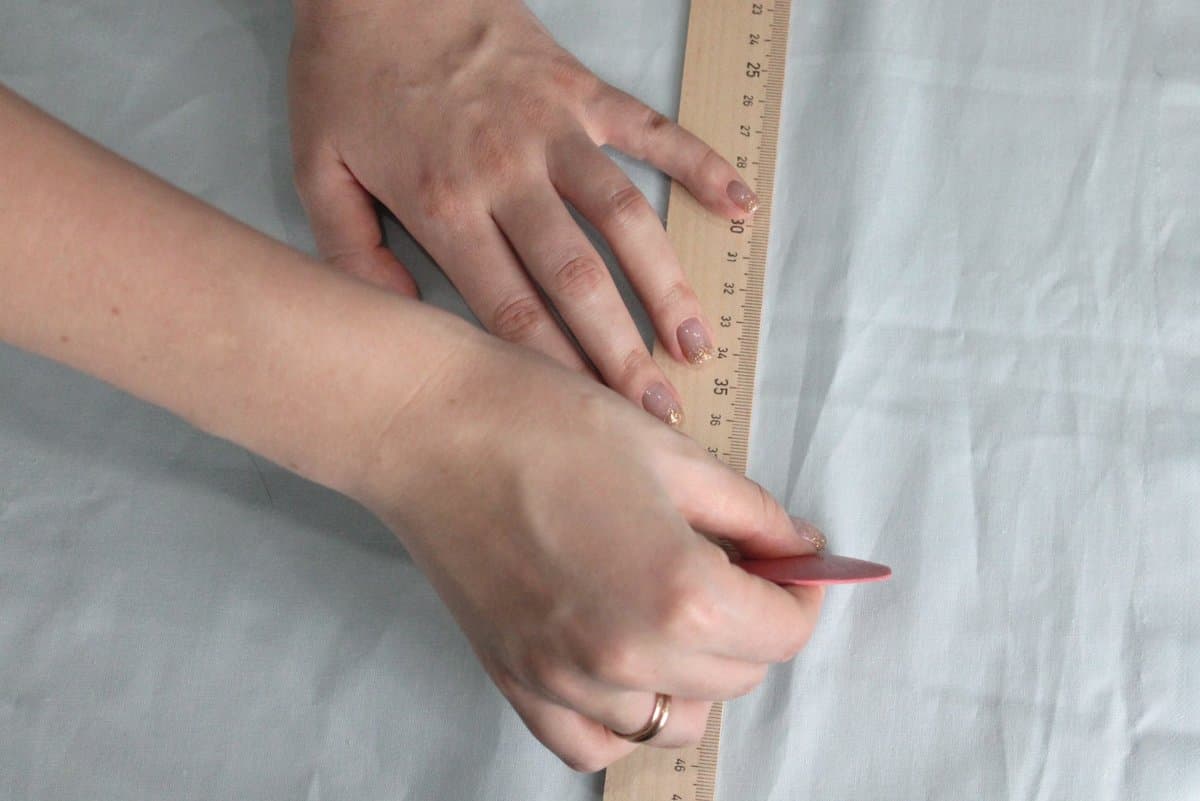
Include a millimeter ruler or a coin of known diameter in every photograph, positioned as close to the mole as possible without overlapping it. This provides an absolute size reference that allows you to detect changes of even one to two millimeters between sessions. Without a consistent size reference in your photographs, apparent size changes could be artifacts of different camera distances rather than actual growth.!!
Take both a close-up shot and a wider contextual shot for each area of interest. The close-up captures detail while the wider shot shows the anatomical location and relationship to nearby landmarks like freckles or skin folds. This dual approach helps you relocate the exact spot during future sessions and gives your dermatologist anatomical context if you share the images.
Building and Maintaining Your Baseline
Your baseline is the initial set of photographs and records against which all future comparisons will be made. Investing time in creating a thorough, well-organized baseline pays dividends for years to come, so treat this first session as the most important one. During your baseline session, photograph every mole, notable freckle cluster, and any other skin marking you want to track.
Use a body map diagram to number each lesion and create a corresponding numbered photo file. For each numbered entry, record the date, body location, approximate size, color description, and any notable features. This cross-referenced system ensures nothing gets lost or confused over time.
Organize your photos in a folder structure that supports easy comparison. A recommended approach is to create a main folder for each body region (head, torso front, torso back, right arm, left arm, right leg, left leg) with subfolders for each date of examination. Name individual files with the lesion number from your body map so you can quickly pull up the history of any specific mole.
Set a calendar reminder to update your documentation monthly. At each session, photograph every tracked lesion using the same technique, lighting, and camera position as your baseline. Immediately after each session, compare the new photos against the previous set while your visual memory of the current appearance is fresh.
Update your baseline every six to twelve months by confirming with your dermatologist that monitored lesions are stable and using the most recent confirmed-stable images as your new reference. This prevents your baseline from becoming so outdated that normal aging changes accumulate and obscure potentially meaningful recent changes. Keep archived older images accessible but use the updated baseline for your active comparisons.

Identifying Meaningful Changes and Using Digital Tools
Not every apparent difference between photos represents a genuine clinical change. Learning to distinguish real changes from photographic artifacts reduces unnecessary anxiety and helps you focus on findings that truly warrant attention. Genuine changes typically manifest as differences visible across multiple comparison photos, not just one pair of images.
If a mole appears slightly darker in one photo but looks the same as baseline in the next month's photo, the difference was likely caused by lighting variation, skin hydration, or recent sun exposure rather than a true change. Persistent, progressive differences across three or more consecutive sessions are more meaningful than isolated variations. Changes that should prompt a dermatology visit include a documented increase in diameter, the appearance of a new color within a previously uniform mole, a change from flat to raised, border irregularity that was not present at baseline, or the development of asymmetry.
If your photos clearly show a mole that was round six months ago and is now oval, or that was uniformly brown and now shows a darker region, these are changes worth professional evaluation. Several digital tools can enhance your tracking process. Learn more about how AI is changing early detection.
Some smartphone applications are designed specifically for mole mapping and tracking, offering features like side-by-side comparison views, measurement tools, and automated change detection alerts. When choosing such a tool, prioritize ones that store data securely and privately. Cloud-based photo storage with date stamping and folder organization works well as a simple, free solution.
Some people use basic photo editing software to place current and baseline images side by side and zoom into specific areas for comparison. Whatever digital approach you choose, maintain a backup of your data and ensure you can access your full history reliably. The value of your documentation increases with time, so losing your archive means losing years of comparative data that cannot be recreated.