

Why Full-Body Skin Exams Save Lives
Skin cancer is the most commonly diagnosed cancer worldwide, yet it is also among the most treatable when caught early. Full-body skin self-examinations bridge the gap between annual dermatology appointments by helping you notice changes when they first appear rather than months later at a scheduled visit. Research published in dermatology journals has consistently shown that patients who perform regular skin self-examinations tend to detect melanomas at earlier stages.
If you have many moles, our guide on how to monitor moles at home is a helpful companion resource. Earlier detection typically means thinner tumors, which correlates strongly with better treatment outcomes and higher survival rates. A thorough self-exam covers every square centimeter of skin, including areas you rarely think about and may never look at during daily life.
Many people focus exclusively on sun-exposed areas like the face and arms, but skin cancers can develop anywhere on the body, including areas that never see sunlight. Approximately 20 to 30 percent of melanomas arise in locations that receive little to no sun exposure, which is why a comprehensive head-to-toe approach is essential.!! This includes the soles of your feet, between your toes, under your nails, and on your scalp, areas where cancers are often diagnosed at more advanced stages simply because they were not checked regularly.
Self-examination is not a substitute for professional skin exams by a trained dermatologist. Instead, it complements professional care by making you an active participant in your skin health. When you know what your skin normally looks like, you become dramatically better at identifying when something deviates from that baseline. The following sections walk you through a systematic approach that ensures you check everything methodically.
Step-by-Step Full-Body Examination Process
A systematic approach prevents you from accidentally skipping areas. Begin by gathering your tools: a full-length mirror, a handheld mirror, a bright lamp, a chair or stool, a comb or hair dryer, and your documentation materials. Allow yourself 15 to 20 minutes in a private, well-lit room.
Start with your face, examining it in the mirror under bright light. Look closely at your nose, lips, mouth, ears both front and back, and eyelids. Use the handheld mirror to examine behind your ears and along the ear canal opening.
Move to your scalp, using a comb or hair dryer on a cool setting to part your hair section by section, examining the scalp underneath. This is much easier with a partner. Proceed to your hands, checking palms, backs of hands, between fingers, and under each fingernail.
Inspect your forearms front and back, upper arms, and armpits. Standing before the full-length mirror, examine your neck, chest, and torso. Women should lift each breast to check the skin underneath.
Continue down to your abdomen, hips, and groin area. Turn around and use the handheld mirror in combination with the full-length mirror to examine your upper and lower back, buttocks, and the backs of your legs. Sit down to examine the fronts of your legs, shins, ankles, tops and soles of your feet, between each toe, and toenails.
Pay particular attention to the nail beds, where subungual melanoma can appear as a dark streak or band in the nail. Repeat this same sequence every time you perform a self-exam so it becomes second nature. A consistent routine means you are less likely to skip areas, and the process becomes faster as it becomes habitual.
Areas People Commonly Miss
Despite good intentions, most people performing skin self-exams consistently overlook the same regions. Being aware of these commonly missed areas helps you avoid the blind spots that reduce the effectiveness of your examination. The scalp is one of the most frequently neglected areas, particularly in people with thick or dark hair.
Melanomas on the scalp are associated with worse outcomes partly because they tend to be detected at later stages. If you have thick hair, enlisting a partner to examine your scalp section by section is important. Pay attention to any new or changing spots, even those that are partially hidden by hair.
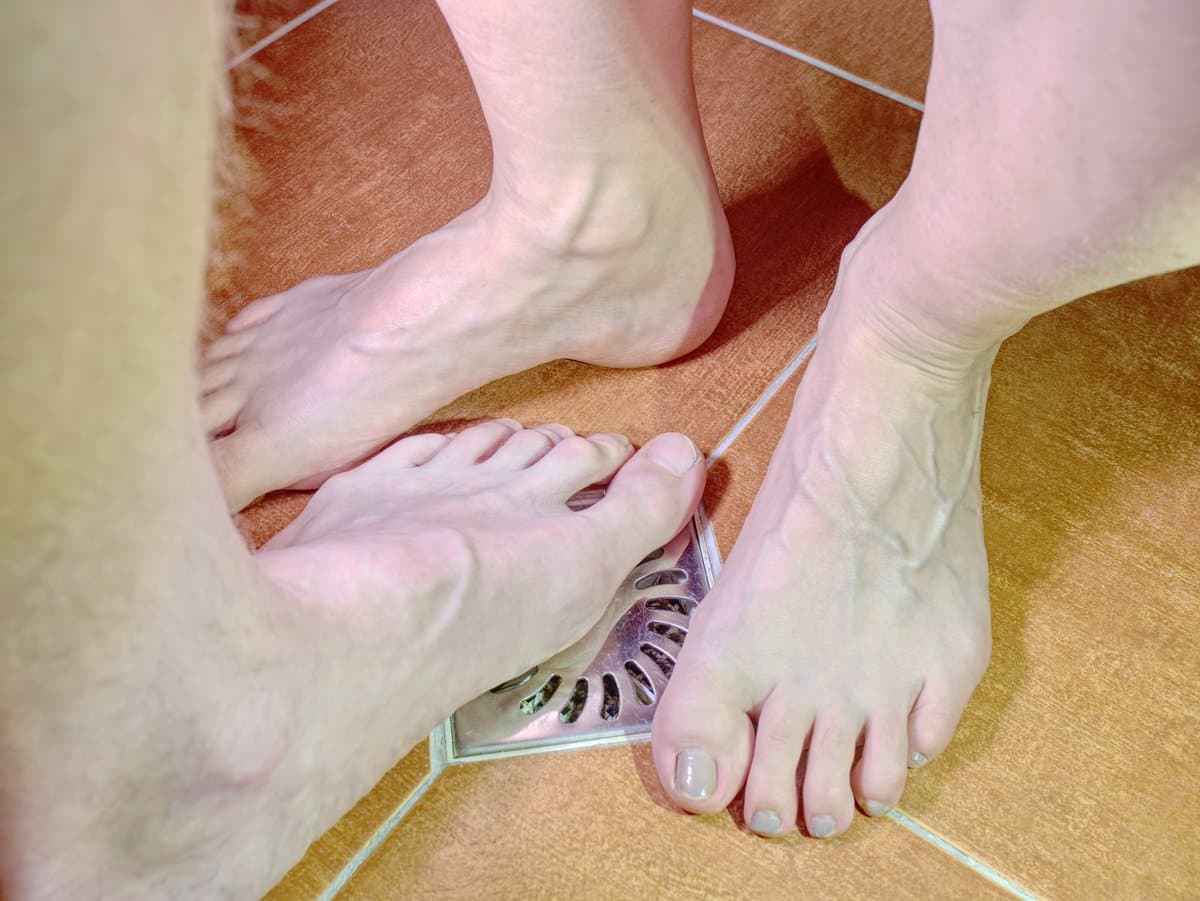
The spaces between toes and the soles of the feet are another commonly missed location. Acral melanoma, which occurs on the palms, soles, and under nails, accounts for a higher proportion of melanoma in people with darker skin tones. Carefully examine each toe web space and the entire sole, including the arch and heel.
The genital and perianal regions are understandably areas that many people skip during self-exams due to discomfort. However, mucosal melanoma can occur in these areas, and lesions here may be dismissed as hemorrhoids, skin tags, or other benign conditions. Including the genital region in your routine self-exam is important because cancers in these locations are frequently diagnosed late due to detection delay.!!
The back of the neck, especially at the hairline, behind the ears, and the lower back just above the buttocks are areas that are difficult to see and therefore easy to neglect. These areas receive significant sun exposure and are common sites for skin cancer development. Use your mirror system or a partner to ensure thorough coverage of all posterior body surfaces.

Normal Versus Abnormal: What to Look For
Understanding the spectrum of normal skin findings prevents unnecessary alarm while helping you recognize genuine warning signs. Most bumps, spots, and marks on your skin are completely benign, but learning the difference between typical and atypical features empowers your monitoring efforts. Normal moles are typically uniform in color, usually a single shade of tan or brown.
They tend to be round or oval with smooth, well-defined borders. Most are smaller than six millimeters and remain stable in appearance over time. Freckles are flat, small, light brown spots that may darken with sun exposure and lighten during winter months.
Seborrheic keratoses, common in people over 40, appear as waxy, stuck-on looking growths that range from light tan to dark brown and have a characteristic rough texture. Features that warrant attention include asymmetry, where one half of a lesion looks distinctly different from the other half. Irregular borders that are ragged, notched, or blurred rather than smooth and round are another flag.
Color variation within a single lesion, particularly combinations of brown, black, red, white, or blue, should be noted. Any lesion larger than six millimeters deserves monitoring, though small lesions can also be concerning if they display other atypical features. Beyond visual features, pay attention to symptoms.
Normal moles do not itch, bleed, or hurt. A lesion that is persistently itchy, bleeds without being scratched or bumped, develops a crust, or fails to heal within three weeks needs professional evaluation. Textural changes matter too, such as a previously flat mole becoming raised or a smooth mole developing a rough surface.
Remember that the single most important thing to look for is change. A mole that looks somewhat unusual but has been completely stable for years is less concerning than a previously normal-looking mole that has recently changed in any way.

Frequency, Documentation, and Next Steps
How often you should perform self-examinations depends partly on your personal risk factors. For the general population, monthly self-exams are the standard recommendation. People with higher risk factors, including a personal or family history of skin cancer, a large number of moles, a history of blistering sunburns, or immunosuppression, may benefit from more frequent monitoring as advised by their dermatologist.
Document your findings at every examination using a body map and photographs. A body map is a printed outline of the human body where you mark the location and number of each notable skin lesion. Pair this with close-up photographs that include a ruler for scale reference.
Store your documentation in chronological order so you can easily compare findings across months. When documenting, note the date, location on your body, approximate size, color, shape, and any symptoms for each spot you are monitoring. If you notice a change, write down specifically what has changed and when you first noticed it.
This detailed record is enormously helpful for dermatologists when evaluating a lesion because it provides temporal context that a single office visit cannot. If your self-exam reveals a concerning finding, see a dermatologist rather than taking a wait-and-see approach. Describe the specific change you have noticed and bring your documentation including comparison photographs.
Most findings will turn out to be benign, but the peace of mind and the occasional early catch make the effort worthwhile. Between self-exams, remain alert to any spot that catches your attention through itching, tenderness, or visible change. You do not need to wait until your next scheduled check to take note of something new. Casual awareness between formal examinations adds another layer of detection that can only benefit your long-term skin health.