
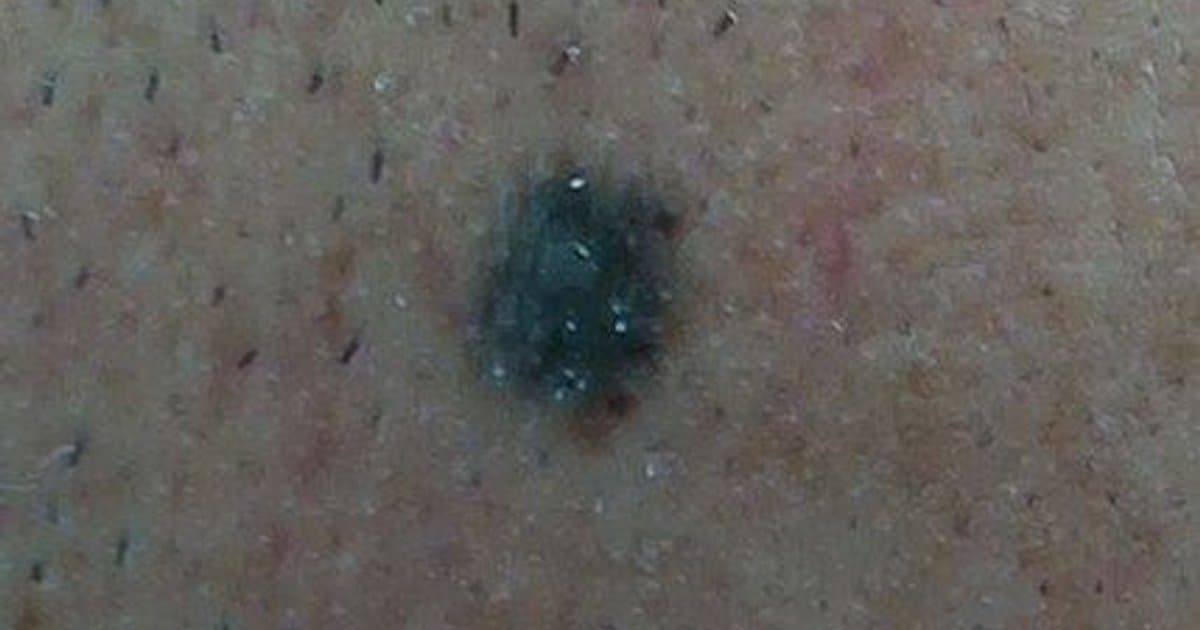
What Is a Blue Nevus?
A blue nevus is a benign melanocytic lesion — a type of mole — that appears blue, blue-gray, or blue-black rather than the typical brown or tan color associated with most moles. The blue coloration is not caused by different pigment chemistry but rather by the physical phenomenon of light interacting with melanin located deep within the dermis. While the melanocytes in common moles reside near the skin surface in the epidermis and superficial dermis, the melanocytes in a blue nevus are situated deep within the mid-to-lower dermis.
This deep location produces the characteristic blue appearance through a phenomenon known as the Tyndall effect — the same optical principle that makes the sky appear blue and veins look blue-green through the skin. When light enters the skin, longer wavelengths (red, yellow) penetrate deeply and are absorbed by the deep melanin, while shorter wavelengths (blue) are scattered and reflected back to the observer's eye, creating the blue appearance. Blue nevi are relatively common, found in approximately one to two percent of the population.
They can appear anywhere on the body but are most frequently located on the dorsal hands and feet, scalp, face, and buttocks. They typically develop in childhood or adolescence and remain stable throughout life. Most are solitary, small (less than one centimeter), and asymptomatic. While the unusual blue color can understandably cause concern, the vast majority of blue nevi are entirely benign and require nothing more than routine monitoring.

Types of Blue Nevi
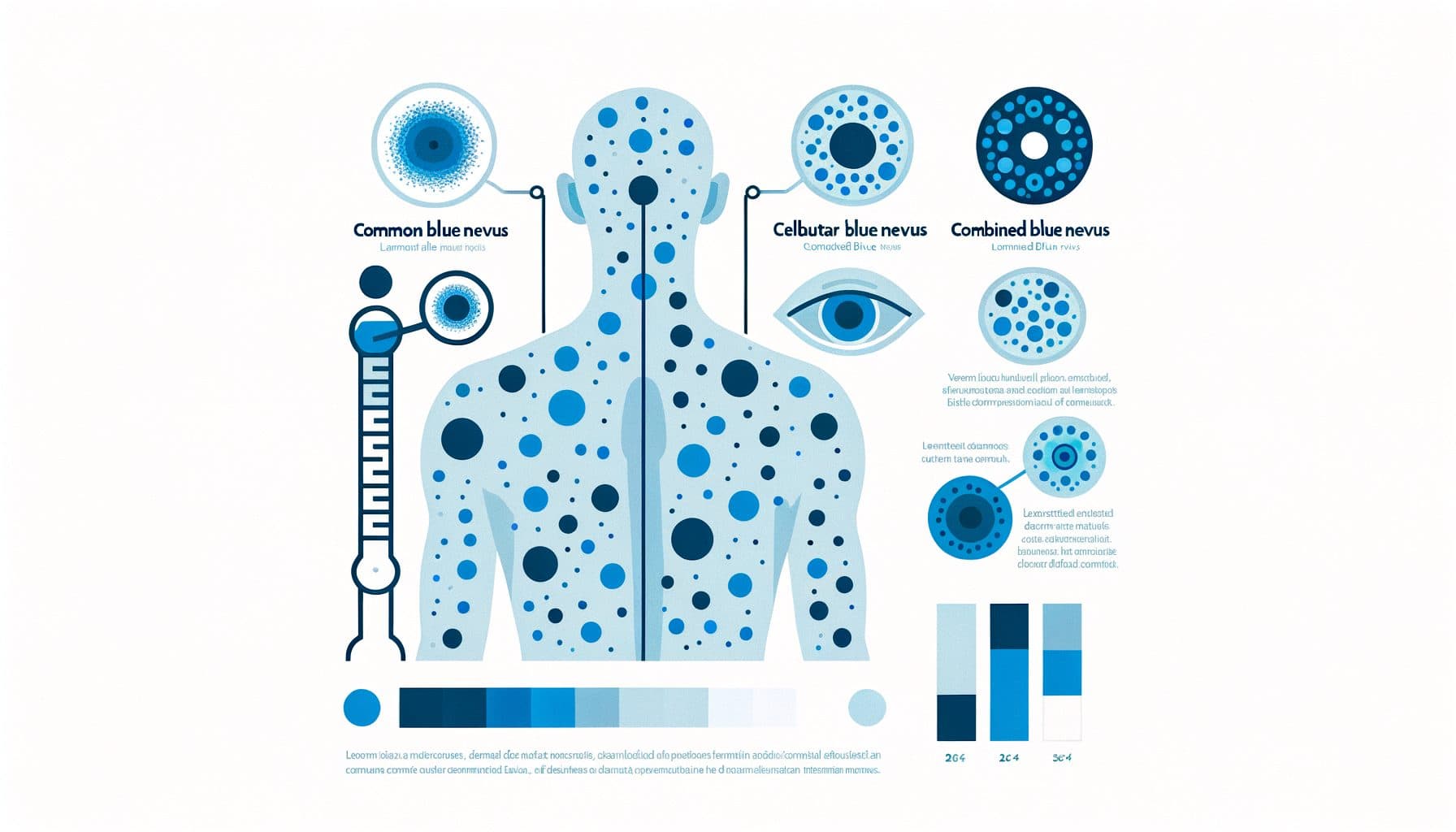
Several distinct variants of blue nevi exist, each with characteristic clinical and histologic features. The common blue nevus (Jadassohn-Tieche type) is the most frequently encountered variant, presenting as a small (typically under one centimeter), well-circumscribed, uniformly blue-to-gray papule or macule. It is composed of elongated, dendritic melanocytes dispersed through the dermis with abundant melanin pigment.
Common blue nevi are most frequently found on the dorsal hands and feet, scalp, and face. They are firmly fixed in the dermis, hard to the touch, and have smooth, well-defined borders. Once formed, they remain remarkably stable in size and color over decades.
The cellular blue nevus is a larger variant, often measuring one to three centimeters, that tends to occur on the buttocks, sacrococcygeal region, and scalp. It appears as a blue-to-gray nodule or plaque and histologically contains dense islands of epithelioid and spindle-shaped melanocytes in addition to the typical dendritic melanocytes. The cellular blue nevus is clinically important because it has a slightly higher (though still very low) risk of malignant transformation compared to the common variant, and it can be more difficult to distinguish from melanoma histologically.
Combined blue nevus refers to a blue nevus that coexists with another type of melanocytic nevus (such as a common acquired nevus or Spitz nevus) within the same lesion, producing a lesion with both brown and blue components. Epithelioid blue nevus is a variant associated with Carney complex, a rare genetic syndrome involving cardiac myxomas, endocrine overactivity, and skin pigmentation abnormalities. This variant is composed of heavily pigmented epithelioid melanocytes and requires evaluation for the associated syndrome.
The Tyndall Effect: Why Deep Pigment Looks Blue
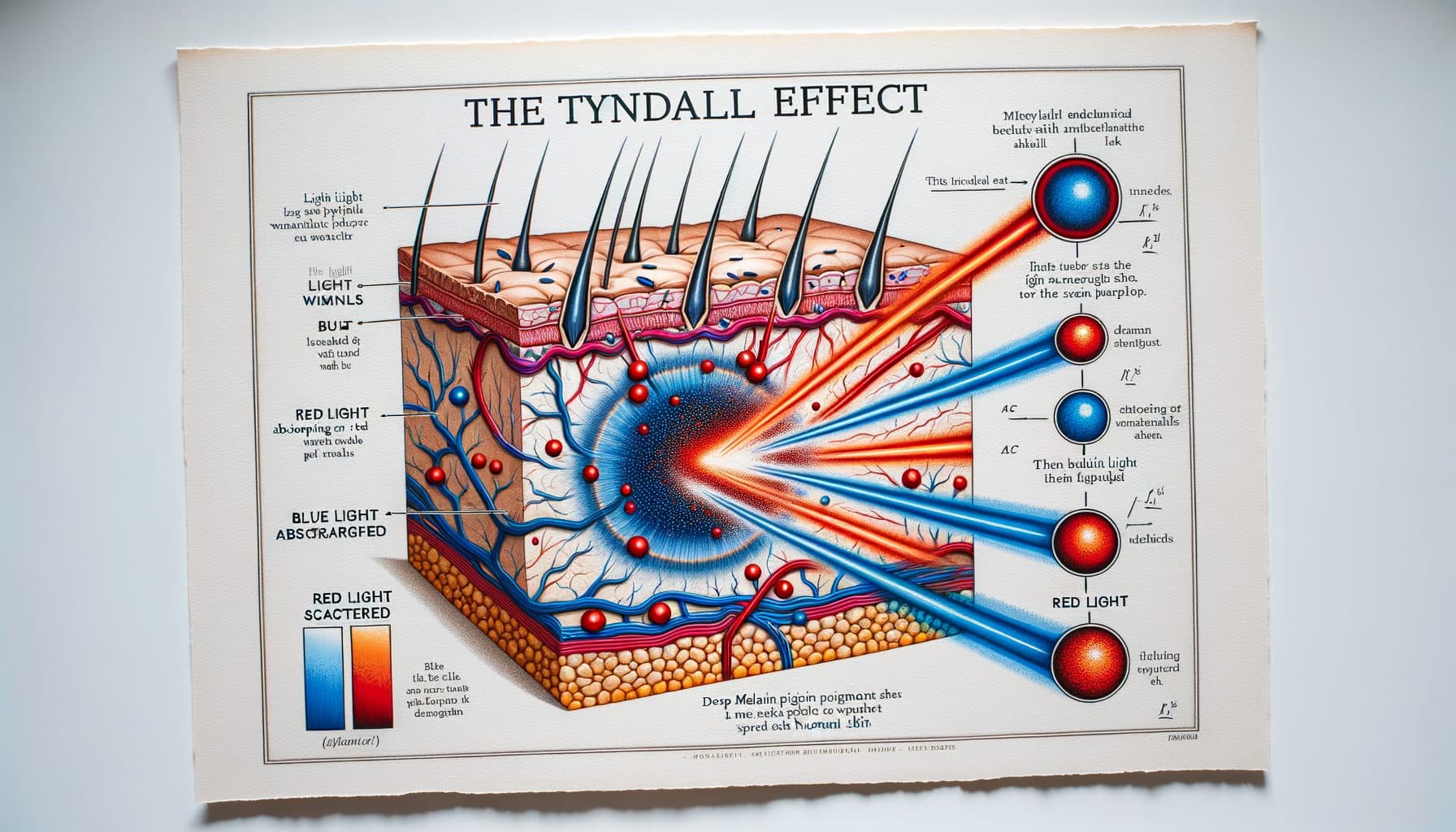
Understanding why blue nevi appear blue requires a brief exploration of the physics of light interaction with skin. The Tyndall effect — named after 19th-century physicist John Tyndall — describes the scattering of light by particles suspended in a medium. When white light (containing all visible wavelengths) enters the skin, it encounters various structures that scatter it.
Shorter wavelengths (blue and violet light, at approximately 400 to 490 nanometers) are scattered much more efficiently than longer wavelengths (red and orange light, at approximately 590 to 700 nanometers). In a common brown mole, melanin pigment is located in the epidermis and superficial dermis, close enough to the surface that all wavelengths of light interact with it and are absorbed relatively equally, producing a brown appearance. In a blue nevus, the melanin is located deeper — in the mid-to-lower dermis.
At this depth, the longer wavelengths of light penetrate deeply enough to be absorbed by the melanin, effectively removing the red and yellow components from the reflected light. Meanwhile, the shorter blue wavelengths are preferentially scattered by the overlying dermal collagen before they reach the deep melanin, reflecting back toward the observer. The net result is that our eyes perceive predominantly blue wavelengths returning from the skin over a blue nevus. This same principle explains many blue phenomena in nature and medicine: the blue appearance of subdermal veins (deoxygenated hemoglobin is actually dark red, not blue), the blue color of certain gemstones with deep inclusions, blue eyes (which contain no blue pigment), and the blue-gray appearance of certain tattoo pigments that migrate deeper into the dermis over time.
Blue Nevus vs. Melanoma: A Critical Distinction
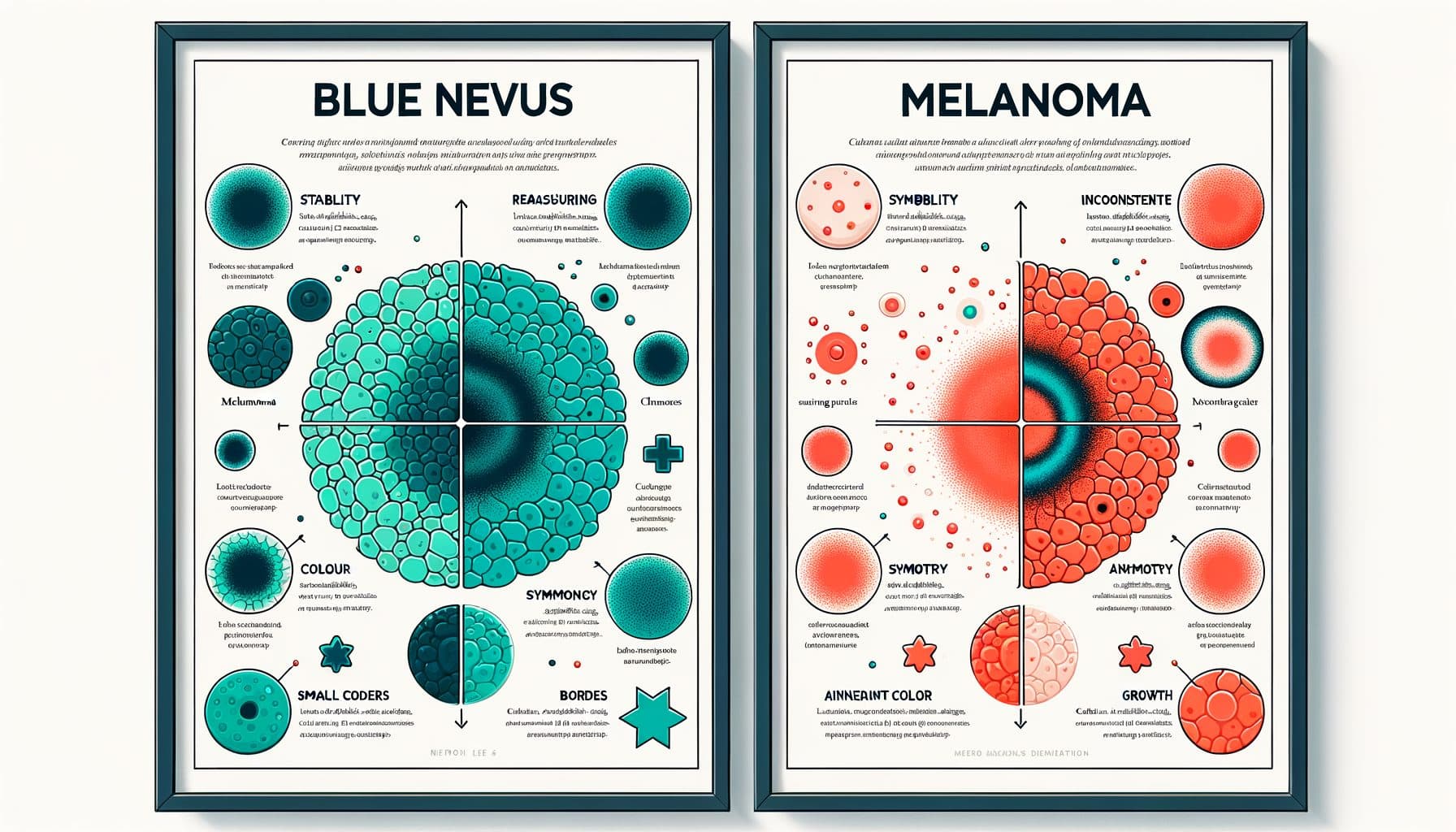
The primary clinical concern with blue nevi is their potential to be confused with nodular melanoma or blue nevus-like melanoma, both of which can present as blue or blue-black nodules. Distinguishing features of a typical benign blue nevus include small size (under one centimeter), homogeneous blue-gray color, well-defined symmetric borders, smooth surface, and long-term stability without change. Melanoma, in contrast, tends to show asymmetry, irregular or poorly defined borders, color heterogeneity (mixing of blue, black, brown, red, or white areas), larger size, and evolution over time.
The key clinical feature favoring a benign blue nevus is stability — a blue lesion that has been present for years without any change in size, shape, or color is overwhelmingly likely to be benign.!! Conversely, a blue or blue-black lesion that is new, growing, changing in shape or color, symptomatic (painful, itching, or bleeding), or larger than one centimeter should be evaluated for possible malignant blue nevus or melanoma. Malignant blue nevus is a rare but recognized entity — an aggressive melanoma that arises within or resembles a blue nevus.
It occurs more commonly in the cellular blue nevus variant, particularly large lesions on the scalp. Features suggesting malignancy include rapid growth, size exceeding two centimeters, ulceration, satellite lesions, and irregular borders. Dermoscopy (examination with a polarized light magnifier) can aid in distinguishing benign blue nevi from melanoma.
Blue nevi typically show a homogeneous blue-gray pattern without the irregular network, regression structures, or multicolored pattern characteristic of melanoma. When clinical and dermoscopic examination cannot confidently establish a benign diagnosis, biopsy is warranted.!!
Diagnosis and Management
Most blue nevi are diagnosed clinically based on their characteristic appearance — a small, well-defined, uniformly blue or blue-gray papule that has been stable over time. Dermoscopy enhances diagnostic accuracy by revealing the homogeneous, structureless blue-gray or steel-blue pattern typical of blue nevi, distinct from the varied patterns seen in melanoma. In expert hands, clinical and dermoscopic evaluation is sufficient for managing typical common blue nevi without biopsy.
However, biopsy is recommended for any blue lesion that has changed in size, color, or shape; any blue lesion larger than one centimeter; cellular blue nevi, particularly large ones on the scalp or sacrum; blue lesions with irregular borders, asymmetry, or color heterogeneity; new blue lesions appearing in adults over the age of 40; and any blue lesion causing diagnostic uncertainty. Excisional biopsy — removing the entire lesion with narrow margins — is preferred over partial biopsy, as it allows complete histopathologic assessment and definitive diagnosis. Pathological examination of a blue nevus reveals the characteristic deep dermal dendritic melanocytes laden with melanin pigment, with the specific pattern varying by subtype.
Once a blue nevus is confirmed as benign, routine monitoring is appropriate. Annual skin checks should include evaluation of known blue nevi for any changes. Patients should be educated about signs that warrant return evaluation — growth, color change, symptomatic changes, or border irregularity. For cellular blue nevi, some dermatologists recommend complete excision to eliminate the small risk of future malignant transformation, particularly for larger lesions.

How AI Skin Analysis Can Help
A blue or blue-black spot on the skin is understandably concerning — the unusual color immediately signals that something might be different from a typical mole. Skinscanner provides immediate AI-powered evaluation when you photograph a blue-colored skin lesion, analyzing its color homogeneity, border regularity, symmetry, size, and surface characteristics to determine whether it matches the benign pattern of a blue nevus or displays features requiring professional evaluation. The AI has been trained to recognize the characteristic homogeneous blue-gray appearance of benign blue nevi and to identify concerning features like color heterogeneity, irregular borders, and asymmetry that might suggest melanoma.
This initial assessment is particularly valuable because blue lesions create disproportionate anxiety — their unusual color makes them look more alarming than brown spots even when they are equally benign. Skinscanner helps provide informed context about blue lesions, explaining the Tyndall effect and the benign nature of stable blue nevi while appropriately flagging lesions that deviate from the expected pattern. For individuals with known blue nevi, the app enables tracking changes over time through serial photography, creating a visual record that makes it easy to detect any evolution in size, color, or border characteristics.
Skinscanner does not replace dermoscopic examination by a trained clinician — any blue lesion with atypical features or concerning changes needs professional assessment with potential biopsy. But for the common situation of discovering a blue spot and wondering whether it is dangerous, Skinscanner provides accessible, immediate guidance.