
Årsaker
Det finnes ingen enkelt bevist årsak til akrale nevi. Genetikk, UV-eksponering, hormonelle endringer, stråling, infeksjoner og gjentatte mindre skader på huden kan alle spille en rolle i deres utseende og vekst.
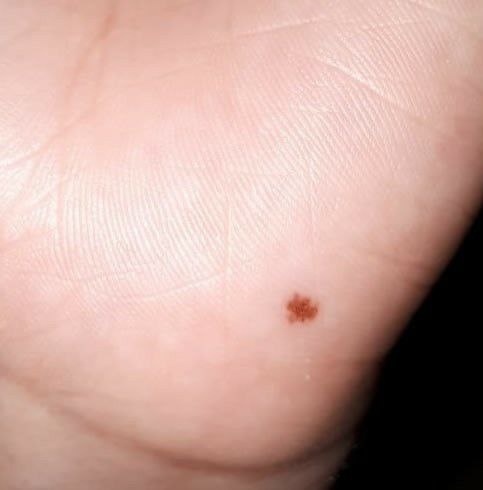
Akralt melanocytisk nevus
Frekvens
Vanlig
Aldersgruppe
Alle aldre
Progresjon
Selvbegrensende
Smittsom
Nei
En akralt nevus er en godartet føflekk som vises på håndflatene eller fotsålene. Den er vanligvis liten, jevnt farget og stabil over tid, og de fleste utvikler seg ikke til melanom. Fordi melanom også kan vises på håndflater og fotsåler, bør enhver ny eller endrende flekk i disse områdene sjekkes av en hudlege.
Dette er generell informasjon. Med en skanning vil du motta en detaljert, personlig analyse — inkludert individuell risikovurdering, progresjonssporing og anbefalte tiltak.
Det finnes ingen enkelt bevist årsak til akrale nevi. Genetikk, UV-eksponering, hormonelle endringer, stråling, infeksjoner og gjentatte mindre skader på huden kan alle spille en rolle i deres utseende og vekst.
En typisk akral nevus anses som trygg og medfører ikke i seg selv høyere melanomrisiko enn normal hud. Den største faren er å forveksle et tidlig akralt melanom med en godartet nevus, så enhver endring i størrelse, form, farge eller følelse bør sjekkes raskt.
De fleste akrale nevi trenger ikke behandling og kan enkelt overvåkes. Hvis en lesjon er mistenkelig, gjentatte ganger traumatisert, eller kosmetisk plagsom, anbefales kirurgisk fjerning med histologi, mens laser eller frysemetoder generelt unngås på disse føflekkene.
Du kan ikke fullt ut forhindre akrale nevi, men du kan redusere risikoen ved å beskytte huden din mot overdreven UV, unngå kronisk friksjon og traumer, og begrense unødvendig strålingseksponering. Regelmessige selvkontroller, fotomonitorering og rettidige besøk til en hudlege hjelper med å oppdage mistenkelige endringer tidlig.
Se en hudlege hvis du merker en ny flekk på håndflaten eller fotsålen, eller hvis en eksisterende akral nevus endrer størrelse, form, farge, eller begynner å klø, gjøre vondt eller blø. Selv om det ser godartet ut, er en førstegangsevaluering klok fordi akralt melanom kan se likt ut i tidlige stadier.
En stabil, typisk akral nevus er ikke en nødsituasjon og kan sjekkes ved en rutinemessig dermatologisk undersøkelse. Hvis flekken er ny hos en voksen, eller du ser rask endring, uregelmessig form, veldig mørk eller ujevn farge, eller symptomer som smerte eller blødning, bør du bestille en akutt (men ikke akuttmottaksnivå) dermatologisk avtale.
Informasjonen som gis her er kun til utdanningsformål og erstatter ikke profesjonell medisinsk rådgivning. Konsulter alltid en dermatolog eller lege hvis du har noen bekymringer.
Seboreisk keratose er en svært vanlig godartet hudvekst som ser ut som en påklistret, vorteaktig eller voksaktig flekk på huden. Den dukker vanligvis opp etter fylte 40–50 år, ofte i mange flekker, og utvikler seg ikke til hudkreft hos de fleste.
En blå nevus er en godartet føflekk som ser blå til blå‑svart ut fordi pigmentet sitter dypere i huden. Den vises vanligvis som en liten, glatt, rund flekk eller kul, oftest på overkroppen, lemmer eller nakke, og har en tendens til å vokse sakte og deretter forbli stabil i mange år.
Et hemangiom er en godartet overvekst av små blodårer i huden som ser ut som en lys rød flekk eller kul. Det kan være til stede ved fødselen eller dukke opp senere i livet, og de fleste er ufarlige og utvikler seg ikke til kreft.
En benign nevus er en vanlig, ikke-kreftfremkallende føflekk laget av pigmentceller i huden. Den vises vanligvis som en flat eller litt hevet flekk med klare grenser og jevn farge, fra lys til mørk brun. De fleste har flere føflekker, og de kan enten være til stede fra fødselen eller dukke opp over tid. De er generelt ufarlige, men bør overvåkes for eventuelle endringer.