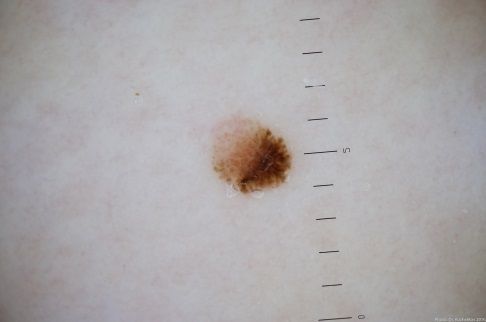
Dysplastiske nevi utvikler seg fra en blanding av genetisk disposisjon og miljømessige utløsere, hovedsakelig UV-stråling. Hormonelle endringer, hudskader og ioniserende stråling kan også bidra, men det er vanligvis ingen enkelt klar årsak hos en person.
Dysplastiske nevi har en høyere risiko for å utvikle seg til melanom enn vanlige føflekker, spesielt når det er mange av dem, det er en familiehistorie med melanom, eller det er mye UV-eksponering. Enhver endring i størrelse, form, farge, kant, eller nye symptomer som kløe, blødning, eller skorping bør sjekkes raskt av en lege.
Hovedbehandlingen for en dysplastisk nevus er kirurgisk fjerning med en liten margin av normal hud og obligatorisk histologi. Destruktive metoder som laser eller frysing anbefales ikke, fordi de ødelegger vevet og gjør det umulig å utelukke melanom.
Du kan redusere risikoen for nye dysplastiske nevi og melanom ved å begrense UV-eksponering, bruke solkrem daglig, unngå solarium, og forhindre gjentatt traume til føflekker. Regelmessige selvkontroller av huden, fotosporing, og rettidige besøk til en hudlege er nøkkelen.
Du bør oppsøke en hudlege eller onkolog for enhver atypisk føflekk, spesielt hvis den endrer seg, ser annerledes ut enn dine andre føflekker, eller er i en høyrisiko person eller plassering. Regelmessige profesjonelle hudkontroller, vanligvis minst en gang i året og oftere hvis du har mange dysplastiske nevi, anbefales sterkt.
Hvis en atypisk føflekk endrer seg i størrelse, form, farge, kant, eller begynner å klø, blø, eller skorpedannelse, bør du oppsøke en hudlege eller onkolog innen de neste 1–2 ukene. Stabile atypiske føflekker uten endringer trenger fortsatt regelmessige planlagte kontroller, vanligvis minst en gang i året.