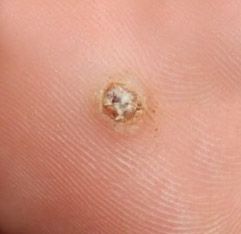
Le verruche plantari sono causate dall'infezione della pelle con il papillomavirus umano (HPV), di solito tipi a basso rischio che non tendono a causare il cancro. Il virus entra attraverso piccole rotture nella pelle, specialmente su suole umide e ammorbidite esposte in luoghi come piscine, docce e palestre. Non tutti coloro che sono esposti all'HPV sviluppano verruche; un'immunità debole, danni cutanei cronici, diabete, obesità e scarsa igiene possono aumentare il rischio. Gravidanza, stress e infezioni gravi possono anche abbassare le difese e rendere le verruche più probabili.
Le verruche plantari sono considerate benigne e hanno un rischio molto basso di trasformarsi in cancro. I principali problemi sono il dolore quando si cammina, il sanguinamento o l'infezione se vengono stuzzicate o ferite, e la diffusione ad altre aree o persone. Una crescita molto rapida, un grande cambiamento di colore o forma, o un nuovo forte dolore o prurito dovrebbero essere controllati da un medico per escludere altri tumori cutanei. Verruche multiple o ricorrenti possono anche segnalare un sistema immunitario indebolito o una portanza cronica di HPV.
Le verruche plantari possono essere trattate con metodi distruttivi come laser, crioterapia con azoto liquido, rimozione con radiofrequenza o elettrocoagulazione. Se ci sono dubbi sulla diagnosi, o se i metodi meno invasivi non sono possibili, si utilizza l'escissione chirurgica con istologia. Tagliare, bruciare o stuzzicare le verruche a casa è pericoloso a causa di sanguinamento, infezione, cicatrici e del rischio di non riconoscere un cancro della pelle. Anche dopo una rimozione riuscita, le verruche possono recidivare, quindi il follow-up e la prevenzione sono importanti.
Puoi ridurre il rischio di verruche plantari proteggendo i piedi in docce, piscine e palestre pubbliche e non camminando scalzo in questi luoghi. Mantieni i piedi puliti e asciutti, cambia i calzini ogni giorno e indossa scarpe ben aderenti per evitare sfregamenti cronici e piccole lesioni cutanee. Supporta il tuo sistema immunitario con un buon sonno, una buona alimentazione e il trattamento tempestivo delle infezioni e delle malattie croniche come il diabete. Dopo che una verruca appare o viene rimossa, limita l'esposizione ai raggi UV su quell'area, evita traumi ripetuti e controlla regolarmente la pelle o utilizza la nostra analisi della pelle con intelligenza artificiale per il monitoraggio.
La maggior parte delle verruche plantari non è urgente, ma dovresti vedere un dermatologo se sono dolorose, si diffondono, sanguinano o non migliorano con cure semplici. Dovresti anche farti controllare se la lesione sembra insolita per una verruca, cambia rapidamente o se hai diabete, cattiva circolazione o un sistema immunitario debole. La nostra analisi della pelle con intelligenza artificiale può aiutarti a monitorare la verruca tra le visite, ma non sostituisce un esame di persona e una biopsia quando necessario.
Le verruche plantari sono di solito un problema a bassa urgenza e possono essere valutate da un dermatologo su base di routine, specialmente se sono stabili e solo lievemente scomode. Cerca cure anticipate se la lesione cambia rapidamente, diventa molto dolorosa, sanguina, sembra atipica per una verruca o se hai diabete, cattiva circolazione o un sistema immunitario debole.