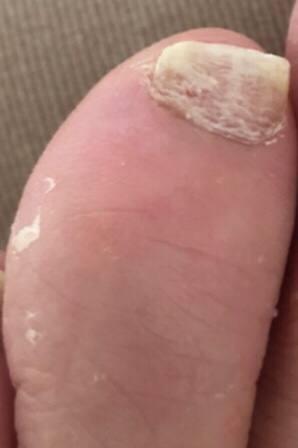
I-Onychomycosis ibangelwa isikhunta esihlasela i-nail plate kanye ne-nail bed, ikakhulukazi ama-dermatophytes afana ne-Trichophyton rubrum. Ukutheleleka kuvame ukuqala lapho isikhunta singena ngama-crack amancane enzipho noma esikhunjeni esizungezile, ikakhulukazi ezindaweni ezishisayo nezimanzi. Ukuhamba unyawo oluhlaza ezishaweni zomphakathi, ukugqoka izicathulo eziqinile, noma ukuba nesifo se-athlete's foot kwandisa amathuba okuthola ukutheleleka kwezinzipho. Ukuncipha kokuvikela, isifo sikashukela, nokujikeleza kwegazi okungelona elihle nakho kwenza kube lula ukuthi isikhunta sithathe indawo.
Usengozini enkulu ye-onychomycosis uma usukhulile, unesifo sikashukela, ukujikeleza kwegazi okungelona elihle, noma ukuncipha kokuvikela, noma uma unokujuluka kwezinyawo njalo noma isifo se-athlete's foot. Izicathulo eziqinile, ezingaphefumuli, ukuhamba unyawo oluhlaza ezishaweni zomphakathi noma ezizeni, nokulimala kwezinzipho kusukela ezemidlalo noma izicathulo ezingafanele kahle nakho kwandisa ingozi. Abantu abasebenza ezindaweni ezimanzi noma abasebenzisa amagumbi okushintsha omphakathi bathola ukuvezwa okwengeziwe. Umlando womndeni wesikhunta sezinzipho nokuhlala nomuntu onaso kungakhuphula amathuba akho futhi.
I-Onychomycosis ilashwa ngemithi yokulwa nesikhunta, noma ithathwa ngomlomo, ifakwe enziphweni, noma kokubili, kuye ngokuthi zingaki izipho ezithintekile nokuthi izinguquko zibi kangakanani. Ukuthinteka okuncane, okungaphezulu, noma okulinganiselwe kwezinzipho kungaphendula kuma-lacquers noma izixazululo ezinamakhambi, kodwa ukutheleleka okukhulu noma okubanzi kuvame ukudinga ama-antifungal omlomo izinyanga eziningana. Izinzipho zikhula kancane, ngakho ukuthuthuka okubonakalayo kuthatha isikhathi ngisho nangemva kokulawulwa kwesikhunta. Ukuhlolwa njalo ngokuhlaziywa kwesikhumba kwethu kwe-AI kungakusiza ukulandelela inqubekela phambili nokuxoxa ngemiphumela nodokotela wakho.
Unganciphisa ingozi yakho yesikhunta sezinzipho ngokugcina izinyawo zihlanzekile futhi zomile, ushintshe amasokisi nsuku zonke, futhi ukhethe izicathulo eziphefumulayo. Hamba njalo nge-flip-flops noma izimbadada ezishaweni zomphakathi, ezizeni, nasezindlini zokushintsha, futhi ugweme ukwabelana ngamathuluzi ezinzipho, amafayela, noma izicathulo. Phatha isifo se-athlete's foot kusenesikhathi ukuze singasabalali siye enziphweni. Ukuhlola izipho zakho njalo, kufaka phakathi ukuhlaziywa kwesikhumba kwethu kwe-AI, kukusiza ukuthi ubambe izinguquko kusenesikhathi futhi wenze isenzo ngaphambi kokuba ukutheleleka kube kubi.
Nini Ukuze Ubonane NoDokotela?
Bona udokotela noma i-dermatologist uma uqaphela ukuguquka kombala okuqhubekayo kwezinzipho, ukujiya, ukuwa, noma ukuhlukaniswa ne-nail bed, ikakhulukazi uma izipho eziningi zithintekile noma unesifo sikashukela noma ukujikeleza kwegazi okungelona elihle. Udokotela angakuqinisekisa isifo ngezivivinyo zamaselula futhi akhethe ukwelashwa okulwa nesikhunta okuphephe kakhulu nokusebenzayo kuwe. Sebenzisa ukuhlaziywa kwesikhumba kwethu kwe-AI ukulandelela izipho zakho futhi ulethe izithombe noma imibiko ekuvakasheni kwakho ukusiza ukuqondisa ingxoxo.
I-Onychomycosis imvamisa ayiyona into ephuthumayo futhi ingahlolwa ekuvakasheni okuvamile kodokotela noma i-dermatology, kodwa akufanele uyihoxise ngoba akuvamile ukuthi iphele ngokwayo. Funa ukunakekelwa kusenesikhathi uma unesifo sikashukela, ukujikeleza kwegazi okungelona elihle, ubuhlungu obukhulu, noma izinguquko zezinzipho ezisheshayo ezimbi kakhulu.