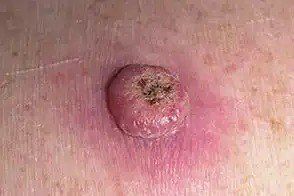
The exact cause of keratoacanthoma is unknown, but long‑term sun exposure, ionizing radiation, chronic skin injury, and contact with certain chemicals seem to increase the risk. It is an acquired tumor, not something you are born with, and usually appears later in adult life.
Keratoacanthoma is considered an optional precancerous condition: most stay benign, but some can transform into squamous cell carcinoma, especially if chronically irritated or burned. People with keratoacanthoma also have a higher chance of developing other skin cancers nearby or elsewhere on the skin.
The main treatment for keratoacanthoma is surgical excision with a small margin of healthy skin, which both removes the tumor and allows precise histological examination. Simple shaving, superficial removal, or destructive methods like laser or cryotherapy alone are not ideal because they increase the risk of recurrence and can miss an underlying skin cancer.
You can lower your risk of keratoacanthoma by protecting your skin from UV, avoiding chronic skin trauma, and minimizing exposure to ionizing radiation and harsh chemicals. Regular self‑checks, our AI skin analysis, and timely visits to a dermatologist for any new or changing bumps are key.
If you notice a fast‑growing, dome‑shaped bump with a central crust or horn‑like plug, especially on sun‑exposed skin, you should see a dermatologist or oncologist soon. Our AI skin analysis can help you monitor the lesion, but only a doctor with a biopsy can reliably distinguish keratoacanthoma from skin cancer.
A fast‑growing bump that could be keratoacanthoma should be assessed by a dermatologist or oncologist within a few weeks, sooner if it is painful, bleeding, or rapidly enlarging. It is not an emergency like a severe infection, but it should not be ignored or watched for months without medical review.