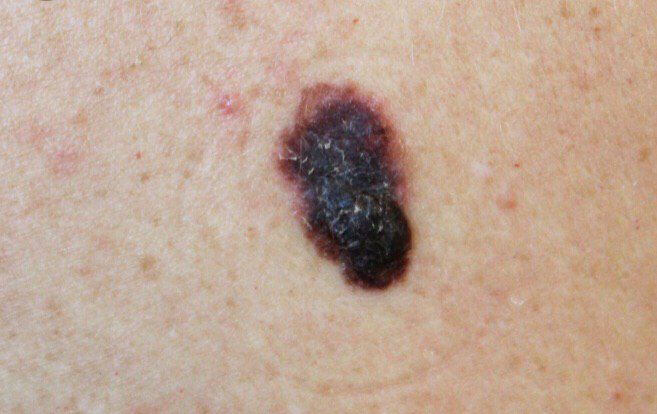
Melanoma develops when melanocytes accumulate genetic damage and turn malignant, most often under the influence of ultraviolet radiation and inherited susceptibility. In many people, no single clear cause can be identified, but a mix of UV exposure, skin type, and genetics plays a role.
The main risk factors for melanoma are intense or repeated UV exposure, fair skin that burns easily, many or atypical moles, a personal or family history of melanoma, and older age. Darker skin is somewhat protected, but acral and subungual melanomas still occur and are often found later.
The main treatment for melanoma is surgical removal with a safety margin of normal skin around the tumor. If lymph nodes or distant organs are involved, treatment may also include lymph node surgery, immunotherapy, targeted therapy, chemotherapy, and/or radiation, chosen by an oncologist based on stage.
You can lower your melanoma risk by limiting UV exposure, avoiding tanning beds, using broad-spectrum sunscreen, and protecting your skin with clothing and shade. Regular self-checks, our AI skin analysis for routine monitoring, and timely doctor visits for changing moles are just as important.
Any mole or dark spot that changes in size, shape, color, or starts itching, bleeding, or ulcerating should be checked urgently by a dermatologist or oncologist. Use our AI skin analysis for regular checks, but don’t delay an in‑person visit if the app or your own observation raises concern.
Melanoma is a medical emergency in the sense that delays can be life‑threatening, so any strongly suspicious lesion should be assessed by a dermatologist or oncologist within days to, at most, a couple of weeks. If a mole is rapidly changing, bleeding, or ulcerating, treat it as urgent and seek in‑person care as soon as possible.