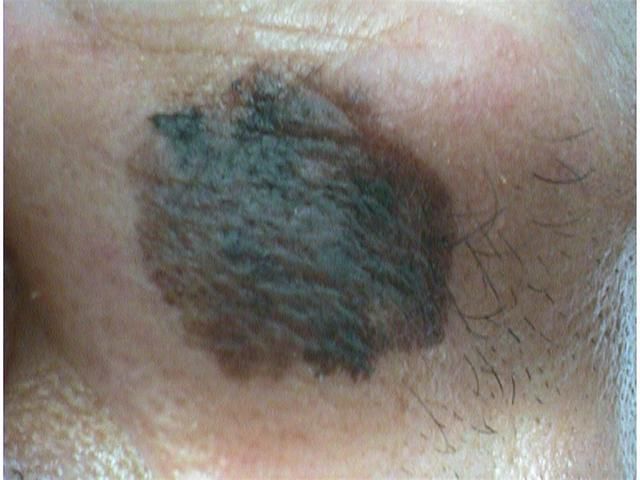
Lentigo melanoma is mainly caused by long‑term cumulative sun damage to the skin, especially on the face, leading to malignant change in pigment cells within a pre‑existing patch called lentigo maligna. Genetic predisposition, fair skin, and reduced antitumor immunity also play a role in who develops this type of melanoma.
Lentigo melanoma carries a high risk of local recurrence and spread to lymph nodes and internal organs once it invades deeper skin layers. The risk is higher in older, fair‑skinned people with heavy lifetime sun exposure, a history of sunburns, or previous melanoma.
The main treatment for lentigo melanoma is wide surgical excision with safety margins, sometimes combined with lymph node surgery if spread is suspected. In more advanced cases, additional treatments like immunotherapy, targeted therapy, chemotherapy, or radiation may be used, while local destructive methods such as laser or freezing are not appropriate for this cancer.
You can lower your risk of lentigo melanoma by protecting your skin from long‑term sun damage, avoiding sunburns, and reducing chronic irritation of pigmented spots. Regular self‑checks, routine use of our AI skin analysis, and timely visits to a dermatologist for any changing lesion are key for early detection.
Any suspicion of lentigo melanoma should be evaluated by a dermatologist or oncologist as soon as possible, ideally within days to a couple of weeks. Our AI skin analysis is useful for routine monitoring, but it cannot replace an in‑person exam, dermatoscopy, and biopsy when melanoma is a concern.
Possible lentigo melanoma should be treated as urgent: arrange an in‑person visit with a dermatologist or oncologist within days to, at most, 1–2 weeks, and immediately if there is bleeding, ulceration, or rapidly changing color or size.