
Was ist Lichen planus?
Lichen planus ist eine chronische entzündliche Erkrankung, die die Haut, Schleimhäute, Nägel und Haare betreffen kann. Sie ist gekennzeichnet durch polygonale, violazeen (purpurrot), flach-toppige Papeln mit feinen, netzartigen weißen Linien (Wickhamsche Striae) auf der Oberfläche. Die Erkrankung ist immunvermittelt, nicht infektiös, und betrifft etwa 1–2% der Bevölkerung — überwiegend Erwachsene im Alter zwischen 30 und 60 Jahren. Sie betrifft beide Geschlechter gleich, obwohl oraler Lichen planus bei Frauen etwas häufiger vorkommen kann.

Ursachen und Pathogenese
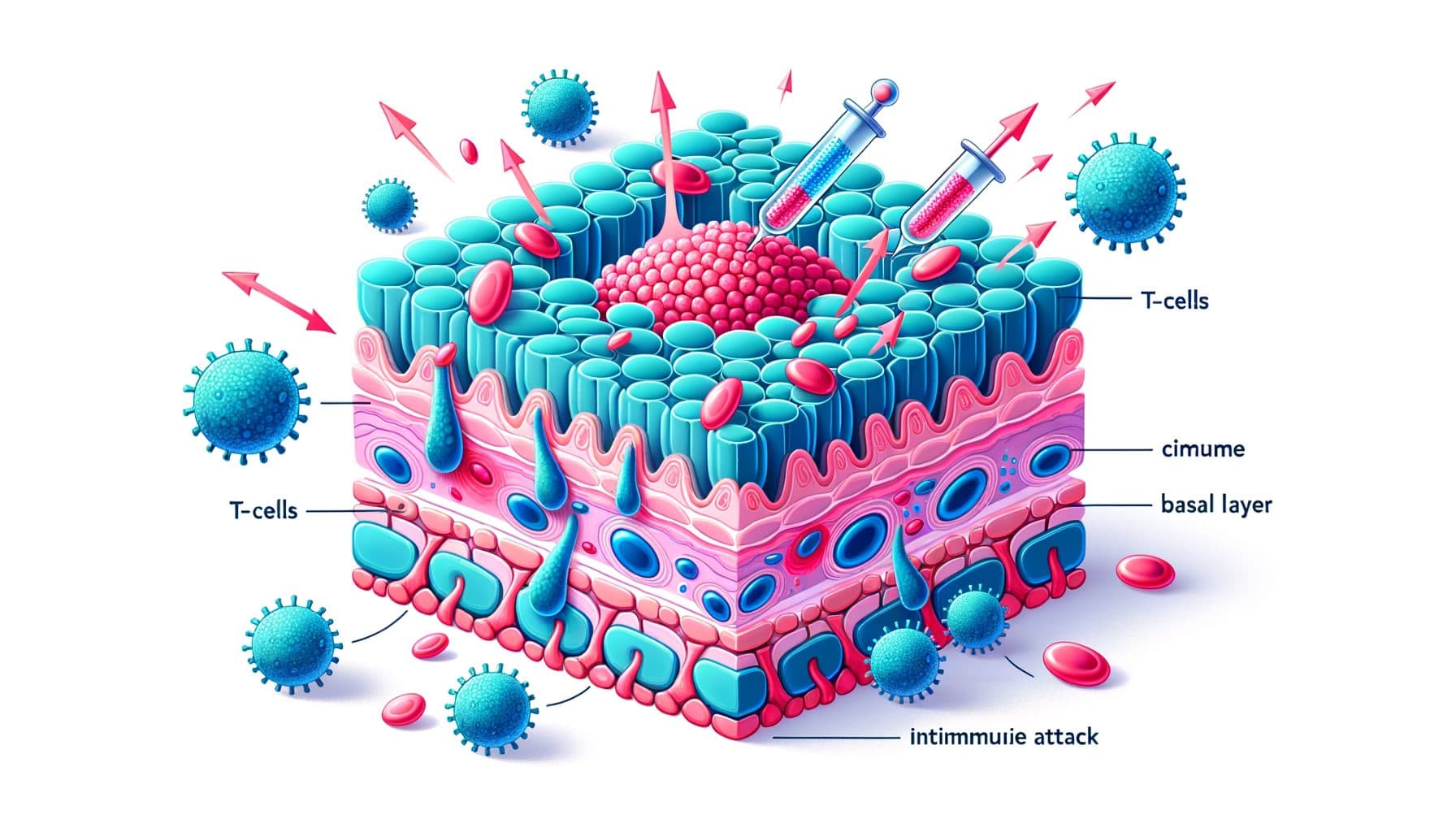
Lichen planus ist eine T-Zell-vermittelte Autoimmunreaktion, die gegen die Basalzellschicht der Haut gerichtet ist. Die genauen Auslöser sind nicht vollständig verstanden. Es bestehen Zusammenhänge mit einer Hepatitis-C-Infektion, bestimmten Medikamenten (Beta-Blocker, ACE-Hemmer, NSAIDs), zahnärztlichen Amalgamfüllungen und Kontaktallergenen.
Stress kann Schübe verschlimmern. Ein genetischer Faktor wird vermutet, da die Erkrankung gelegentlich in Familien gehäuft auftritt. Arzneimittelinduzierte lichenoide Reaktionen können idiopathischen Lichen planus nachahmen und sollten in die Differenzialdiagnose einbezogen werden.
Symptome und Formen
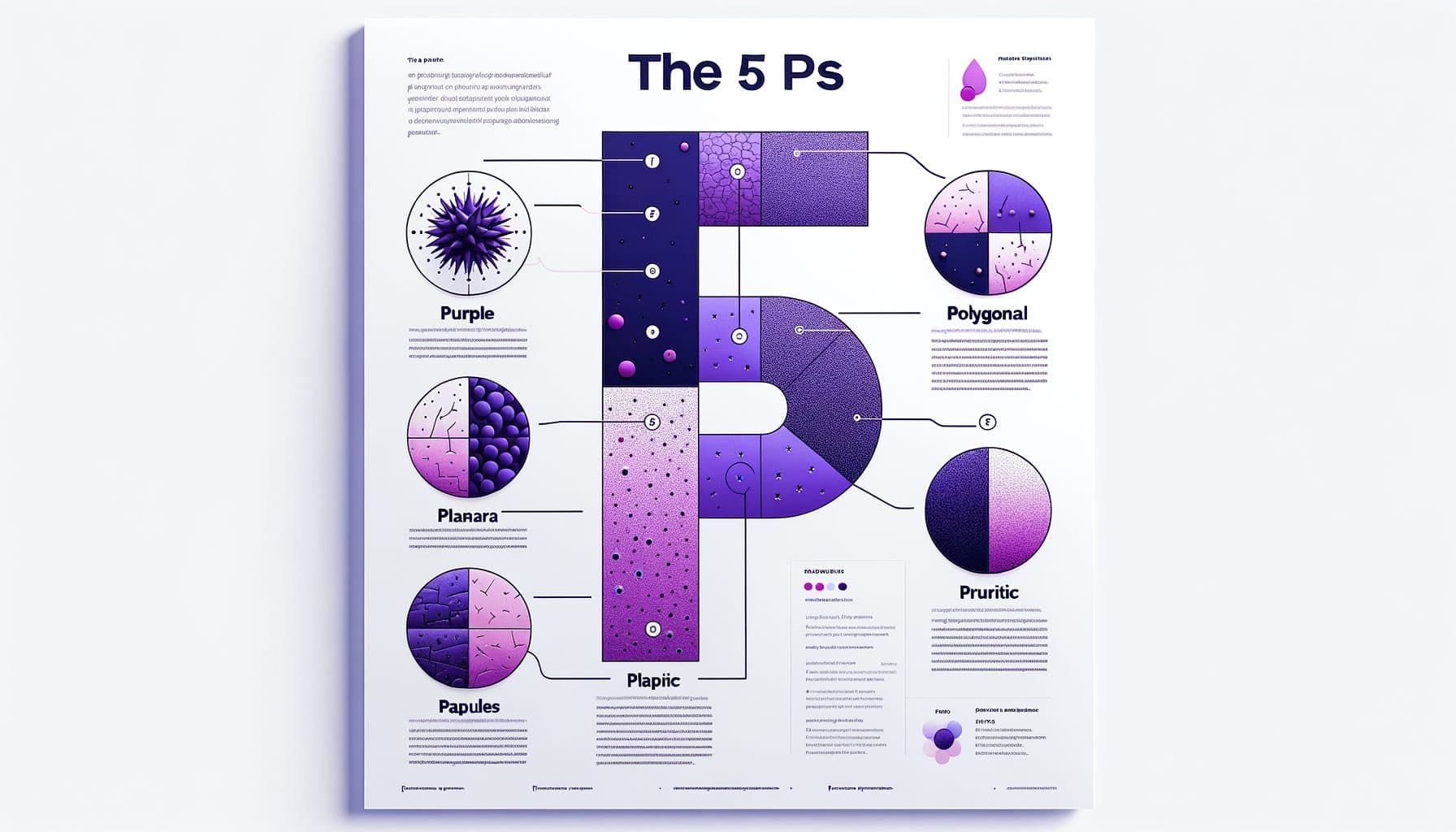
Die klassischen 5 Ps beschreiben die Hautläsionen: juckend (pruritig), polygonal, planar (flach-toppig), lila und Papeln. Bevorzugte Stellen sind die Handgelenke, Unterarme, Knöchel und der untere Rücken. Oraler Lichen planus zeigt sich als weiße Streifen (retikuläres Muster), Erosionen oder Ulzerationen auf der Mundschleimhaut, der Zunge oder dem Zahnfleisch.
Nagelbeteiligung kann Rillenbildung, Verdünnung oder vollständigen Nagelverlust umfassen. Das Koebner-Phänomen — die Entwicklung neuer Läsionen an Stellen mechanischer Reizung — ist häufig und kann die Verteilung entlang von Kratzern oder Gürtellinien erklären.
Diagnose
Die Diagnose basiert auf der klinischen Präsentation — die typischen Wickhamschen Striae unter der Dermatoskopie sind oft diagnostisch. Eine Hautbiopsie bestätigt die Diagnose und zeigt das charakteristische bandartige lymphozytäre Infiltrat an der Übergangszone mit Schädigung der basalen Keratinozyten (Schnittstellendermatitis). Bei Verdacht auf oralen Lichen planus ist eine Biopsie besonders wichtig, um prämaligne Veränderungen auszuschließen. Eine Hepatitis-C-Screening wird empfohlen, da der Zusammenhang in mehreren Studien gut etabliert ist.!!

Behandlungsoptionen
Topische Kortikosteroide sind die Erstlinientherapie für kutanen Lichen planus. Hochpotente Steroide wie Clobetasolpropionat werden für Hautläsionen verwendet, während mildere Formulierungen für Schleimhäute geeignet sind. Calcineurininhibitoren (Tacrolimus, Pimecrolimus) bieten eine steroidfreie Option, insbesondere für orale und genitale Formen.
Bei umfangreicher Beteiligung können systemische Therapien in Betracht gezogen werden: orale Kortikosteroide, Retinoide (Acitretin), Methotrexat oder Phototherapie (UVB, PUVA). Antihistaminika helfen, den Juckreiz zu lindern.

Verlauf und Prognose
Kutaner Lichen planus ist in der Regel selbstlimitierend und heilt bei den meisten Patienten innerhalb von 1–2 Jahren, kann jedoch postinflammatorische Hyperpigmentierung hinterlassen. Oraler Lichen planus folgt oft einem chronischen Verlauf, der eine langfristige Behandlung erfordert — da erosive Formen ein geringes Risiko für eine maligne Transformation zu Plattenepithelkarzinom bergen, ist eine regelmäßige Überwachung wichtig.!! Nagelveränderungen können bestehen bleiben. Rückfälle sind möglich, aber die Gesamtprognose ist gut.

Wie die KI-Hautanalyse helfen kann
Die charakteristischen lila, flachköpfigen Papeln des Lichen planus können manchmal mit anderen entzündlichen Erkrankungen wie Psoriasis, Arzneimittelreaktionen oder Ekzemen verwechselt werden. Skinscanner analysiert die Farbe, Form und Verteilung Ihrer Hautläsionen, um zu helfen, festzustellen, ob Ihre Symptome mit Lichen planus übereinstimmen. Regelmäßige Fotodokumentation ermöglicht es Ihnen, die Entwicklung bestehender Läsionen zu verfolgen, neue frühzeitig zu erkennen und Ihre Reaktion auf die Behandlung über Wochen und Monate zu überwachen.
Dieser visuelle Zeitstrahl ist besonders wertvoll für das Management einer Erkrankung, die unvorhersehbar schwanken kann. Für diejenigen mit postinflammatorischer Hyperpigmentierung nach der Heilung des Lichen planus kann Skinscanner Ihnen helfen, das allmähliche Verblassen zu überwachen. Skinscanner ersetzt keine dermatologische Untersuchung oder Biopsie — die möglicherweise für eine definitive Diagnose erforderlich sind — bietet jedoch eine hilfreiche Erstbewertung und kontinuierliche Überwachungsunterstützung.