

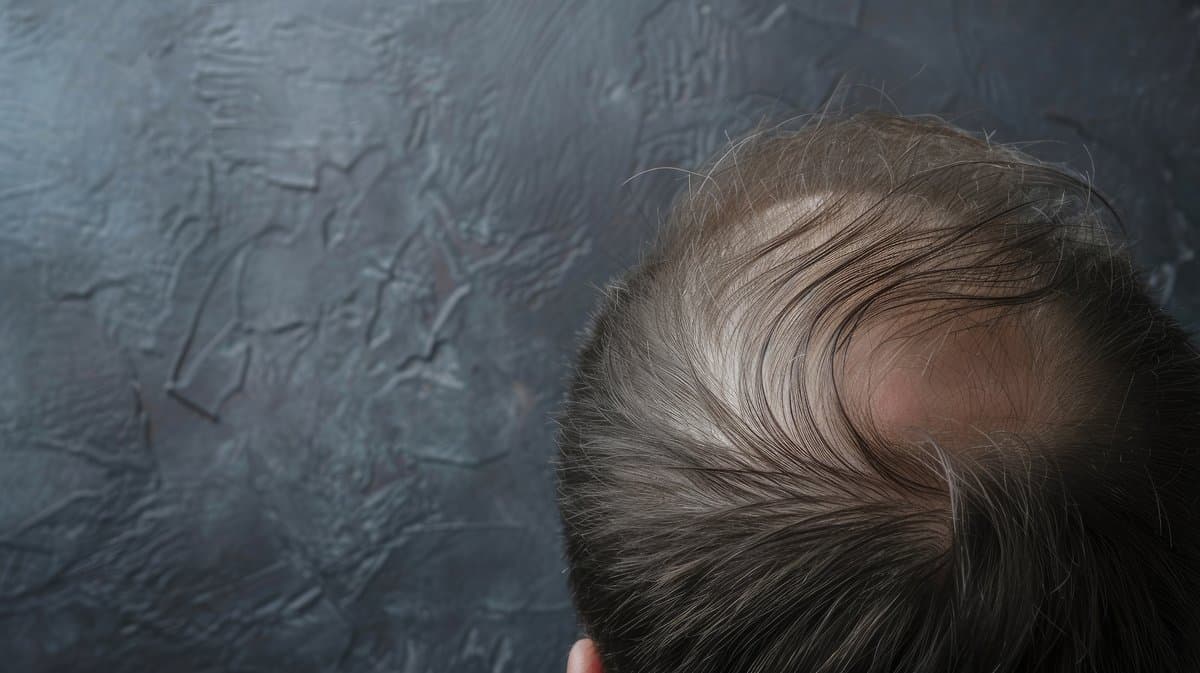
Why Hair Thins on Top and Common Causes
Hair thinning on the crown or top of the head is one of the most common hair-related concerns for both men and women, yet many people delay addressing it because they assume nothing can be done. The reality is that early identification of the cause significantly improves outcomes, regardless of the underlying reason. Androgenetic alopecia, commonly known as male or female pattern hair loss, is the leading cause.
In men, this typically begins with a receding hairline and thinning at the crown, gradually progressing over years. In women, it usually presents as diffuse thinning along the part line while the frontal hairline remains intact. This type of hair loss is driven by genetic sensitivity to dihydrotestosterone, a hormone that miniaturizes hair follicles until they produce increasingly thinner and shorter hairs.
Telogen effluvium is another frequent cause of thinning, particularly in women. This condition occurs when a significant stressor pushes a large number of hair follicles into the resting phase simultaneously, resulting in noticeable shedding two to three months after the triggering event. Common triggers include major surgery, severe illness, significant weight loss, childbirth, emotional trauma, and nutritional deficiencies.
Iron deficiency, thyroid dysfunction, and vitamin D deficiency are among the most commonly overlooked medical causes of hair thinning that are fully reversible with proper treatment.!! Other causes include alopecia areata, an autoimmune condition that can cause patchy or diffuse thinning, traction alopecia from tight hairstyles pulling on follicles over time, and certain medications including some blood pressure drugs, antidepressants, and hormonal contraceptives.

What You Can Do About Thinning Hair
The appropriate response to hair thinning depends entirely on identifying the underlying cause, which is why a proper evaluation is essential before committing to any treatment. For androgenetic alopecia, the two FDA-approved treatments are minoxidil and finasteride. Minoxidil is a topical solution applied to the scalp that prolongs the growth phase of hair follicles and increases blood flow to the scalp.
It is available over the counter for both men and women. Finasteride is an oral prescription medication for men that blocks the conversion of testosterone to dihydrotestosterone. Both treatments require consistent long-term use to maintain results, and they work best when started early before significant follicle miniaturization has occurred.
For telogen effluvium, the most important step is identifying and addressing the trigger. If a nutritional deficiency is responsible, correcting it with supplementation typically reverses the thinning within three to six months. Thyroid-related hair loss improves once thyroid levels are properly managed with medication.
Stress-induced telogen effluvium usually resolves spontaneously within six to nine months as the stressor passes and hair cycles normalize. Starting treatment during the early stages of thinning yields dramatically better results than waiting until significant volume loss has occurred, because dormant follicles are much harder to reactivate than miniaturizing ones.!! Low-level laser therapy and platelet-rich plasma injections are newer options with growing evidence supporting their effectiveness.
Nutritional support through biotin, zinc, and iron supplementation may help when deficiencies are present but will not reverse genetic hair loss on their own. Skinscanner allows you to photograph your scalp regularly and track changes over time with photo comparison, helping you detect subtle progression and monitor whether your treatment approach is working.
