
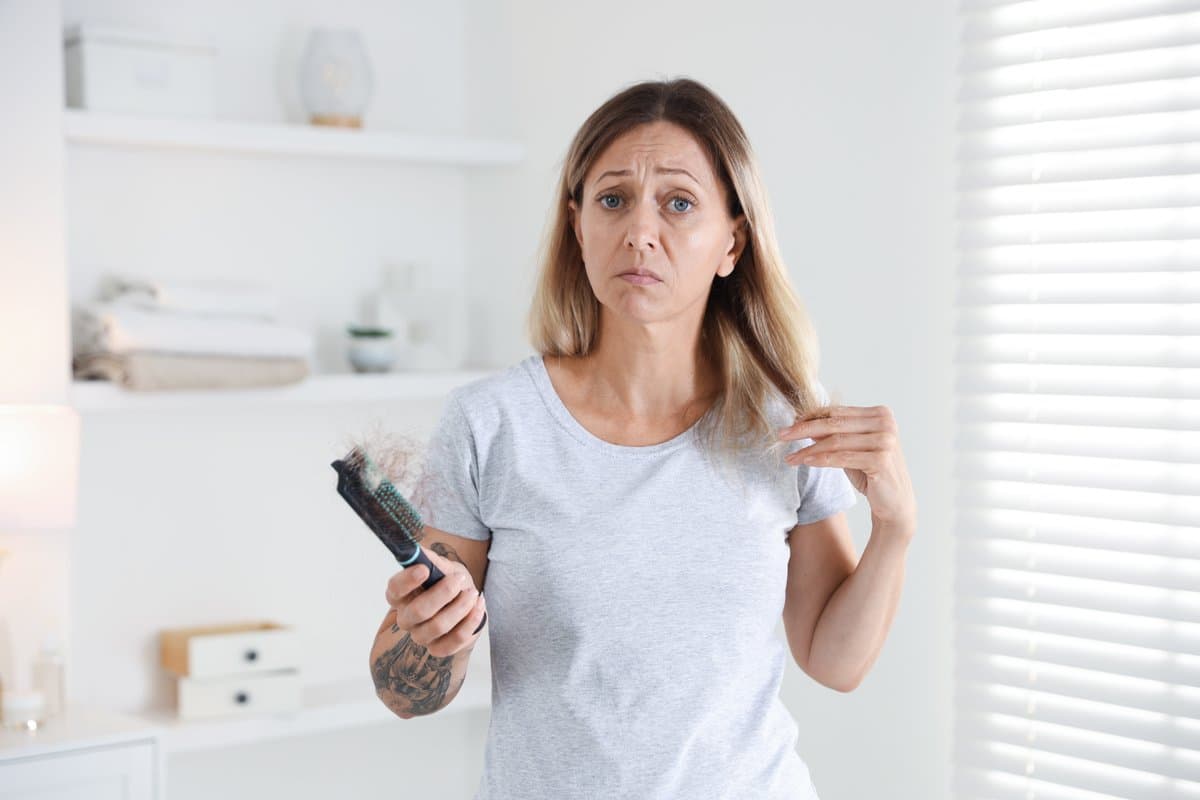
The Hidden Causes Behind Thinning Hair
Hair loss in women is surprisingly common, affecting roughly 40 percent of women by the time they reach age 50, yet it remains under-discussed because of the stigma surrounding it. While many people associate baldness with men, female-pattern hair loss, known medically as androgenetic alopecia, causes gradual thinning along the part line and crown in millions of women. But hormonal genetics are only one piece of the puzzle.
Thyroid disorders, both hypothyroidism and hyperthyroidism, disrupt the hair growth cycle and can cause diffuse thinning across the entire scalp. Iron deficiency, even without full-blown anemia, is one of the most overlooked causes of hair shedding in premenopausal women. Polycystic ovary syndrome creates an androgen imbalance that can thin scalp hair while increasing facial and body hair.
Telogen effluvium, triggered by stress, surgery, illness, crash dieting, or childbirth, can cause dramatic shedding of up to 300 hairs per day two to three months after the triggering event.!! Autoimmune conditions like alopecia areata cause patchy, round bald spots when the immune system mistakenly attacks hair follicles. Tight hairstyles worn consistently over years cause traction alopecia, pulling hair out at the roots along the hairline and temples.
Nutritional deficiencies in zinc, biotin, vitamin D, and protein can all impair hair growth. Certain medications including blood thinners, antidepressants, and birth control pills list hair loss as a side effect. Understanding which of these twelve causes applies to you is the essential first step toward effective treatment.

What You Can Do Starting Today
The good news is that most forms of female hair loss are treatable or reversible once the underlying cause is identified. Start by scheduling blood work with your doctor to check thyroid function, ferritin levels, vitamin D, zinc, and a complete blood count. These simple tests can reveal nutritional and hormonal imbalances that respond well to supplementation or medication adjustments.
If telogen effluvium is the cause, reassurance is often the best medicine: the shedding is temporary, and hair typically regrows fully within six to nine months once the triggering event has passed. For androgenetic alopecia, topical minoxidil is the most studied and effective over-the-counter treatment for women, with visible improvement appearing after three to six months of consistent use. Catching female hair loss early dramatically improves outcomes because treatments work best on follicles that are still active rather than those that have already miniaturized beyond recovery.!!
Spironolactone, an anti-androgen medication, can help women whose thinning is driven by hormonal factors. Scalp health matters too: switch to gentle, sulfate-free shampoos and avoid excessive heat styling, chemical processing, and tight ponytails or braids that stress the hairline. A diet rich in lean protein, leafy greens, eggs, and fatty fish supports healthy hair from within.
Stress management through regular exercise, adequate sleep, and mindfulness can reduce cortisol-driven shedding. Tracking your scalp with periodic photographs helps you and your doctor objectively measure whether a treatment is working over time.