
What Is a Dermatofibroma?
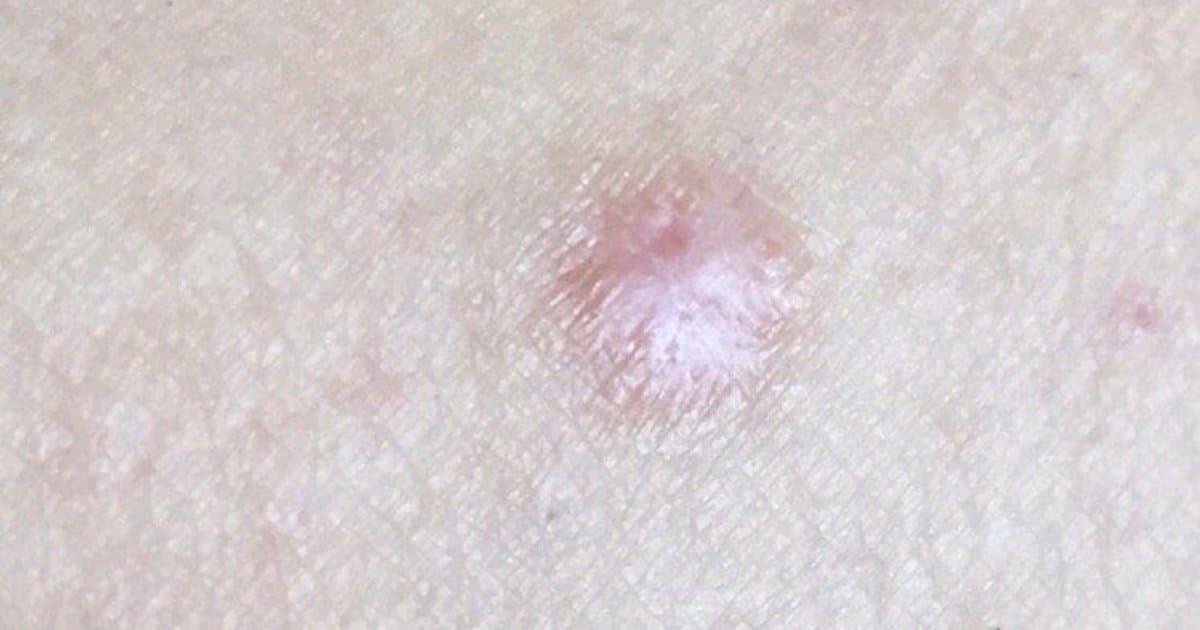
A dermatofibroma — also known as a benign fibrous histiocytoma or histiocytoma cutis — is a common, benign skin growth composed of a mixture of fibroblasts, collagen, and histiocytes that forms a firm, round nodule within the dermis. These growths are among the most frequently encountered skin lesions in dermatology practice, accounting for approximately three percent of all skin specimens sent for pathological analysis. Dermatofibromas typically present as firm, round-to-oval nodules measuring five to ten millimeters in diameter, though they can occasionally reach two centimeters or larger.
They feel like a small, hard button embedded in the skin — distinctly firmer than the surrounding tissue. The overlying skin may be skin-colored, pink, reddish-brown, or hyperpigmented, and the surface is usually smooth, though it may be slightly scaly or shiny. Dermatofibromas occur most commonly on the lower extremities, particularly the shins and thighs, though they can develop anywhere on the body.
They are more prevalent in women than men, with most appearing in young to middle-aged adults between the ages of 20 and 50. The growths are typically solitary — having more than one is common, but multiple simultaneous dermatofibromas may occasionally be associated with immunosuppression. Once formed, dermatofibromas are generally permanent and stable, neither growing significantly nor resolving spontaneously.

What Causes Dermatofibromas?
The exact cause of dermatofibromas is not fully established, but they are widely believed to represent a reactive fibrous proliferation — essentially an overgrowth of scar-like tissue — triggered by minor skin injury. Many patients can recall an insect bite, thorn prick, splinter, minor cut, or folliculitis at the site where a dermatofibroma subsequently developed, supporting the reactive etiology theory. The thinking is that a minor wound or insect bite triggers a localized inflammatory response, and during the healing process, fibroblasts and other cells proliferate excessively, producing a dense nodule of fibrous tissue that persists long after the original stimulus has resolved.
However, many dermatofibromas appear with no identifiable preceding trauma, suggesting that additional factors are at play. Hormonal influences may contribute — the higher prevalence in women and the occasional appearance or enlargement during pregnancy support this hypothesis. The immune system also appears to play a role, as individuals with immunosuppression from HIV infection, organ transplantation, or immunosuppressive medications have a higher tendency to develop multiple dermatofibromas.
A genetic predisposition likely exists, as some individuals develop numerous dermatofibromas while others never develop any despite similar exposure to minor skin injuries. At the cellular level, dermatofibromas contain a mixture of fibroblasts, myofibroblasts, histiocytes, and inflammatory cells arranged in a characteristic storiform (whorled) pattern within the dermis. The lesion often extends to the subcutaneous fat and entraps surrounding collagen bundles at its periphery, creating the firmness characteristic of these nodules.

The Dimple Sign: The Diagnostic Clue
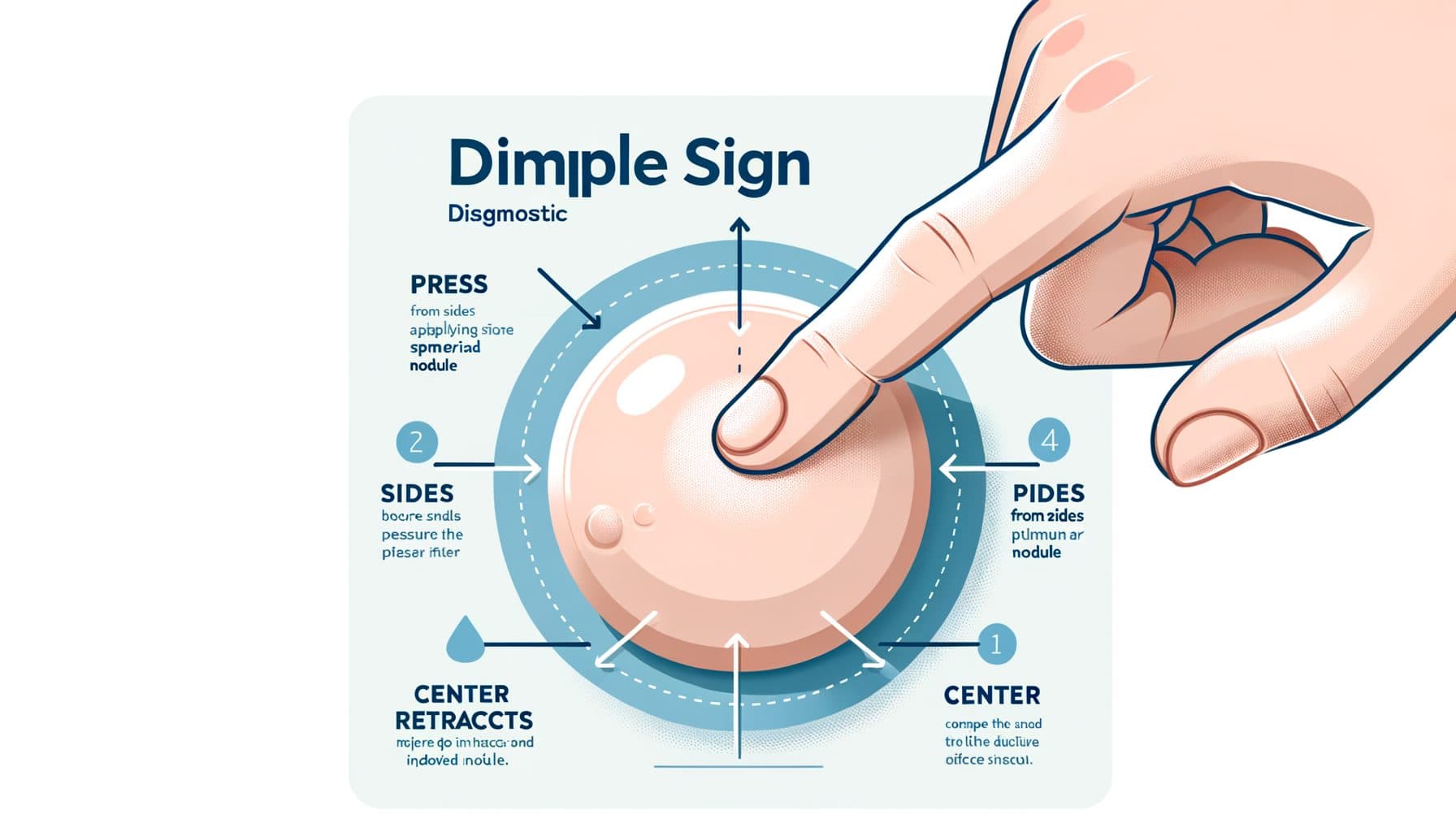
The most distinctive clinical feature of a dermatofibroma is the pathognomonic dimple sign — also called the Fitzpatrick sign or buttonhole sign. When you pinch the skin overlying a dermatofibroma between your thumb and forefinger, the lesion characteristically dimples or retracts inward rather than protruding outward as most raised skin lesions would.!! This occurs because dermatofibromas are tethered to the surrounding dermis by their fibrous tentacle-like extensions, and lateral compression causes the lesion to be pulled down into the subcutaneous tissue.
The dimple sign is so characteristic that it alone can establish the clinical diagnosis in most cases, though it is not completely specific — rare malignant lesions can occasionally produce a similar sign. Beyond the dimple sign, several other features help identify dermatofibromas. They are remarkably firm to palpation — harder than surrounding skin and most other benign skin lesions.
The overlying skin often shows a brownish discoloration that may darken with sun exposure. On dermoscopy, dermatofibromas display a characteristic pattern: a central white scar-like area surrounded by a delicate peripheral pigment network, sometimes described as looking like a white patch surrounded by a lacy brown ring. This pattern differs from the pigment network seen in melanocytic lesions and is recognizable to trained clinicians. The fixation of dermatofibromas within the dermis is another distinguishing feature — they move with the skin when you slide it over the underlying tissue but feel anchored within the skin itself, unlike lipomas that are freely mobile beneath the skin surface.
Dermatofibroma vs. More Concerning Lesions
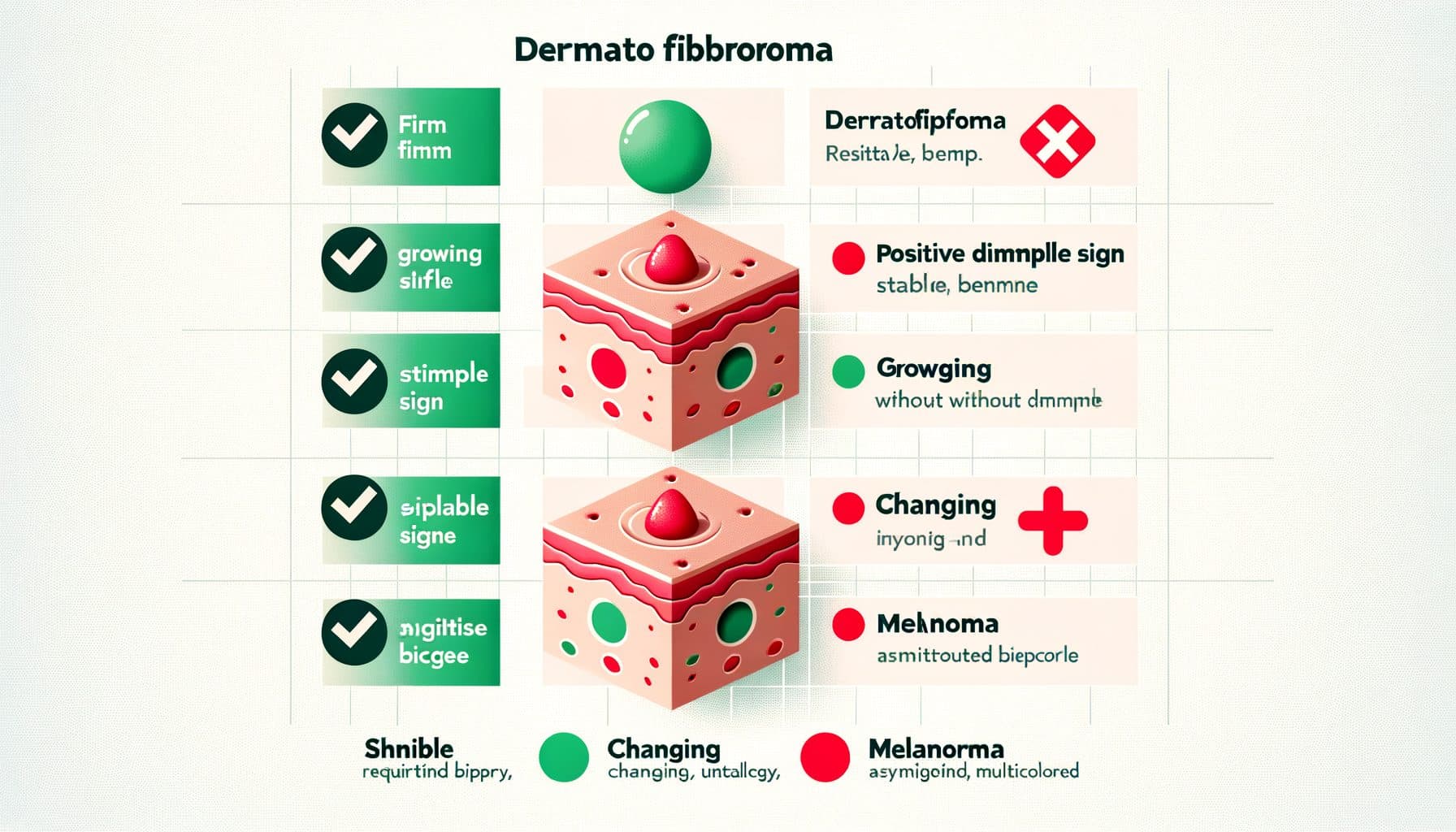
While dermatofibromas are benign, several more concerning conditions can mimic their appearance and must be distinguished through careful evaluation. Dermatofibrosarcoma protuberans (DFSP) is a rare, locally aggressive soft tissue tumor that can initially resemble a dermatofibroma. DFSP tends to be larger, grows more rapidly, and is often located on the trunk rather than the legs.
Unlike dermatofibromas, DFSP extends deeply into subcutaneous tissue and underlying fascia, has a higher recurrence rate after excision, and can rarely metastasize. Any nodule that grows beyond two centimeters, enlarges progressively, or is fixed to deeper structures warrants biopsy to exclude DFSP.!! Melanoma can occasionally present as a firm, pigmented nodule that might be confused with a hyperpigmented dermatofibroma.
Features suggesting melanoma include asymmetry, irregular borders, color variation including blue-black or red hues, and recent change in size or symptoms. The dimple sign is typically absent in melanoma. Basal cell carcinoma, particularly the morpheaform or nodular subtypes, can present as a firm, skin-colored nodule.
Look for pearly translucent quality, telangiectasias on the surface, and absence of the dimple sign. A Merkel cell carcinoma can present as a firm, rapidly growing, red-to-violet nodule, often on sun-exposed skin in elderly patients. Any skin nodule that is growing rapidly, changing character, painful, bleeding, or ulcerating should be biopsied regardless of how much it resembles a typical dermatofibroma. Context matters — a firm nodule in an immunosuppressed patient or someone with a history of skin cancer deserves a lower threshold for biopsy.
Treatment: When and How to Remove Dermatofibromas
Because dermatofibromas are benign and carry no risk of malignant transformation, treatment is not medically necessary. Many patients learn to live with their dermatofibromas once they understand the benign nature of the growth. However, removal may be desired for several reasons: cosmetic concerns, particularly for lesions on visible areas like the shins or arms; recurrent irritation from shaving, clothing friction, or repeated trauma; persistent tenderness or pain (some dermatofibromas are uncomfortable when pressed); diagnostic uncertainty where biopsy is needed to rule out a more concerning lesion; or significant patient anxiety despite reassurance.
Full surgical excision is the definitive treatment but comes with an important caveat: because dermatofibromas extend deep into the dermis and sometimes into subcutaneous fat, complete excision requires cutting fairly deep, resulting in a surgical scar that may be more cosmetically noticeable than the original lesion — particularly on the legs, where scar healing tends to be slower and more visible. Patients should be counseled about this trade-off before proceeding. Shave excision (tangential removal) removes the visible portion of the dermatofibroma flush with or just below the skin surface, leaving a flatter scar.
However, because the deeper portion remains, recurrence rates are higher — reported at 20 percent or more. Cryotherapy with liquid nitrogen can flatten dermatofibromas but rarely eliminates them completely and may leave hypopigmented marks. Laser treatment has been used with variable success. For most patients, the pragmatic approach is observation with reassurance, reserving excision for lesions that are symptomatic, diagnostically uncertain, or causing significant cosmetic distress.
How AI Skin Analysis Can Help
Discovering a firm bump in your skin understandably raises questions and sometimes anxiety. Is it just a harmless dermatofibroma, or could it be something more serious? Skinscanner provides immediate AI-powered analysis when you photograph a concerning skin nodule, evaluating features like color, shape, border characteristics, and surface texture to help determine whether the lesion is consistent with a benign dermatofibroma or exhibits features warranting professional evaluation.
The AI can recognize common patterns associated with dermatofibromas — the brownish discoloration, symmetric round shape, and smooth surface — and distinguish them from patterns more suggestive of concerning lesions like dermatofibrosarcoma protuberans or melanoma. For individuals with multiple dermatofibromas, Skinscanner helps monitor existing lesions for any changes and identify new growths that differ from the established pattern. While the characteristic dimple sign cannot be assessed through photography alone, the visual features captured in a high-quality photo provide valuable diagnostic information.
Skinscanner is particularly useful as a first-line screening tool for the common scenario of discovering a new firm bump and wanting immediate guidance on whether urgent evaluation is needed. It does not replace clinical examination — any nodule that is growing, changing, symptomatic, or concerning despite AI reassurance should be evaluated by a dermatologist who can perform palpation, dermoscopy, and biopsy if indicated.