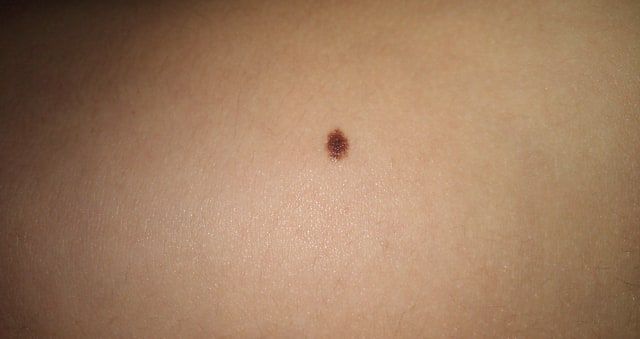
Benign nevi form when pigment cells in the skin grow in small clusters instead of spreading out evenly. Genetics, sun and UV exposure, and hormonal changes all play a role in how many moles you get and how they look. Sometimes injuries, radiation, or certain illnesses can also trigger new moles or changes in existing ones.
A typical benign nevus has a very low risk of turning into melanoma, similar to normal skin. The risk is slightly higher in large or giant congenital moles, especially those over 20 cm, but still low overall. The main warning signs are changes in size, shape, color, or new symptoms like itching, pain, or bleeding.
Most benign nevi don’t need any treatment and can simply be monitored over time. If a mole is suspicious, repeatedly traumatized, or cosmetically bothersome, it can be surgically removed and sent for histology. Destructive methods like laser or freezing are not recommended for pigmented nevi because they destroy tissue needed for proper analysis.