
Causes
The exact cause of a Spitz nevus is not fully understood. Genetics, UV exposure, and hormonal changes (like puberty or pregnancy) are thought to play a role. Most cases appear without any clear trigger.
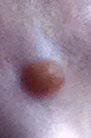
Spitz nevus (epithelioid and spindle-cell nevus)
Frequency
Rare
Age Group
Children
Progression
Self-Limiting
Contagious
No
A Spitz nevus is a benign type of mole that usually appears in children and young adults as a small, raised, dome-shaped spot on the skin. It’s typically smooth, symmetrical, and can be pink, red, or brown, and it does not usually cause any symptoms. Although it can sometimes look similar to melanoma, it does not normally turn into skin cancer. Any new or changing Spitz-like spot should be checked by a dermatologist to be safe.
This is general information. With a scan you'll receive a detailed, personalized analysis — including individual risk assessment, progression tracking and recommended actions.
The exact cause of a Spitz nevus is not fully understood. Genetics, UV exposure, and hormonal changes (like puberty or pregnancy) are thought to play a role. Most cases appear without any clear trigger.
A typical Spitz nevus is considered benign and has a very low risk of turning into melanoma. The main risk is missing a melanoma that looks similar, which is why any changing or atypical lesion should be checked and often removed. Trauma, strong UV, or radiation to the area are reasons to be more cautious and see a doctor.
The main treatment for a Spitz nevus is surgical removal with a small margin of normal skin, followed by histological examination to confirm the diagnosis. Destructive methods like laser or freezing are not recommended because they destroy tissue and make accurate diagnosis impossible. If the lesion is typical and stable, some doctors may suggest careful monitoring instead of immediate removal, especially in children.
You can’t fully prevent Spitz nevi, but you can lower general skin risk by limiting UV exposure, using sunscreen, and avoiding chronic skin trauma. Regular self-checks, photo monitoring, and timely visits to a dermatologist help catch any suspicious changes early. Our AI skin analysis can be part of your routine to track moles and flag changes.
Any suspected Spitz nevus, especially if new, changing, or appearing in an adult, should be evaluated by a dermatologist. In many cases, the doctor will recommend surgical removal and histology to be completely sure it’s benign. Use our AI skin analysis for routine monitoring, but rely on an in‑person specialist for diagnosis and treatment decisions.
A stable, long‑standing Spitz‑like mole without changes is usually not an emergency and can be checked at a routine dermatology visit. If the spot is rapidly growing, changing color or shape, or starts to itch, hurt, or bleed, you should see a dermatologist within the next few weeks for possible removal and histology.
The information provided here is for educational purposes only and does not replace professional medical advice. Always consult a dermatologist or physician if you have any concerns.
Acne vulgaris is a very common chronic inflammatory skin condition that affects hair follicles and oil (sebaceous) glands, mainly on the face, chest, back, and shoulders. It shows up as blackheads, whiteheads, red bumps, pus-filled spots, and sometimes deeper nodules, cysts, scars, and dark marks.
Eczema is a group of inflammatory skin conditions that cause redness, intense itching, dryness, and sometimes oozing or crusting. It can be acute with blisters and swelling or chronic with thickened, cracked skin, and it often flares in cold, dry seasons and improves in summer.
Rosacea is a chronic inflammatory skin condition that mainly affects the central face and causes persistent redness, visible blood vessels, and sometimes acne‑like bumps or eye irritation. It tends to flare in response to triggers like heat, alcohol, spicy food, or stress and usually needs long‑term, tailored care rather than a quick one‑time treatment.
Cystic acne is a severe, chronic form of acne where deep, painful nodules and cysts form in the skin and often leave scars. It usually affects the face, chest, back, and shoulders, and needs proper medical treatment rather than just cosmetic care.