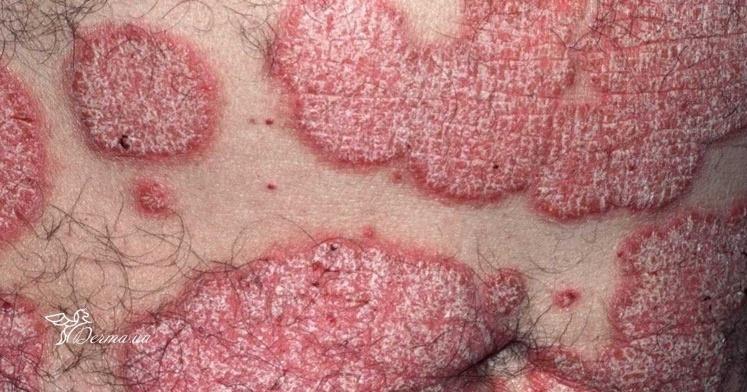
A psoríase vulgar é causada por unha mestura de predisposición xenética e hiperactividade do sistema inmunitario, desencadeada por factores como infeccións, certos medicamentos, irritación da pel, estrés, alcol e clima. O sistema inmunitario acelera erróneamente o crecemento das células da pel e a inflamación, levando ás típicas placas vermellas e escamosas.
Tes máis probabilidades de desenvolver psoríase vulgar se parentes próximos teñen psoríase, se fumas, bebes moito alcol, tes sobrepeso ou tes enfermidades autoinmunes ou metabólicas. Lesións repetidas na pel, estrés crónico e certos medicamentos tamén aumentan o risco de brotes e enfermidade máis grave.
O tratamento da psoríase vulgar céntrase en suavizar e eliminar as escamas, calmar a inflamación e ralentizar o crecemento excesivo das células da pel. Dependendo da gravidade, isto pode incluír hidratantes e cremas queratolíticas, esteroides tópicos, análogos da vitamina D, inhibidores da calcineurina, fototerapia e, en casos moderados a graves, medicamentos sistémicos ou biolóxicos, guiados por un dermatólogo.
Non podes previr completamente a psoríase vulgar se es xeneticamente propenso, pero podes reducir os brotes evitando desencadeantes como fumar, o uso excesivo de alcol, lesións na pel e estrés non controlado. O coidado suave da pel, un peso saudable, exercicio regular e o uso coidadoso de medicamentos baixo guía médica axudan a manter a enfermidade máis tranquila.
Deberías ver a un dermatólogo para confirmar a psoríase vulgar, discutir os factores desencadeantes e escoller a mestura adecuada de cremas, posible terapia de luz ou tratamento sistémico. Os seguimentos regulares son importantes, especialmente se as placas se espallan, as unllas ou as articulacións están afectadas ou se a túa calidade de vida está claramente reducida.
A psoríase vulgar xeralmente non require atención de emerxencia, pero deberías ver a un dermatólogo dentro de semanas para un diagnóstico e un plan de tratamento personalizado, especialmente se as placas se espallan, as unllas ou articulacións están implicadas, ou se o picor e a aparencia te molestan. Busca axuda médica urxente se desenvolves vermelhidão xeneralizada, lesións cheas de pus, febre ou malestar grave.