
Causes
The exact cause of pink lichen is still unclear, but many experts suspect a temporary viral trigger. It is not an allergy, and it is not caused by a fungus or bacteria.
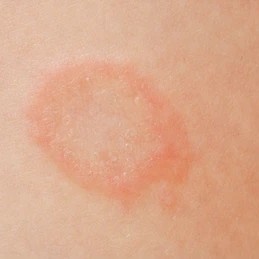
Pityriasis rosea
Frequency
Uncommon
Age Group
Young Adults
Progression
Self-Limiting
Contagious
No
Pink lichen (pityriasis rosea) is a temporary rash that usually starts with one larger pink patch, followed by many smaller spots on the chest, back, and abdomen. It often itches mildly, is not dangerous, and usually goes away on its own within 1–3 months without leaving scars.
This is general information. With a scan you'll receive a detailed, personalized analysis — including individual risk assessment, progression tracking and recommended actions.
The exact cause of pink lichen is still unclear, but many experts suspect a temporary viral trigger. It is not an allergy, and it is not caused by a fungus or bacteria.
Pink lichen is most common in teenagers and young adults and usually affects otherwise healthy people. It is generally harmless, but in pregnancy or with very unusual rashes, a doctor should check for other conditions.
Pink lichen usually goes away on its own within 1–3 months and often needs no specific treatment. Therapy focuses on easing itching and irritation with moisturizers, mild steroid creams, antihistamines, and sometimes antiviral tablets if started very early.
There is no guaranteed way to prevent pink lichen because the exact cause is unknown. General skin care, avoiding overheating, and treating infections promptly may help reduce triggers, but the condition is usually a one‑time event.
See a dermatologist if the rash lasts longer than 3 months, appears on the face, palms, or soles, is very painful or blistering, or if you feel unwell with fever or severe sore throat. Pregnant women and parents of infants with a similar rash should always get an in‑person evaluation.
Pink lichen is usually not an emergency and can be evaluated in a routine dermatology visit within a few weeks. Seek earlier care if the rash is very atypical, very itchy, blistering, or you feel generally unwell.
The information provided here is for educational purposes only and does not replace professional medical advice. Always consult a dermatologist or physician if you have any concerns.
An open comedone, or blackhead, is a small plug of oil and dead skin that blocks the opening of a pore and turns dark when exposed to air. It is a non‑inflamed form of acne and most often appears on the face, neck, chest, back, and shoulders. Blackheads are usually harmless but can be a cosmetic concern and may progress to inflamed pimples if bacteria overgrow.
Milia are tiny, white or yellowish cysts just under the surface of the skin, most often seen on the face. They are harmless, not infectious, and usually cause only cosmetic concerns rather than health problems.
A closed comedone (whitehead) is a small clogged pore where sebum and dead skin cells are trapped under a thin layer of skin. It looks like a tiny, pale or skin‑colored bump without a black dot in the center and is considered a mild, non‑inflamed form of acne.
An acral nevus is a benign mole that appears on the palms of the hands or soles of the feet. It is usually small, evenly colored, and stable over time, and most do not turn into melanoma. Because melanoma can also appear on palms and soles, any new or changing spot in these areas should be checked by a dermatologist.