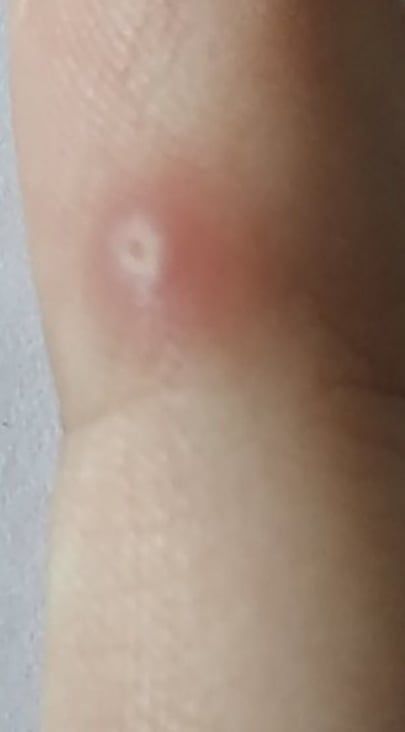
Almindelige vorter er forårsaget af infektion i de øvre hudlag med humant papillomavirus (HPV), normalt lavrisiko-typer, der ikke fører til kræft. Ikke alle, der udsættes for HPV, udvikler vorter, så faktorer som et svagere immunsystem, kronisk hudskade, dårlig hygiejne, stress og tilstande som diabetes kan øge chancen for, at vorter dukker op. Virussen trænger ind gennem små hudbrud og kan sprede sig ved direkte kontakt eller delte genstande. Når HPV er i huden, får det hudcellerne til at vokse hurtigere og danne den ru, hævede vorte.
Almindelige vorter betragtes som sikre fra et onkologisk synspunkt og bliver næsten aldrig til kræft. De vigtigste risici er gentagen traume, blødning, smerte, infektion af beskadiget hud, spredning til andre kropsområder og kosmetisk eller psykologisk ubehag. Du bør se en læge, hvis en vorte ændrer sig hurtigt, bliver meget hårdere, begynder at gøre ondt, eller ser meget anderledes ud end dine sædvanlige vorter. Vores AI hudanalyse kan hjælpe dig med at opdage disse ændringer tidligt ved at sammenligne fotos over tid.
Mange almindelige vorter forsvinder af sig selv, så hvis de er små, stabile og ikke generende, er forsigtig observation ofte nok. Når behandling er nødvendig, bruger hudlæger normalt lokale destruktive metoder som laserfjernelse, kryoterapi med flydende nitrogen, radiofrekvens eller elektrisk kauterisering, eller kirurgisk excision, hvis diagnosen er uklar. Selvskæring, brænding eller rivning af vorter er usikkert på grund af blødning, infektion, ardannelse og risikoen for at overse en mere alvorlig læsion. Vores AI hudanalyse kan hjælpe dig med at overvåge vorter under observation og spore resultaterne efter professionel behandling.
Du kan reducere risikoen for almindelige vorter ved at beskytte din hud mod kronisk irritation og små skader, holde god hånd- og fodhygiejne, og behandle infektioner og metaboliske tilstande som diabetes rettidigt. At støtte dit immunsystem med nok søvn, stresskontrol, sund ernæring og at undgå rygning hjælper også din krop med at kontrollere HPV. Undgå at pille ved eksisterende vorter, dele personlige genstande som håndklæder eller negleværktøj, og overeksponere din hud for UV- eller ioniserende stråling. Vores AI hudanalyse kan minde dig om at tjekke din hud regelmæssigt og holde øje med eksisterende vorter.
Hvornår Skal Du Se en Læge?
De fleste almindelige vorter kan overvåges uden hast, men du bør se en hudlæge, hvis en vorte vokser hurtigt, ændrer form eller farve, bliver smertefuld, bløder let, eller ser anderledes ud end dine andre vorter. Det er også værd at se en læge, hvis du har mange vorter, vorter på usædvanlige steder, et svækket immunsystem, eller hvis hjemmepleje har fejlet og vorter generer dig. Vores AI hudanalyse kan hjælpe dig med at afgøre, hvornår en ændring ser betydelig nok ud til at blive tjekket personligt.
Almindelige vorter er normalt ikke en nødsituation og kan ses af en hudlæge på rutinemæssig basis. Søg tidligere personlig evaluering, hvis en vorte ændrer sig hurtigt, bliver smertefuld, bløder, eller ser klart anderledes ud end dine almindelige vorter.