

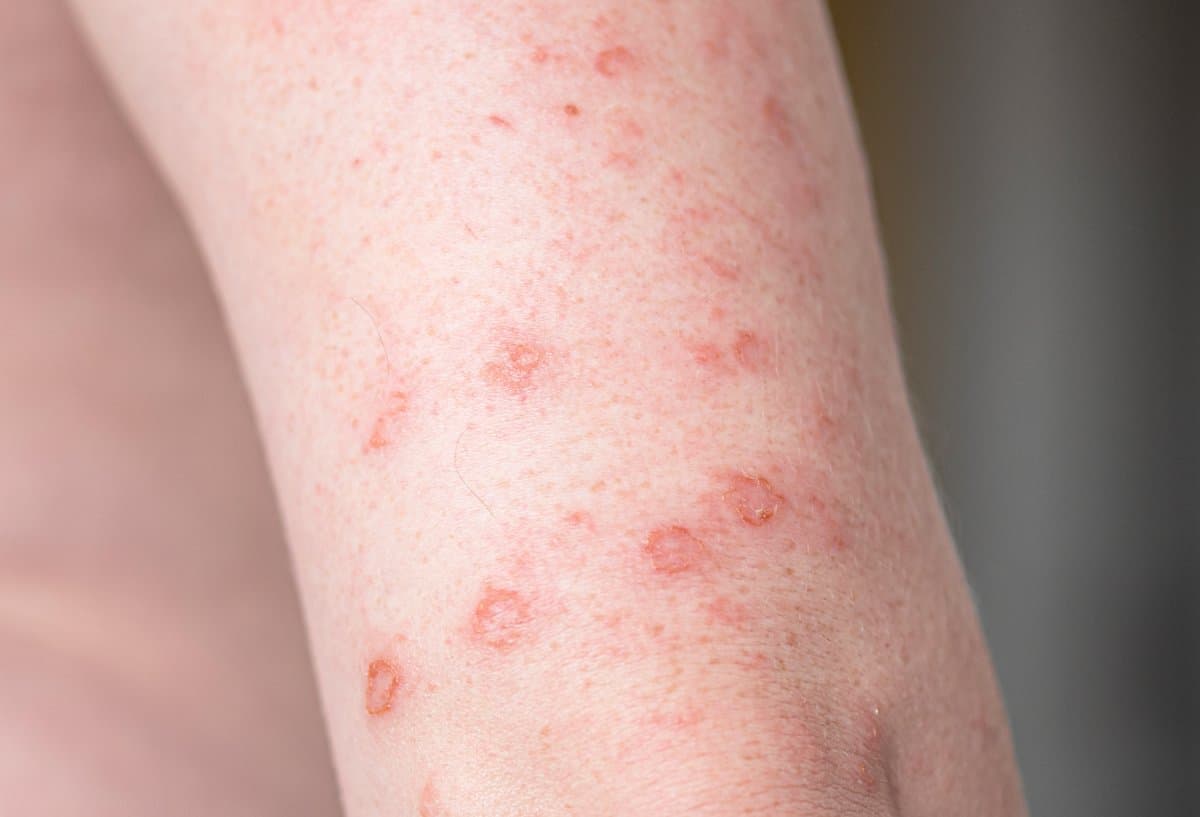
What Is Really Causing Those Mystery Bumps
You wake up with itchy, raised bumps that look exactly like mosquito bites, but it is the middle of winter, your windows are closed, and there is no insect in sight. This scenario is extremely common and is one of the most-searched skin symptoms online. The most frequent explanation is hives, known medically as urticaria.
Hives are raised, red or skin-colored welts that appear suddenly, itch intensely, and can look identical to mosquito bites. They are caused by the release of histamine from mast cells in the skin, triggered by an enormous range of stimuli: foods, medications, infections, stress, temperature changes, pressure on the skin, or sometimes no identifiable cause at all. Individual hive welts typically last less than 24 hours but may be replaced by new ones in different locations.
Contact dermatitis from a new laundry detergent, soap, or fabric can produce localized bumps that mimic insect bites on areas where the irritant touched the skin. If your mystery bumps disappear within 24 hours only to reappear in a different location, hives are the most likely cause, as true insect bites remain fixed at the site where the bite occurred.!! Dermatitis herpetiformis, associated with celiac disease, produces intensely itchy, small blisters that can resemble insect bites and clusters on the elbows, knees, buttocks, and scalp.
Scabies, a mite infestation that spreads through close contact, causes small, extremely itchy bumps often found between the fingers, on the wrists, and around the waistline. Folliculitis, infection of hair follicles, produces itchy bumps that center around a hair. Papular urticaria is a hypersensitivity reaction to previous insect bites that causes new bumps to appear at old bite sites or even on skin that was never bitten, confusing people into thinking they have an ongoing infestation.

How to Identify the Cause and Find Relief
Determining the cause of your mystery bumps requires a bit of detective work. Start by noting when and where the bumps appear. If they migrate to new locations within hours and individual welts last less than a day, hives are the most likely diagnosis.
If bumps are concentrated in areas covered by clothing, consider contact dermatitis from laundry products. If the itching is worst at night and concentrated between fingers, on wrists, or around the waistband, scabies should be investigated. If bumps center around hair follicles, folliculitis is probable.
For hives, over-the-counter antihistamines like cetirizine or loratadine taken daily can provide significant relief. Keeping a symptom diary that records what you eat, which products you use, your stress levels, and when bumps appear can reveal patterns that lead to identifying your specific trigger within two to three weeks.!! Avoid hot showers, tight clothing, and scratching, all of which can worsen histamine release.
If hives persist for more than six weeks, the condition is classified as chronic urticaria and warrants evaluation by an allergist or dermatologist who may order blood tests to check for underlying causes including thyroid dysfunction and infections. For contact dermatitis, an elimination approach works best: switch to fragrance-free, dye-free detergent, soap, and lotion for two weeks and see if the bumps resolve. Scabies requires prescription permethrin cream applied to the entire body from neck to toes and left on overnight.
All household members and close contacts need simultaneous treatment to prevent reinfestation. Folliculitis often responds to antibacterial washes containing benzoyl peroxide or chlorhexidine. If your bumps do not respond to any of these approaches within a few weeks, a dermatologist visit is the logical next step for a definitive diagnosis.
