
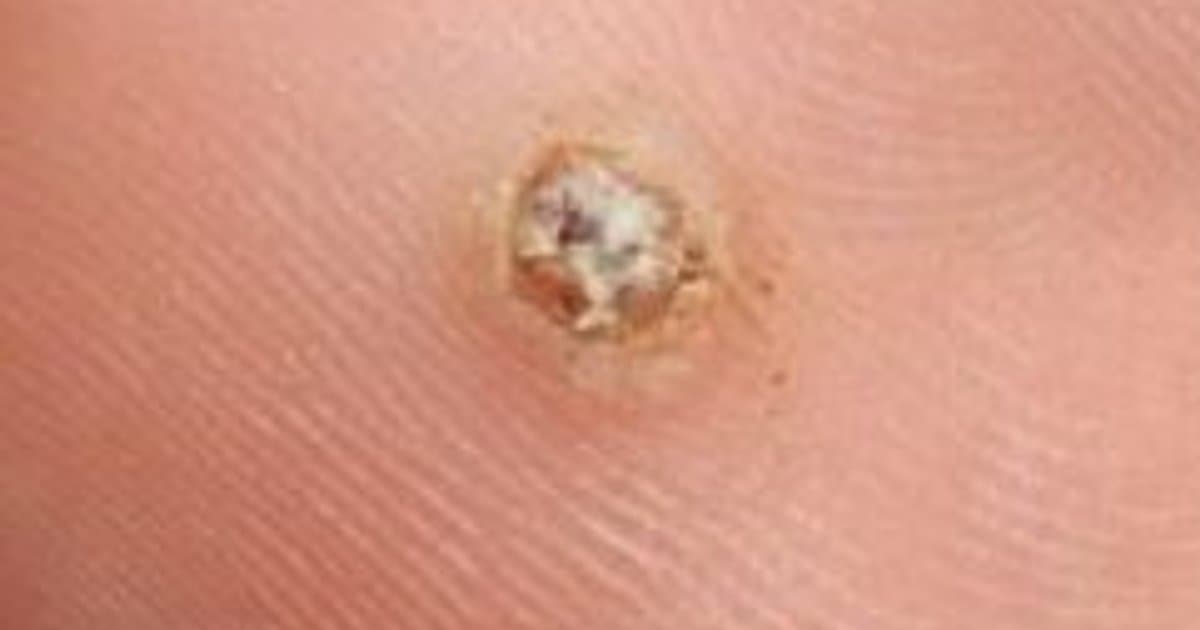
What Are Plantar Warts?
Plantar warts (verrucae plantares) are benign skin growths on the soles of the feet caused by human papillomaviruses (HPV) — primarily types 1, 2, 4, and 63. Due to constant pressure from walking, they grow inward rather than outward, forming a thorn-like plug that extends into deeper tissue. This explains the pain when walking — like stepping on a stone. Plantar warts are particularly common in children and adolescents.
Causes and Transmission
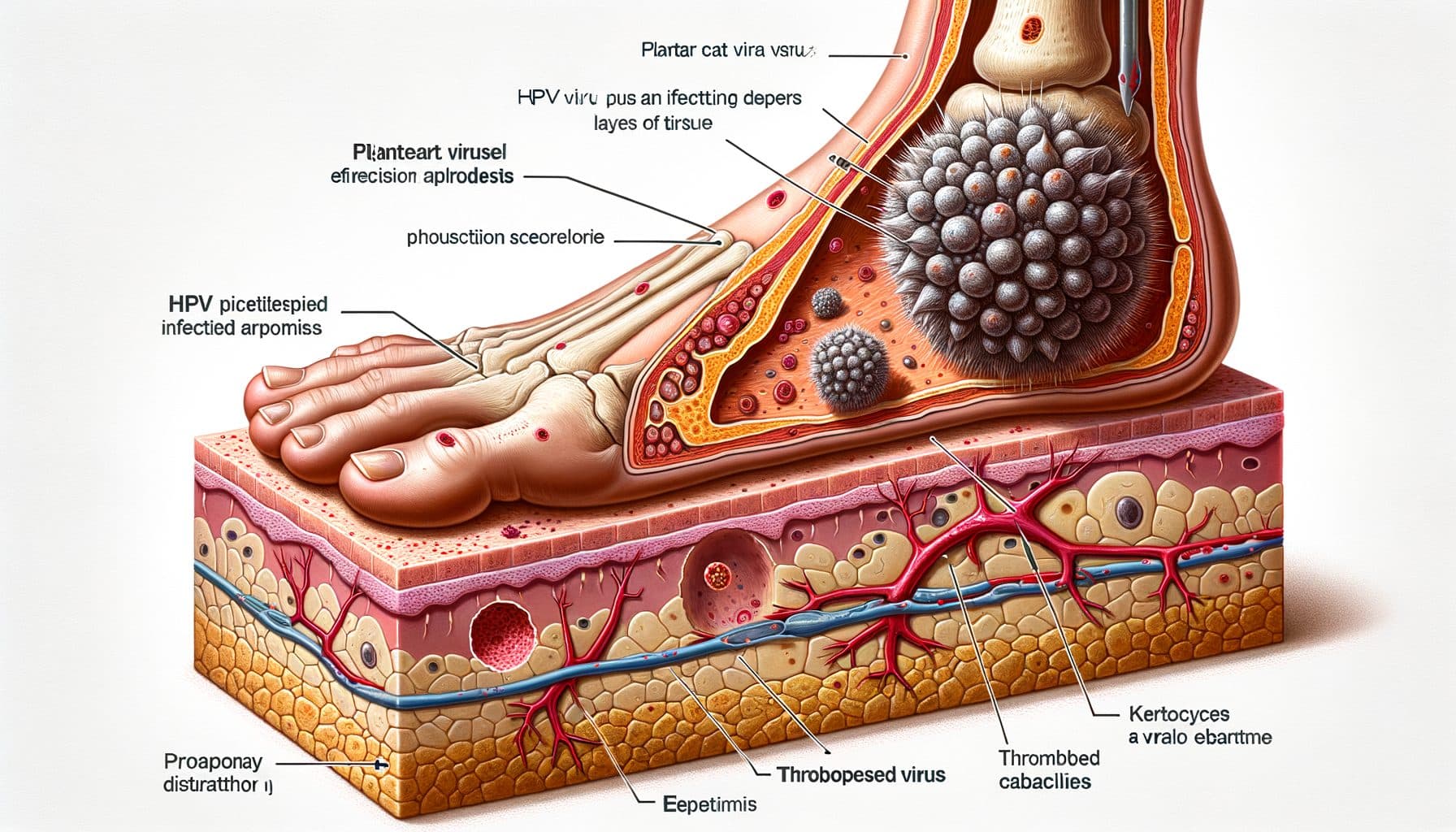
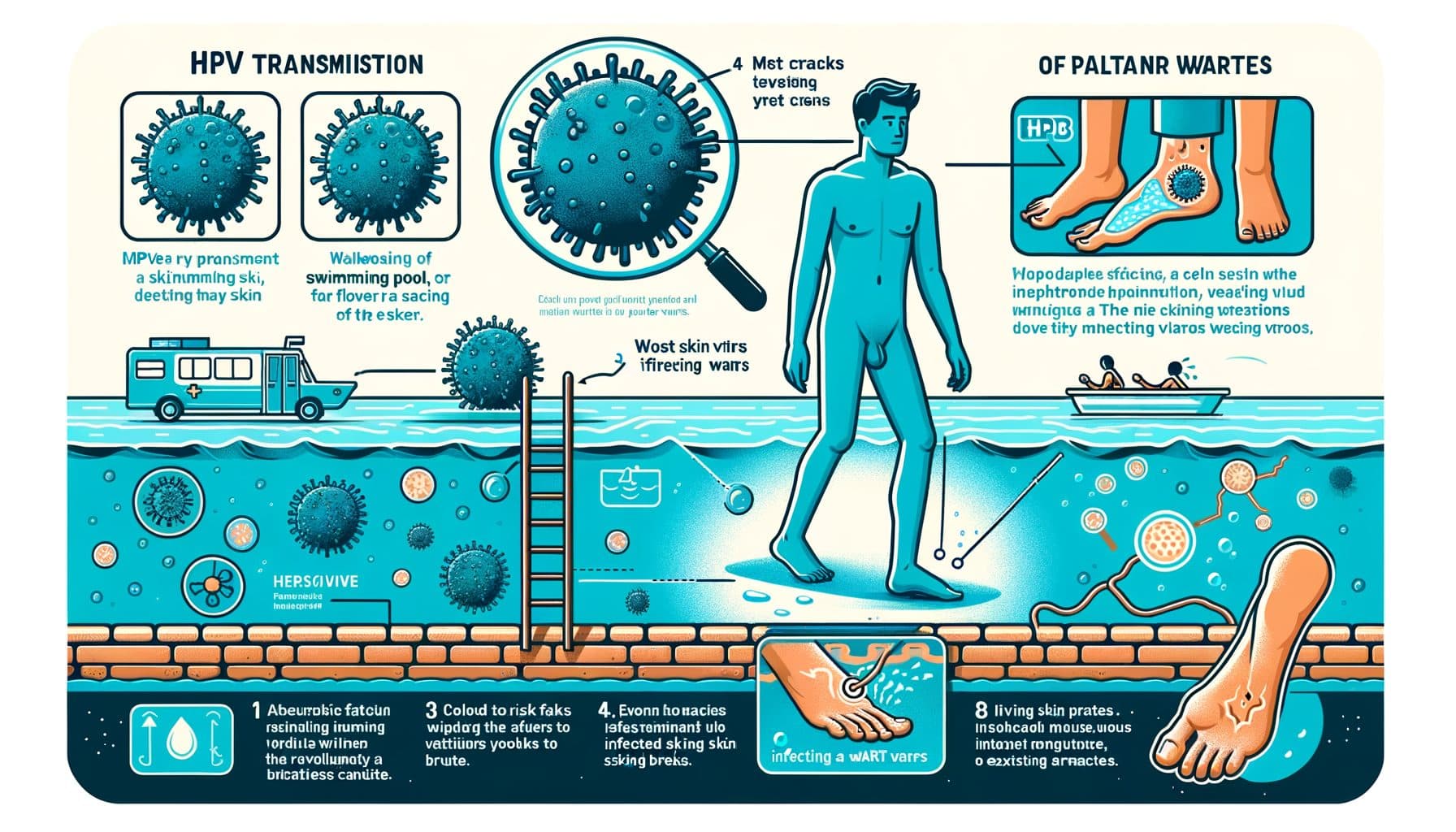
HPV viruses enter the epidermis through small skin breaks — cracks, macerated skin, microtrauma — and infect the keratinocytes. Typical sites of infection are swimming pools, communal showers, changing rooms, and sauna areas, where the virus can survive on moist surfaces. Walking barefoot in these areas increases the risk.
The incubation period ranges from weeks to months. A weakened immune system, poor circulation in the feet, and existing skin lesions promote infection.
Symptoms and Recognition
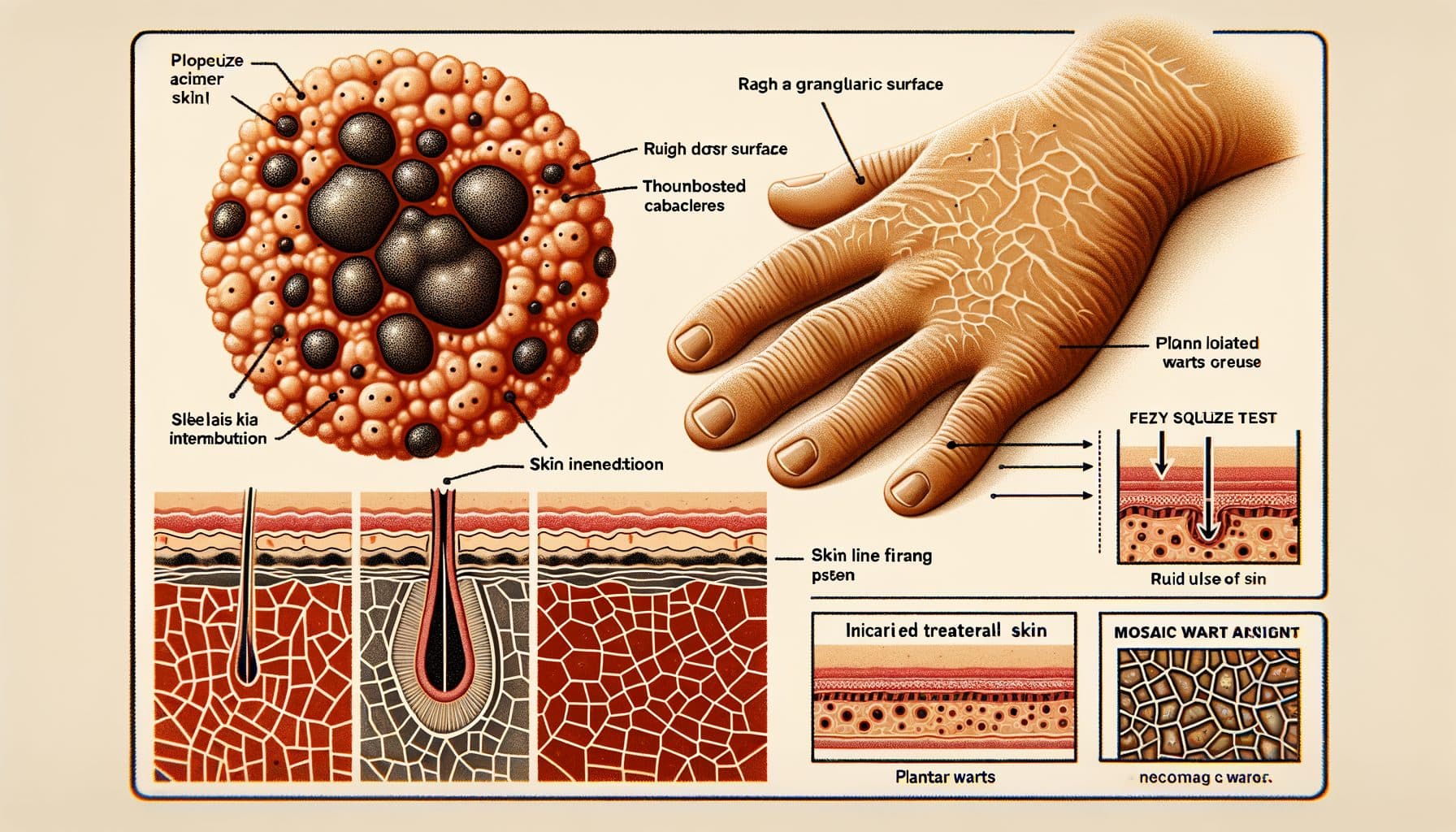
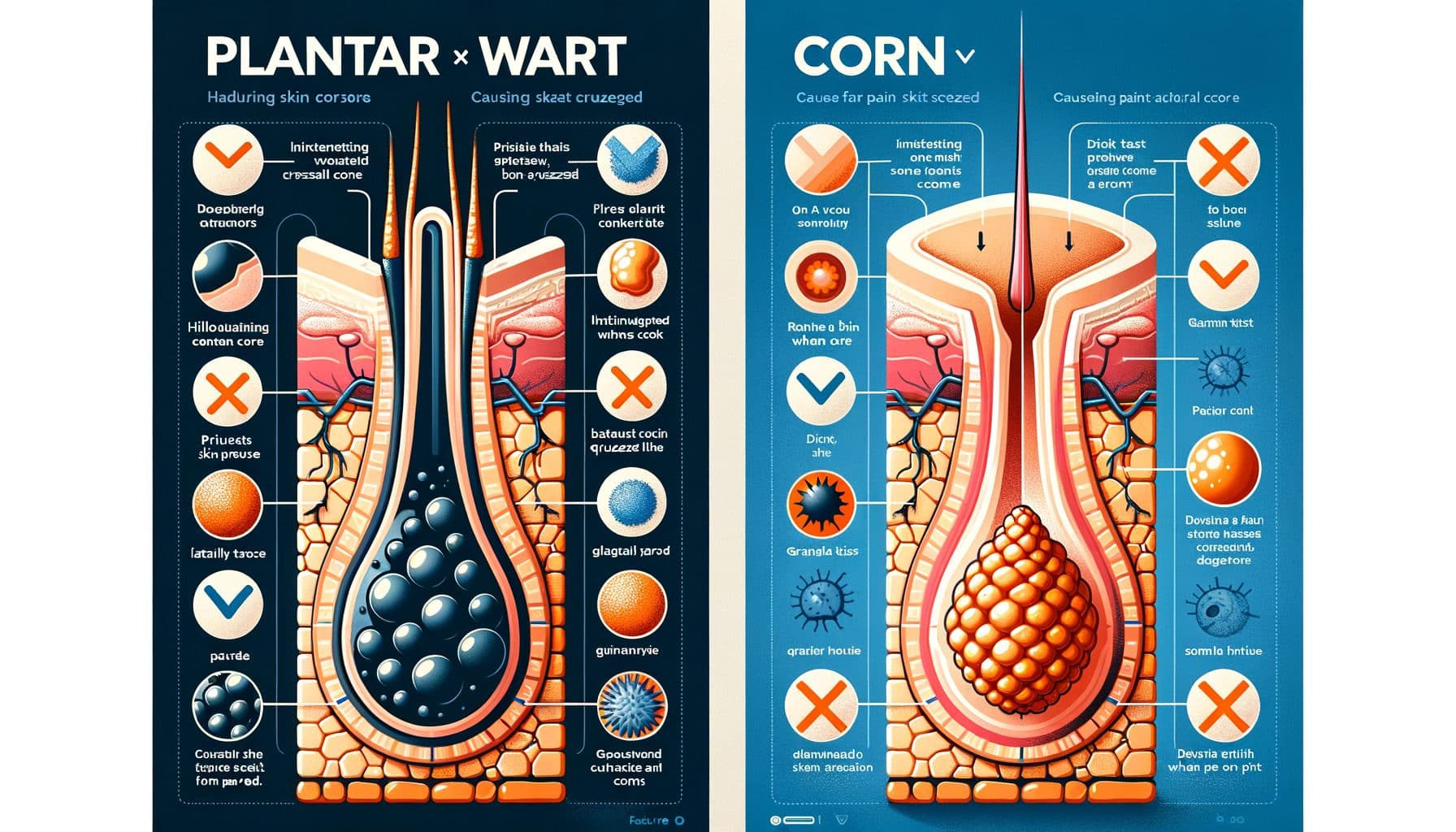
Plantar warts appear as hard, thickened areas of skin on the sole with a rough, slightly granular surface. ' Lateral squeezing of the wart typically causes pain (squeeze test), while direct pressure from above is often less painful — in contrast to corns. Mosaic warts are a special form where multiple warts merge into a flat cluster.
Distinguishing from Corns
Clinical differentiation from corns (clavus) is important since treatment differs. Corns have a central, translucent horny core and show pain with direct pressure. Plantar warts display the typical black dots (thrombosed capillaries), interrupt the skin lines (dermatoglyphics), and hurt with lateral pressure. When the horny layer is pared away, warts reveal black dots and granular tissue — corns reveal a smooth, glassy core.!!
Treatment Methods
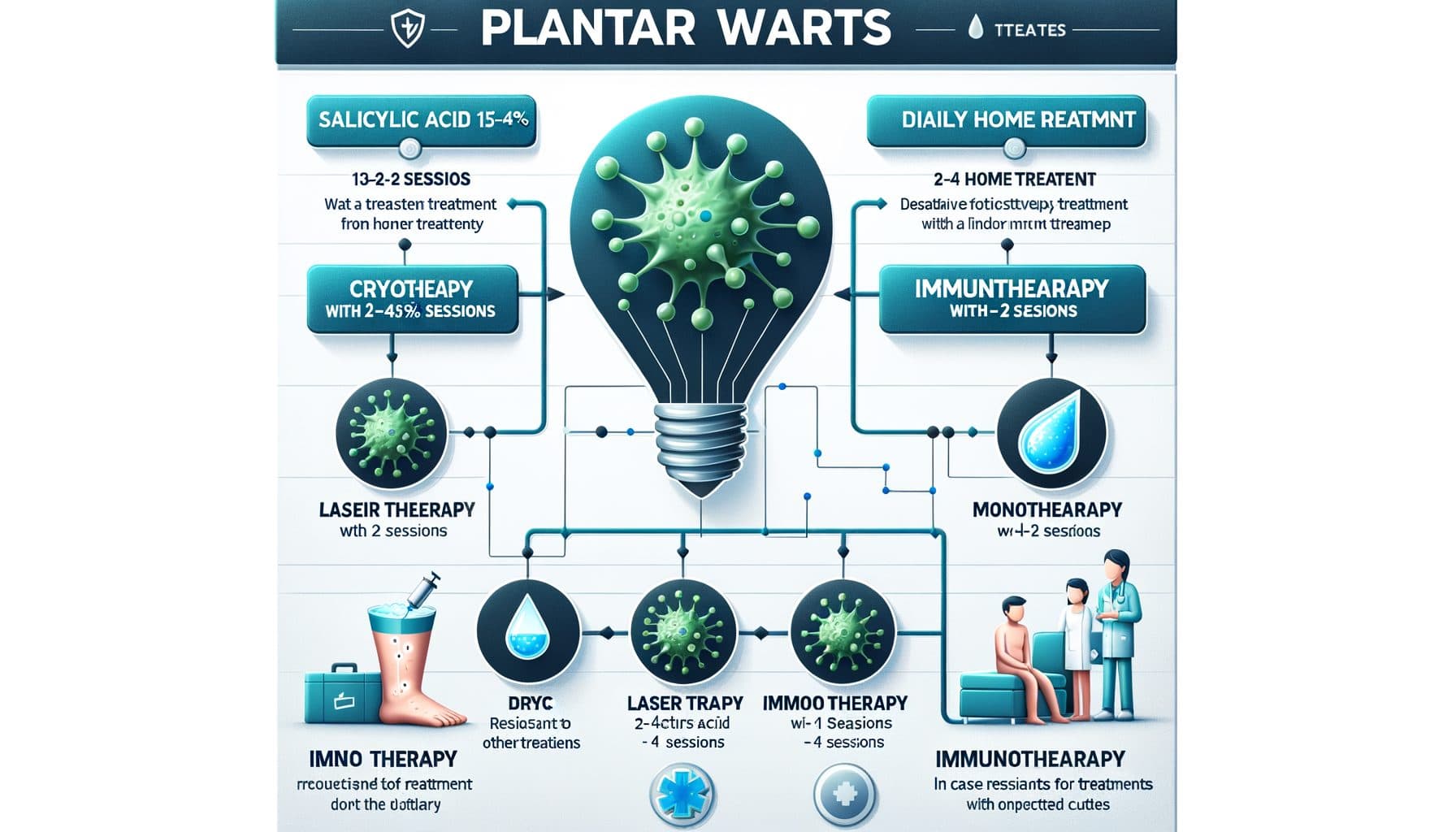
Treatment depends on size, number, pain level, and therapy resistance. Salicylic acid preparations (15–40%) are first-line — daily application after softening and debriding the horny layer over weeks. Cryotherapy (freezing with liquid nitrogen) is available at the dermatologist and usually requires 2–4 sessions at 2–3 week intervals. Other options include laser therapy, application of monochloroacetic acid, curettage, and immunotherapy with diphencyprone (DPCP) for treatment-resistant warts.
Prevention and Prognosis
Preventive measures include: wearing flip-flops in swimming pools and communal showers, keeping feet dry, using your own towels, caring for and covering foot injuries, and not picking at warts (auto-inoculation). The prognosis is good — over 65% of warts resolve spontaneously within 2 years even without treatment, more frequently in children than adults.!! Immunocompromised patients have higher recurrence rates and often need more intensive therapy.

How AI Skin Analysis Can Help
Is that painful spot on your foot a plantar wart or just a corn? The distinction matters because treatment approaches differ significantly. Skinscanner analyzes the visual characteristics of foot lesions — surface texture, the presence of black dots (thrombosed capillaries), interruption of skin lines, and overall morphology — to help you determine whether you're dealing with a wart, corn, or callus.
During self-treatment with salicylic acid, regular photos allow you to track whether the wart is shrinking, which can take weeks to notice with the naked eye. This objective monitoring helps you decide when home treatment is working versus when it's time to see a dermatologist for cryotherapy or other professional options. Skinscanner does not replace clinical examination, but it provides accessible guidance for a condition that often starts as a minor annoyance and can become significantly painful if left untreated.