

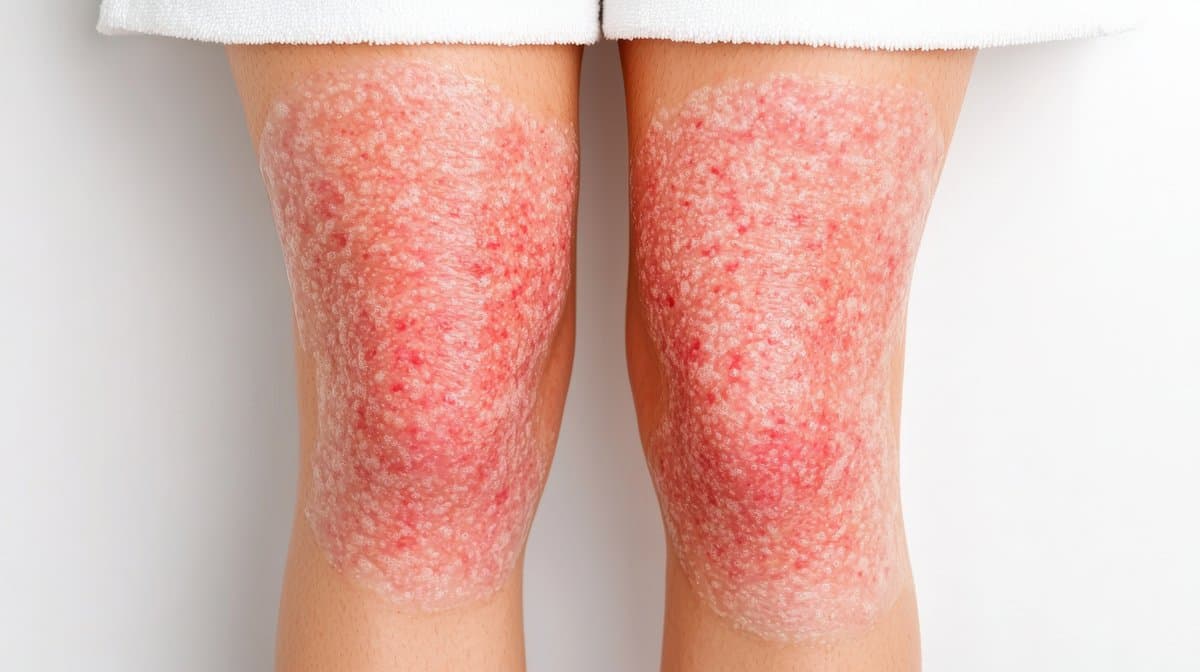
Hlavní rozdíly v vzhledu a umístění
Na první pohled mohou ekzém a psoriáza vypadat překvapivě podobně, což je důvod, proč miliony lidí bojují s nesprávnou léčbou měsíce, než dostanou správnou diagnózu. Existují však výrazné vizuální a texturální rozdíly, které vám mohou pomoci je od sebe rozlišit. Ekzém, také nazývaný atopická dermatitida, se obvykle objevuje jako červené nebo tmavě hnědé skvrny zanícené pleti, které mohou při aktivaci plakat, vytékat nebo krustovat.
Postižená pleť často vypadá syrově a chronický ekzém může způsobit, že pleť zhoustne a stane se koženou v procesu nazývaném lichenifikace. Ekzém se vyskytuje vnitřních záhybech těla, nejčastěji se objevuje v ohybech loktů, za koleny, na zápěstích, na krku a kolem očí. U kojenců často postihuje tváře a pokožku hlavy.
Psoriáza produkuje vyvýšené, jasně definované plaky pokryté silnými, stříbřitě bílými šupinami, které jsou výsledkem abnormálně rychlého hromadění kožních buněk. Stříbřitá šupina na vrcholu dobře definovaného, vyvýšeného červeného plaku je znakem psoriázy a je to nejspolehlivější vizuální rys, který ji odlišuje od ekzému.!! Psoriáza se běžně objevuje na vnějších plochách kloubů, zejména na loktech a kolenou, stejně jako na pokožce hlavy, dolní části zad a hýždích.
Může také postihnout nehty, což způsobuje prohlubování, ztluštění nebo oddělení od nehtového lůžka. Ačkoli se oba stavy mohou vyskytovat kdekoli na těle, jejich preferovaná umístění poskytují silnou diagnostickou nápovědu.

Různé příčiny, různé léčby
Základní mechanismy, které způsobují ekzém a psoriázu, jsou zásadně odlišné, a proto stejná léčba zřídka funguje pro obě. Ekzém zahrnuje defektní kožní bariéru, často způsobenou genetickou mutací ovlivňující protein filaggrin, v kombinaci s hyperaktivní imunitní reakcí na environmentální spouštěče. Mezi běžné spouštěče ekzému patří alergeny, dráždivé látky, stres, změny teploty a některé potraviny.
Tento stav obvykle začíná v kojeneckém nebo dětském věku a může se s věkem zlepšovat, i když mnozí dospělí nadále zažívají zhoršení. Psoriáza je chronické autoimunitní onemocnění, při kterém imunitní systém mylně urychluje životní cyklus kožních buněk, což je tlačí na povrch během dnů namísto normálního čtyřtýdenního cyklu. Tento rychlý obrat vytváří charakteristické silné, šupinaté plaky.
Psoriáza je stále více chápána jako systémové zánětlivé onemocnění, což znamená, že ovlivňuje více než jen kůži a je spojena s vyššími mírami kardiovaskulárních onemocnění, diabetu a deprese.!! Léčba ekzému se zaměřuje na obnovu kožní bariéry pomocí emolientů, snížení zánětu pomocí topických kortikosteroidů nebo inhibitorů kalcineurinu a identifikaci a vyhýbání se spouštěčům. Léčba psoriázy cílí na hyperaktivní imunitní odpověď, používá topické léčby pro mírné případy a systémové léky, jako je methotrexát, cyklosporin nebo novější biologické léky pro středně těžké až těžké onemocnění.
Fototerapie pomocí kontrolované expozice UV světlu je účinná pro obě onemocnění, ale prostřednictvím různých mechanismů. Získání správné diagnózy je zásadním prvním krokem, protože aplikace léčby psoriázy na ekzém nebo naopak může být neúčinná nebo dokonce škodlivá. Skinscanner může analyzovat obrázky vaší kůže a pomoci rozlišit mezi běžnými projevy těchto dvou stavů, což vás nasměruje k správné konverzaci s vaším lékařem.
